ADHD Mind Unload: A Practical Tool for Clearing Mental Clutter and Regaining Focus
If you have ever felt like your brain is running several browser tabs at once—each one demanding attention, none of them fully loading—you are not alone. For adults with ADHD or simply busy, overwhelmed minds, mental clutter is a persistent challenge. The feeling of having too many thoughts, tasks, and worries competing for space can make it hard to start anything, finish anything, or simply be present.
Enter ADHD Mind Unload, a 30-page eBook designed to help you clear that clutter, reduce stress, and rebuild focus one small step at a time. But with so many tools, workbooks, apps, and systems out there, how does this one compare? Is it the right fit for your needs, or would another approach serve you better? This article explores what makes ADHD Mind Unload distinct, where it fits in the broader landscape of focus and clarity resources, and how to decide if it is the right choice for you.
What Is ADHD Mind Unload and What Makes It Distinct?
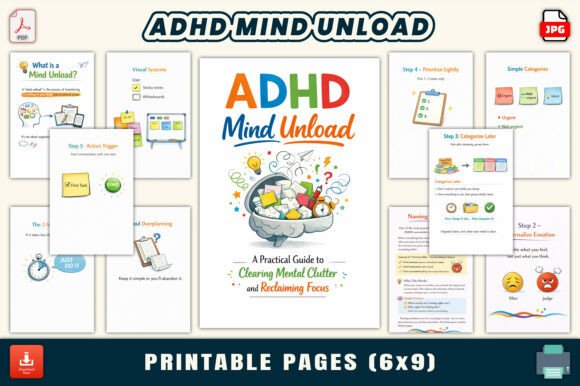
ADHD Mind Unload is a concise, 30-page eBook that focuses on the practice of "brain dumping"—getting thoughts, worries, and tasks out of your head and onto paper. The book is structured around helping you understand how ADHD affects your thoughts and emotions, practice effective mind-unload techniques, reduce overwhelm, and build simple, ADHD-friendly routines that actually stick.
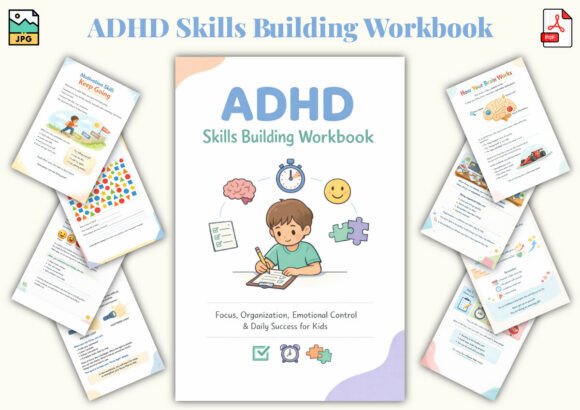
What sets it apart from many other resources is its deliberate simplicity. Each page is short, visually clean, and designed for real-life use. There are no complicated systems, no dense chapters, and no overwhelming instructions. The layout uses a white background with subtle color highlights, plenty of white space, and a minimal, modern style that is easy on the eyes. In a world of elaborate planners and multi-step productivity frameworks, ADHD Mind Unload intentionally keeps things small and approachable.
The 6 x 9 inch page size is also worth noting. It is compact enough to feel manageable—not like a heavy textbook—but large enough to write in comfortably. The eBook is provided in both JPG and PDF formats, so you can use it digitally on a tablet or print it at home.
Comparing ADHD Mind Unload to Other Approaches for Mental Clarity
When you are looking for ways to manage an overwhelmed mind, you will likely encounter a range of options. These include traditional journals, productivity planners, cognitive behavioral therapy workbooks, digital note-taking apps, mindfulness practices, and coaching programs. Each has its own strengths, and none is right for everyone. Here is how ADHD Mind Unload stacks up against some of these alternatives.
Versus Traditional Journaling or Brain Dump Notebooks
A plain notebook is the simplest brain dump tool—you just write whatever comes to mind. It is flexible and costs almost nothing. However, many people find that a blank page can be intimidating or unfocused. ADHD Mind Unload provides structure without rigidity. It offers prompts, gentle guidance, and a clear sequence of steps, which can be especially helpful if you are not sure where to start or if you tend to abandon notebooks after a few pages. The tradeoff is that a blank notebook is more open-ended, which some people prefer for creative or unstructured expression.
Versus Productivity Planners and Systems
Popular planners like the Bullet Journal, Passion Planner, or digital tools like Notion and Todoist offer powerful systems for organizing tasks and projects. They can be excellent for some, but they often require a significant upfront time investment to set up and maintain. For someone with ADHD, the complexity of these systems can create a new kind of overwhelm. ADHD Mind Unload takes a different approach: it is not a full productivity system but a focused tool for mental clarity. It helps you clear your head so that you can then decide what system (if any) you want to use for task management. If you have tried complex planners and felt more stressed than organized, this lighter approach may be a better starting point.
Versus Cognitive Behavioral Therapy (CBT) Workbooks
CBT workbooks are evidence-based tools for understanding and reshaping thought patterns. They are excellent for addressing anxiety, depression, and ADHD-related negative thinking. However, they tend to be longer, more detailed, and require more cognitive effort. ADHD Mind Unload is not a replacement for therapeutic workbooks, but it can serve as a complementary first step. If you are not ready for deep cognitive restructuring, the simple act of unloading your mind can provide immediate relief and a clearer starting point.
Versus Digital Note-Taking and Mind Mapping Apps
Apps like Evernote, Apple Notes, or mind mapping tools like MindNode offer digital ways to capture and organize thoughts. They are searchable, portable, and easy to edit. However, digital tools can introduce distractions—notifications, other apps, the temptation to multitask. For some people with ADHD, the tactile experience of writing on paper is more grounding and less likely to lead to a rabbit hole of browsing. ADHD Mind Unload is a paper-based (or printable) tool, which can be a deliberate break from screens. On the other hand, if you strongly prefer digital organization or need to access your notes across devices, a digital app may be more practical.
Strengths and Tradeoffs of ADHD Mind Unload
Understanding the strengths and limitations of any resource helps you decide if it fits your situation. Here is a balanced look at what ADHD Mind Unload offers and where it may fall short.
Strengths
- Low barrier to entry. At 30 pages with simple instructions, it is easy to start and finish. This is important for people who feel paralyzed by large projects.
- ADHD-friendly design. The clean layout, white space, and soft color highlights reduce visual overwhelm. The structure is predictable and calming.
- Practical and actionable. The focus on brain dump techniques and simple routines means you can use it immediately without learning a new system.
- Portable and flexible. The 6 x 9 inch size and dual format (PDF and JPG) let you use it on paper or digitally, at home or on the go.
- Supports habit building. By encouraging small, repeatable actions, it helps you build routines that are more likely to stick than ambitious overhauls.
Tradeoffs and Limitations
- Not a comprehensive productivity system. If you need a full task manager, calendar integration, or project planning tools, this eBook alone will not replace those. It is a clarity tool, not an organizer.
- Limited depth. 30 pages of concise content means it does not explore every angle of ADHD management. It is a starting point, not an encyclopedia.
- May feel too simple for some. If you are already familiar with brain dumping or mindfulness, you might find the content basic. It is best suited for people who are new to structured mental clarity practices or feel overwhelmed by more complex resources.
- Requires consistency. Like any tool, its value depends on regular use. A brief eBook can only help if you actually return to it and practice the techniques.
When ADHD Mind Unload May Be the Right Choice
This eBook is likely a good fit if you identify with any of the following scenarios.
- You feel perpetually overwhelmed and do not know where to begin when it comes to organizing your thoughts and tasks. The simple prompts and step-by-step approach can help you break the cycle of mental paralysis.
- You have tried complex planners or systems and abandoned them. ADHD Mind Unload offers a lighter, less demanding alternative that may feel more sustainable.
- You prefer small, tangible steps over large, abstract goals. The book's structure encourages you to do one thing at a time without pressure.
- You want a resource that is easy to pick up and put down. If your attention is easily fragmented, the short pages and clear sections make it easy to use for just a few minutes at a time.
- You are looking for a tool to use alongside therapy or coaching. This eBook can complement professional support by giving you a concrete practice to do between sessions.
When You May Need a Different Option
There are also situations where ADHD Mind Unload may not be the best fit, and it is worth knowing what else is out there.
- If you need a full task and project management system that integrates with your calendar and workflows, you will likely need a digital tool or planner that offers those features. Consider something like a Bullet Journal setup or a digital app like Trello or Todoist.
- If you are dealing with significant anxiety, depression, or trauma that affects your daily functioning, a therapeutic workbook or professional counseling may be more appropriate. Brain dumping can help with overwhelm, but it is not a substitute for clinical support.
- If you strongly prefer digital organization and want your notes to be searchable and synced across devices, a printable PDF may not fit your workflow. A mind mapping or note-taking app might serve you better.
- If you are looking for a deep dive into ADHD psychology and executive function strategies, you might benefit from a longer book, online course, or coaching program. This eBook is intentionally brief and focused on the practice of unloading, not on comprehensive education.
Practical Comparisons: Realistic Examples
To make this more concrete, consider a few hypothetical situations.
Example 1: Sarah, a graphic designer with ADHD. Sarah feels scattered every morning, with a dozen tasks competing for attention. She has tried digital to-do lists but ignores them. She buys ADHD Mind Unload, spends five minutes each morning doing a brain dump, and then picks the top three tasks. The structure helps her start her day without feeling paralyzed. She still uses a simple calendar app for deadlines, but the eBook gives her the mental clarity to prioritize.
Example 2: Marcus, a project manager who is curious about ADHD tools. Marcus has a busy mind but does not have an official ADHD diagnosis. He is looking for a way to reduce stress and improve focus. He tries ADHD Mind Unload but finds the ADHD-specific framing less relevant to him. He would likely benefit more from a general brain dump journal or mindfulness app. For him, the eBook's design is good, but the context is not the best match.
Example 3: Priya, a graduate student who feels overwhelmed by research and deadlines. Priya uses ADHD Mind Unload to clear her head before studying. She finds that the simple prompts help her separate real tasks from anxious thoughts. However, she also needs a detailed project plan for her thesis. She ends up using the eBook alongside a digital project management tool—one for clarity, the other for organization.
Making an Informed Decision
When you evaluate ADHD Mind Unload, consider your current needs, your past experiences with other tools, and your preferred style of working. Ask yourself a few questions.
- Do I need a gentle, low-pressure starting point, or am I ready for a deeper system?
- Do I prefer paper and pen, or digital formats?
- Am I looking for a single tool to solve everything, or am I open to using several complementary resources?
- How much time and energy am I willing to invest in learning and maintaining a new practice?
If you are leaning toward ADHD Mind Unload, it is worth treating it as an experiment. Try using it for a week and see if the practice of unloading your mind makes a difference. If it does, great. If not, you have gained insight into what you really need. The key is not to find a perfect resource but to find something that moves you toward more clarity and less overwhelm.
ADHD Mind Unload is not a magic solution, and no single tool works for everyone. But its simplicity, accessibility, and focus on one core practice make it a solid option for many adults who are tired of feeling mentally cluttered and want a realistic way to start clearing the noise.