Overcoming Negative Thoughts Workbook: A Practical Tool for Reshaping Your Inner Dialogue
If you have ever caught yourself stuck in a loop of self-criticism, worry, or doubt, you already know how exhausting negative thinking can be. It is not simply about feeling down in the moment—repeated patterns of negative thought can shape how you see yourself, how you respond to challenges, and even how you interact with others. Many people search for ways to break this cycle, and among the resources available, the Overcoming Negative Thoughts Workbook has gained attention as a structured, self-guided option. But how does it compare to other approaches, and when might it be the right fit for you?
This article explores what this workbook offers, how it contrasts with other tools and methods for managing negative thinking, and what to consider as you decide which path forward aligns best with your needs.
What the Overcoming Negative Thoughts Workbook Offers
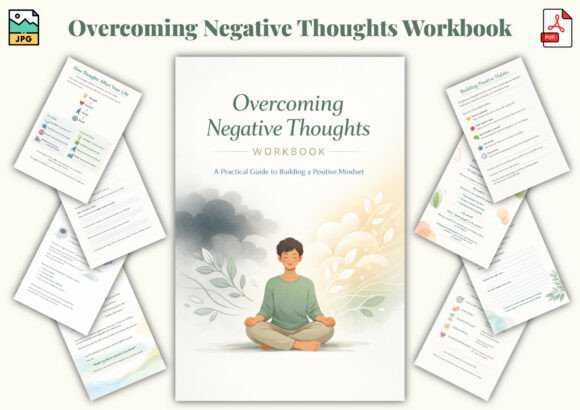
The Overcoming Negative Thoughts Workbook is a 23-page printable resource designed to help you recognize, challenge, and replace unhelpful thought patterns. It is built around a step-by-step structure that moves from awareness to action. Pages include thought identification exercises, cognitive reframing activities, emotional check-in worksheets, daily mindset tracking, and spaces for reflection. The layout is clean and minimal, with a calm design intended to reduce distractions during self-reflection.
What makes this workbook distinct is its combination of guided prompts and open-ended reflection. It does not simply ask you to log your thoughts; it provides specific frameworks for questioning those thoughts and restructuring them. The cognitive reframing exercises, for example, walk you through identifying cognitive distortions—like all-or-nothing thinking or catastrophizing—and then invite you to construct more balanced alternatives. This is a method grounded in cognitive behavioral therapy principles, adapted here for self-directed use.
The workbook is formatted at 6 × 9 inches, comes in high-quality JPG and print-ready PDF formats, and is designed for both personal use and for professionals such as coaches, therapists, and educators who may incorporate it into their practice.
How It Compares with Other Approaches to Managing Negative Thoughts
No single tool works for everyone. The way you engage with negative thinking depends on your goals, your current level of self-awareness, and the support you have available. The Overcoming Negative Thoughts Workbook sits within a broader landscape of options, including digital apps, therapy or coaching, journaling without a structured framework, and other printed workbooks. Understanding these alternatives helps clarify where this workbook fits.
Structured Workbook vs. Freeform Journaling
Many people begin managing negative thoughts by keeping a journal. Writing freely about what is on your mind can be helpful for emotional release and self-expression. However, freeform journaling does not always provide a clear pathway for challenging distorted thinking. You might write the same patterns week after week without learning how to shift them. The Overcoming Negative Thoughts Workbook offers more direction. Its prompts guide you to examine the evidence for your thoughts, consider alternative interpretations, and track your progress over time. For someone who wants a structured process rather than a blank page, this workbook may be more effective.
On the other hand, freeform journaling allows for complete flexibility. If you prefer a less guided approach or already have a strong understanding of cognitive techniques, you might find a structured workbook feels repetitive. The best fit depends on how much support you want from the format itself.
Workbook vs. Digital Apps for Mental Wellness
Digital apps for mood tracking, meditation, or cognitive behavioral therapy are widely used, and many offer convenience and reminders. Apps can track patterns automatically, provide audio guidance, and offer community features. However, they also come with screen time considerations, privacy concerns, and sometimes subscription costs. The Overcoming Negative Thoughts Workbook is offline and print-based, which some people find more calming and less distracting. Writing by hand can also deepen engagement and memory retention compared to tapping on a screen.
Where an app might be better is if you need real-time reminders or prefer interactive elements like quizzes or progress graphs. The workbook requires you to sit down with it intentionally, which can be both a strength and a limitation depending on your habits and schedule.
Workbook vs. Therapy or Coaching
Professional support from a therapist or coach offers personalized guidance, accountability, and the ability to work through deeper or more complex issues. For someone with moderate to severe negative thinking patterns that interfere with daily functioning, professional help is often the most appropriate choice. The Overcoming Negative Thoughts Workbook is not a substitute for therapy. What it can do is complement professional work—many therapists assign similar exercises between sessions—or serve as a starting point for self-exploration before seeking further support.
If you are already in therapy, this workbook could reinforce the skills you are building. If you are not ready for or cannot access therapy, it offers a structured way to begin addressing negative thinking on your own terms.
Strengths of the Overcoming Negative Thoughts Workbook
The workbook has several features that make it stand out, especially for people who prefer a tangible, focused, and methodical approach.
- Step-by-step progression. It moves from identifying thoughts to challenging and reframing them, which mirrors evidence-based cognitive behavioral techniques. This logical flow helps prevent you from skipping foundational awareness work.
- Variety of exercise types. With 23 pages, there is enough diversity to keep the process engaging—thought tracking, emotional check-ins, affirmation building, and reflection sections all serve different purposes in the overall process.
- Printable and reusable. You can print the PDF as many times as you like, which is useful if you want to revisit exercises after some time has passed or if you are using it with multiple people in a coaching or teaching context.
- Minimal, calm design. The layout is intentionally uncluttered, which can help reduce cognitive load when you are already working through difficult thoughts.
Limitations and Tradeoffs to Consider
No resource is perfect for everyone, and it is important to weigh the limitations of the Overcoming Negative Thoughts Workbook alongside its strengths.
- Requires self-motivation. Without an external schedule, coach, or app reminder, it is up to you to consistently sit down and work through the pages. Some people thrive on this autonomy; others may need more structure or accountability.
- No personalized feedback. A workbook cannot respond to your specific answers or adjust the exercises based on your progress. If you need individualized guidance, a therapist or coach would be better suited.
- Limited scope for severe or clinical patterns. For someone dealing with diagnosed depression, anxiety disorders, or trauma, a self-guided workbook may not be enough. In such cases, professional support is essential.
- One format fits all. The exercises are the same for every user. While they are broadly applicable, they may not align perfectly with every person's thinking style or emotional needs.
When This Workbook May Be the Right Choice
The Overcoming Negative Thoughts Workbook is likely a good fit if you are someone who:
- Prefers written, off-screen activities for mental wellness work
- Is new to cognitive restructuring techniques and wants a guided introduction
- Enjoys structure but also values space for personal reflection
- Is looking for a supplement to therapy or coaching sessions
- Wants a resource that is easy to revisit over time
- Creates or sells printable content and is evaluating tools to offer clients or students
It may also appeal to educators and practitioners who want a ready-made resource to share with groups or individuals without having to design worksheets from scratch.
When Another Option May Be a Better Fit
Conversely, you might consider a different approach if you:
- Prefer digital tools with reminders, audio guidance, or community features
- Need real-time support between sessions with a professional
- Are working through severe or persistent negative thinking that affects your ability to function
- Already have a strong understanding of cognitive reframing and simply want a blank journal for freeform exploration
- Find it difficult to maintain a consistent paper-and-pen routine without external accountability
In those cases, an app, a therapist, or a less structured journaling practice might serve you better. There is no single right answer—only the approach that fits your current circumstances and preferences.
How to Evaluate the Workbook for Your Own Needs
Before deciding whether the Overcoming Negative Thoughts Workbook is right for you, consider asking yourself a few practical questions:
- What is my primary goal? Am I looking for awareness, skill-building, or long-term habit change?
- How much time can I realistically dedicate to this practice each week?
- Do I prefer structured guidance or open-ended exploration?
- Am I already receiving professional support, or am I working independently?
- Do I want a resource I can use once, or one I can return to periodically?
Your answers will help clarify whether a structured workbook aligns with your intentions. If you decide to try it, consider treating the first few pages as a trial period. See if the exercises feel useful, whether the tone is encouraging without being overly prescriptive, and if the format fits naturally into your routine.
Making an Informed Decision
Choosing a tool for managing negative thoughts is a personal decision. The Overcoming Negative Thoughts Workbook offers a thoughtful, structured approach that is grounded in cognitive behavioral principles. It is not a quick fix or a substitute for professional care, but it can be a meaningful part of a larger practice for self-awareness and mental clarity. Compared to freeform journaling, it provides more direction. Compared to digital apps, it offers a screen-free, tactile experience. Compared to therapy, it is more accessible but less personalized.
For many people, the right approach is not a single tool but a combination—using a workbook like this alongside other practices such as mindfulness, exercise, or professional support. The key is to find what helps you engage with your thought patterns in a way that feels manageable and sustainable over time.
Whether you choose this workbook or another path, the most important step is simply beginning. Negative thinking patterns do not change overnight, but with consistent effort and the right resources, they can shift. A structured tool like the Overcoming Negative Thoughts Workbook is one way to start that journey with clarity and purpose.