Empowering Focus and Emotional Regulation: The ADHD Skills Building Workbook for Modern Learners
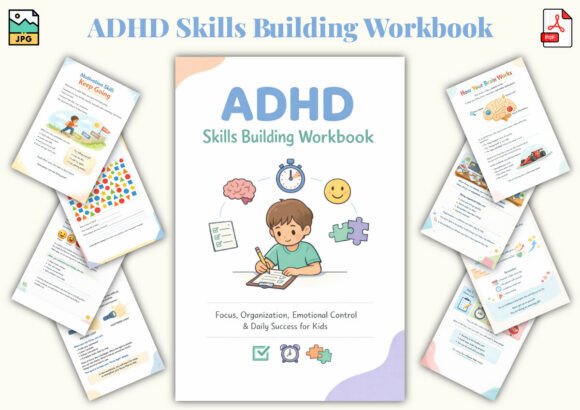
The landscape of educational support and child development is rapidly shifting. As awareness of neurodiversity grows, parents, educators, and therapists are moving away from one-size-fits-all approaches toward tools that honor individual cognitive patterns. Among the most promising resources emerging from this shift is the ADHD Skills Building Workbook – a thoughtfully designed 36-page printable PDF and JPG set that helps children develop focus, organization, and emotional control. This isn’t just another activity book; it represents a convergence of design psychology, behavioral science, and accessible learning materials that resonate deeply with today’s families and professionals.
Why the ADHD Skills Building Workbook Matters Now
Attention deficit hyperactivity disorder (ADHD) affects millions of children worldwide, yet the tools available for skill building have long been either clinical and intimidating or overly gamified without real structure. Parents and teachers alike have struggled to find resources that balance engagement with genuine skill development. The ADHD Skills Building Workbook fills this gap by offering a clean, distraction-free layout with soft pastel accents and kid-friendly typography. In an era of sensory overload, the workbook’s minimal design is a deliberate countertrend: it reduces cognitive load while teaching children how to manage their own attention.
The workbook appears at a time when the broader market for printable educational materials is exploding. Creators and entrepreneurs in the digital product space recognize that parents want printable, immediately usable content that fits their schedule. The 6×9-inch format is ideal for home printers and on-the-go use, aligning with the growing preference for portable, low-tech solutions in an increasingly screen-saturated world. Professionals, from occupational therapists to school counselors, are adopting such workbooks as a complement to digital therapies, acknowledging that tactile activities—coloring, writing, checking boxes—activate neural pathways differently than tapping a screen.
What Makes This Workbook Different: A Closer Look at Design and Purpose
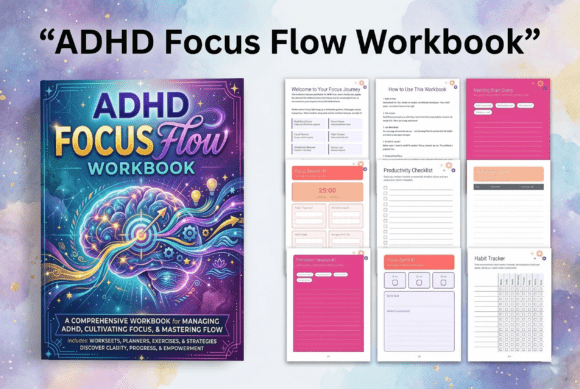
Many resources claiming to support ADHD simply list repetitive exercises. What sets the ADHD Skills Building Workbook apart is its holistic integration of focus-building activities, organization and routine worksheets, emotional awareness and calming strategies, and habit tracking and motivation exercises. These aren’t scattered pages but a cohesive journey that guides a child from self-awareness to mastery. Each section builds on the previous one, creating a narrative of progress that is both measurable and encouraging.
The workbook includes 36 carefully designed pages, each with a clear purpose:
- Focus-building activities: Short, achievable exercises that train sustained attention without overwhelming the child.
- Organization and routine worksheets: Visual tools for planning mornings, homework, and bedtime routines.
- Emotional awareness and calming strategies: Pages that help children identify feelings and practice regulation techniques like deep breathing or grounding.
- Habit tracking and motivation exercises: Simple trackers that reward consistency using stamps or stickers, reinforcing positive behavior.
- Reflection and progress pages: Opportunities for children and parents to discuss what worked and what didn’t, promoting metacognition.
- Achievement and certificate page: A tangible celebration of effort, which is critical for building self-esteem in children with ADHD.
This structure responds directly to the core deficits of ADHD: attention control, time management, emotional regulation, impulse control, confidence building, and daily habit formation. By addressing each domain in a single, unified resource, the workbook saves families from piecing together multiple disparate tools.
Broader Trends: The Rise of Print-on-Demand and Neurodiversity-Friendly Design
The market for printables has matured beyond simple planners and coloring pages. Today, creators are developing specialized resources for niche audiences, especially those related to mental health and neurodiversity. The ADHD Skills Building Workbook exemplifies this trend. Entrepreneurs and content creators in the digital product space are noticing that parents and professionals increasingly demand materials that are not only functional but also aesthetically calming. The pastel color palette, consistent professional design, and distraction-free layout are direct responses to research showing that children with ADHD benefit from reduced visual clutter.
Moreover, the workbook’s print-ready format (both PDF and JPG) reflects changing consumer expectations. Buyers want files that work seamlessly with any printer or app—no special software required. This accessibility lowers the barrier for teachers in underfunded classrooms and therapists working remotely. The 6×9-inch size is portable, easy to store, and fits inside a binder or folder, making it a practical tool for daily use rather than a one-off activity.
Changing Needs: Why Professionals and Parents Are Turning to Structured Workbooks
The conversation around ADHD support has evolved from a deficit model to a strengths-based approach. Instead of focusing solely on what children cannot do, resources like the ADHD Skills Building Workbook emphasize what they can learn: skills that build confidence and autonomy. This shift aligns with broader educational trends such as social-emotional learning (SEL) and executive function training. Schools are embedding these skills into curricula, but many parents seek supplementary tools to reinforce them at home.
Busy parents, especially those juggling multiple responsibilities, appreciate having a ready-made guide that removes the guesswork. Therapists recommend workbooks like this because they provide structured practice between sessions, accelerating progress. The reflection and progress pages offer a built-in feedback loop that helps children see their own growth, which is powerfully motivating.
From a business perspective, this workbook represents a scalable product with high perceived value. Creators can offer it as a standalone purchase, a lead magnet, or part of a larger ADHD resource library. The inclusion of both PDF and JPG files gives customers flexibility in how they use the pages—print them, import them into note‑taking apps, or project them on a screen. This versatility meets the expectations of a hybrid user base that values both analog and digital solutions.
Practical Applications: Who Benefits and How
The target audience for the ADHD Skills Building Workbook is broad, but the core users fall into several key groups:
- Parents and homeschooling families: They can integrate the workbook into daily routines, using the habit trackers and emotional awareness pages to foster independence. A parent told us that the workbook turned morning chaos into a simple checklist system; their child now checks off “make bed” and “pack backpack” without reminders.
- Teachers and classroom support staff: In a resource‑room or inclusive classroom, the workbook serves as a quick‑access tool for calm‑down corners or one‑on‑one skill practice. Some teachers use the focus‑building activities as warm‑ups before tests.
- Therapists and counselors: Occupational therapists and child psychologists incorporate the pages into therapy sessions, using the reflection prompts to initiate conversations about feelings and self‑regulation.
- Entrepreneurs and creators: For those in the digital product space, this workbook illustrates a successful model of niche market entry. By combining authentic need, professional design, and clear skill outcomes, it attracts a willing audience that often shares it with other families.
Example: Using the Workbook in a Real‑World Setting
Consider a second‑grader who struggles to stay seated during homework. A parent can open the workbook to the “Focus Boost” page, which presents a short timed activity: find five hidden objects in a simple illustration. After completing it, the child feels a sense of accomplishment and is more willing to proceed to a math worksheet. Over time, the habit tracker reinforces this pattern. The child’s confidence grows, and the parent has a concrete record of progress to share with the teacher or pediatrician.
For an entrepreneur looking to create similar resources, the workbook demonstrates the importance of user‑centered design. Every element—from the font choice to the absence of distracting borders—was intentional. Copying this level of thoughtfulness in your own products can dramatically improve customer satisfaction and word‑of‑mouth referrals.
The Future of ADHD Support: Why Printable Workbooks Are Here to Stay
As technology continues to evolve, some might assume that digital apps will replace printed materials. However, the reality is more nuanced. Many families report that screens exacerbate ADHD symptoms, making a printed workbook an essential tool for screen‑free skill building. The tactile experience of writing, drawing, and flipping pages grounds children in the present moment. Moreover, printable resources offer a level of customization that apps cannot: parents can choose which pages to print, in what order, and how often to repeat exercises.
The ADHD Skills Building Workbook sits at the intersection of tradition and innovation. It honors time‑tested paper‑based learning while incorporating modern insights about neurodiversity and design. Its popularity signals a broader movement toward thoughtful, low‑tech solutions that put the child’s experience first. For professionals in education and therapy, adding such a resource to their toolkit is a practical, high‑impact choice. For creators and entrepreneurs, it represents a template for building products that genuinely help people—and therefore earn trust and loyalty.
The workbook is not a quick fix, but a companion for the journey of growth. In a world where attention is the new currency, teaching children how to manage it is one of the most valuable gifts we can offer. The ADHD Skills Building Workbook delivers on that promise with every page.
This article is for informational and promotional purposes. The workbook described is a digital product available for print. Always consult a qualified professional for individual advice regarding ADHD.