Navigating Mental Wellness in a Demanding World: The 2026–2027 Mental Health Journal Bundle
In an era where the boundaries between professional ambition and personal well-being have become increasingly porous, the tools we use to structure our days often determine the quality of our lives. For years, planners and journals existed in separate domains: one for productivity, the other for introspection. That divide is now closing. The 2026–2027 Mental Health Journal Bundle represents a deliberate convergence of these worlds — a structured system that helps professionals, creators, entrepreneurs, and marketers manage their daily responsibilities while simultaneously nurturing emotional resilience. It is not merely a planner with prompts; it is a response to a fundamental shift in how we understand performance, sustainability, and mental health in the modern workplace.
The Changing Landscape of Professional Well-Being
The conversation around mental health in professional environments has moved from the periphery to the center. Burnout, anxiety, and chronic stress are no longer seen as personal failings but as systemic challenges that demand structural solutions. In response, a growing number of individuals are seeking tools that integrate mental health practices directly into their daily workflows. The 2026–2027 Mental Health Journal Bundle speaks directly to this need. It acknowledges that for most professionals, there is no separate "self-care time" — well-being must be woven into the fabric of planning, task management, and reflection.
What makes this bundle particularly relevant is its timing. As we move through the mid-2020s, the expectations placed on knowledge workers, freelancers, and entrepreneurs have only intensified. The always-on culture, the fragmentation of attention, and the pressure to constantly perform have created an environment where intentional pauses are not optional but essential. This journal bundle offers a framework for those pauses — a way to check in with oneself without derailing productivity.
Bridging Structure and Emotional Awareness
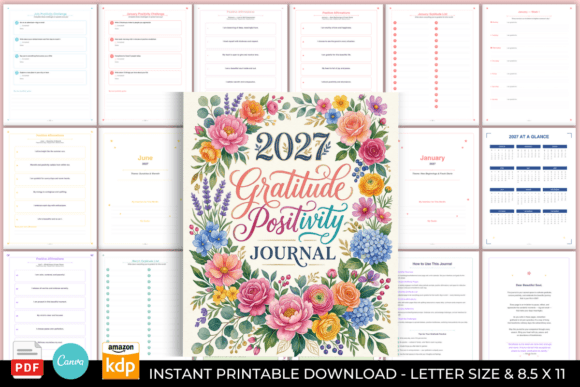
At its core, the 2026–2027 Mental Health Journal Bundle is designed to bridge two often competing priorities: the need for structure and the need for emotional attunement. On one side, it provides comprehensive planning tools — yearly and monthly calendars, daily planners, and goal-setting frameworks. On the other, it integrates guided self-reflection exercises, coping techniques, and tracking systems that help users monitor their mental health over time. This duality is what sets it apart from conventional planners.
For entrepreneurs and freelancers who manage their own schedules, the bundle becomes a personal operating system. It allows them to map out quarterly goals while also logging anxiety triggers, practicing grounding techniques, and reflecting on emotional patterns. For marketers and creatives working under tight deadlines, it offers a structured way to decompress between intense periods of output. The journal does not separate work from well-being; it recognizes that they are interdependent.
Why People Are Paying Attention to Integrated Mental Health Tools
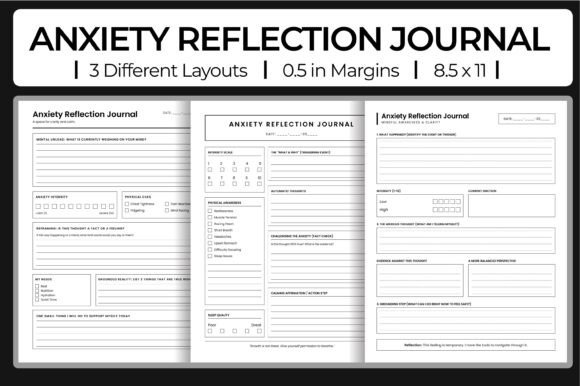
The rising interest in products like the 2026–2027 Mental Health Journal Bundle can be traced to several converging trends. First, there is a growing disillusionment with purely productivity-focused systems. The bullet journal craze of the last decade taught us that planning can be therapeutic, but it also revealed that many people need more guidance — especially when it comes to managing anxiety, stress, and emotional health. A blank page with dots can be liberating, but for someone navigating anxiety, a structured prompt like "What is one thought I can challenge today?" is far more actionable.
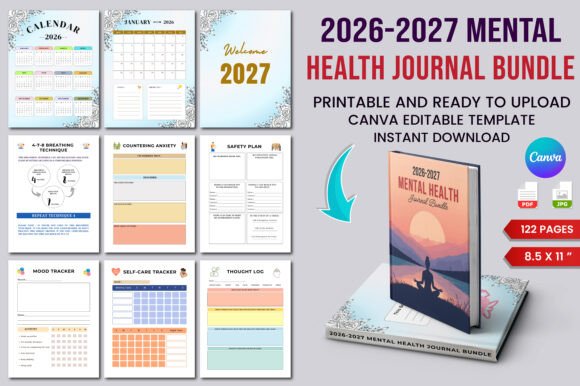
Second, the normalization of therapy and mental health awareness has shifted expectations. Professionals today are more likely to view emotional well-being as a skill to be practiced rather than a problem to be fixed. Tools that offer evidence-based techniques — such as the S.T.O.P. technique, the 4-7-8 breathing method, and the 5-4-3-2-1 grounding exercise — are no longer seen as niche wellness content but as practical resources for daily life. The bundle includes these techniques in a format that is immediately usable, without requiring prior knowledge of therapeutic frameworks.
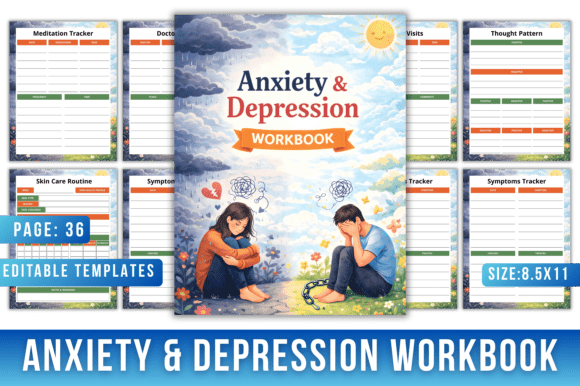
Third, the concept of "tracking" has expanded beyond fitness and sleep. People now want to track their mood, anxiety levels, thought patterns, and self-care habits with the same rigor they apply to their business metrics. The bundle offers dedicated trackers for mood, anxiety, symptoms, stress, self-care, and even period cycles — reflecting a holistic understanding of health that acknowledges the interplay between physical, emotional, and mental states.
Practical Applications for Professionals and Creators
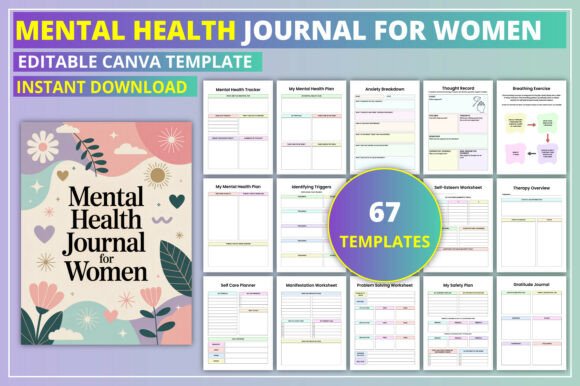
Consider a freelance designer juggling multiple client projects. The daily planner section helps allocate time for each deliverable, while the anxiety worksheet provides a structured space to examine the worry that arises when a deadline shifts. The deep breathing record form becomes a quick reset between calls. The mindfulness wheel offers a visual reminder to check in with different dimensions of well-being. Over time, the habit tracker reveals patterns — perhaps anxiety spikes on days with back-to-back client meetings, or mood dips when sleep is inconsistent. These insights are not abstract; they are actionable data that inform better decisions.
For an entrepreneur building a startup, the annual goals and manifestation worksheets provide clarity of purpose, while the overcoming limiting beliefs section challenges the internal narratives that often undermine risk-taking and innovation. The safety plan and reminder to myself pages serve as anchors during moments of overwhelm — a structured way to self-regulate when the pressure of building a business feels unmanageable.
Marketers and content creators, who often work in high-stimulation, feedback-driven environments, can use the thought log to separate constructive criticism from dysfunctional thinking patterns. The countering anxiety worksheets offer a cognitive behavioral approach to reframing the worries that arise around performance metrics, campaign outcomes, or audience reception.
Changing Needs, Workflows, and Expectations
The modern professional's workflow is no longer linear. It is fragmented across devices, platforms, and roles. The 2026–2027 Mental Health Journal Bundle addresses this by providing a single, physical anchor — a place to return to that is offline, intentional, and unhurried. In a world of notifications and infinite scrolling, the act of writing by hand has become a counterbalance. It slows down thought, encourages reflection, and creates a record that is not easily deleted or dismissed.
Expectations around mental health support have also evolved. People no longer want generic affirmations or superficial positivity. They want tools that respect their intelligence, acknowledge their struggles, and offer real mechanisms for growth. The bundle includes advanced elements like the dysfunctional thoughts record, the anxiety issues log, and the going with the flow worksheet — which invite deeper cognitive and emotional work. These are not decorative pages; they are functional instruments for self-inquiry.
The inclusion of a medications list and doctor visits tracker further signals a shift toward treating mental health with the same seriousness as physical health. For individuals managing medication, therapy, or ongoing treatment, having a dedicated space to track this information within their daily planner reduces friction and increases consistency. It also normalizes the conversation around clinical support, making it a routine part of self-management rather than a separate, private burden.
Connecting to Broader Developments in Lifestyle and Technology
The rise of integrated mental health tools parallels broader developments in how we think about human performance. The era of "grind culture" is giving way to a more nuanced understanding of sustainable achievement. Companies are investing in employee well-being programs, and individuals are taking personal responsibility for designing lives that support long-term health. The 2026–2027 Mental Health Journal Bundle sits at the intersection of these movements. It is a product of its time — reflecting a cultural moment where self-awareness is seen as a competitive advantage rather than a luxury.
From a lifestyle perspective, the bundle aligns with the growing interest in intentional living, minimalism, and slow productivity. It encourages users to plan with purpose, reflect with honesty, and care for themselves with consistency. It also acknowledges that mental health is not a destination but an ongoing practice — one that requires regular attention, adjustment, and patience.
Observations on Usage and Integration
Those who adopt the 2026–2027 Mental Health Journal Bundle often find that its value deepens over time. In the first week, it functions as a structured planner with helpful prompts. By the end of the first month, the tracking pages begin to reveal patterns. By the sixth month, the journal becomes a personal archive — a document of growth, setbacks, coping strategies, and small victories. The monthly reflections and positive experiences pages encourage users to look back with perspective, which is something most digital tools fail to provide.
The bundle also supports a variety of use cases. Some users will gravitate toward the anxiety management sections, while others will focus on goal setting and habit tracking. Some will use it as a therapeutic adjunct to therapy, while others will use it as a standalone system for self-regulation. The flexibility is intentional. Rather than prescribing a single method, the bundle offers a toolkit that can be adapted to individual needs.
Why This Bundle Matters Right Now
In a cultural moment defined by uncertainty, information overload, and rising rates of anxiety and depression, tools that help people ground themselves are not optional. They are essential. The 2026–2027 Mental Health Journal Bundle matters because it meets people where they are — in the middle of their busy lives, trying to balance work, relationships, health, and purpose. It does not ask users to set aside an hour for meditation or to attend a retreat. It asks them to take a few minutes each day to check in with themselves, to breathe intentionally, to write down one thought that needs reframing, and to plan their day with both ambition and care.
For professionals, creators, and entrepreneurs who have long operated under the assumption that success requires sacrificing well-being, this journal represents a different possibility. It suggests that structure and emotional health can coexist. It suggests that tracking your anxiety is not a sign of weakness but a strategy for resilience. And it suggests that the most productive thing you can do, some days, is to pause, breathe, and write.
The 2026–2027 Mental Health Journal Bundle is more than a product. It is a response to a cultural need — a practical, thoughtful, and accessible tool for anyone who wants to navigate the demands of modern life without losing sight of themselves.