The 2026–2027 Side Business Workbook Planner: Your Complete Guide to Organizing, Tracking, and Growing a Side Hustle
Managing a side business while juggling a full-time job, family responsibilities, and personal commitments can feel like spinning plates. Without a clear system, even the most driven entrepreneurs struggle with missed deadlines, scattered notes, and hazy goals. The 2026–2027 Side Business Workbook Planner addresses this challenge head-on. Designed as a complete productivity and business management tool, it helps entrepreneurs plan, organize, and grow their side hustle efficiently by combining calendar planning, goal setting, financial tracking, and business strategy into one structured system. This article explores what this planner offers, why such a tool is essential for modern side hustlers, and how you can use its features to stay focused and achieve consistent progress.
Why a Dedicated Side Business Planner Matters in 2026–2027
The gig economy and side hustle culture continue to expand. More people are launching freelance services, e-commerce stores, consulting practices, or content channels alongside their primary careers. A 2025 study noted that nearly 40% of working professionals now earn income from at least one side venture. Yet the biggest barrier to success isn't lack of ideas—it's lack of organization. A side business lives in the margins of your schedule. Without deliberate structure, it gets pushed aside by urgent daily demands.
The purpose of a side business workbook is to create a dedicated mental and physical space where your entrepreneurial goals get the same respect as your day job. The 2026–2027 planner does this by merging traditional time management with specific business tools. It transforms vague ambitions like "grow my online store" into actionable weekly tasks, financial checkpoints, and measurable milestones. For the busy professional, this shift from reactive to proactive planning is transformative.
Core Features of the 2026–2027 Side Business Workbook Planner
This planner is not a generic agenda. It includes specialized sections that address every phase of running a side operation. Below is a breakdown of its most valuable components and how each supports your entrepreneurial journey.
Comprehensive Calendar and Scheduling Tools
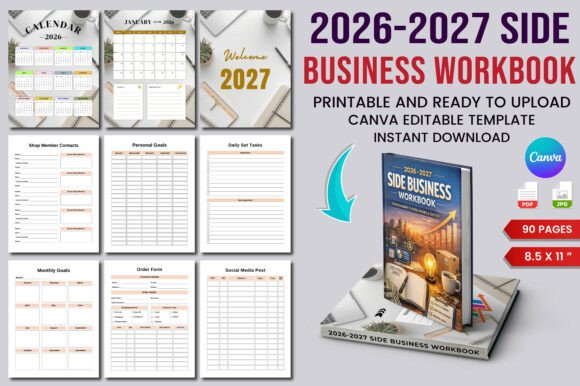
Time is your scarcest resource when building a side business. The planner provides a 2026–2027 2-Year Calendar overview, allowing you to see long-term deadlines at a glance. Within this framework, you'll find a Daily Planner, Weekly Planner, and Monthly Review section. These aren't just blank grids—they prompt you to identify priorities for each day and week, then reflect on what worked during monthly reviews. A Weekly Timetable and Class Schedule (useful for tutors or educators running a side teaching business) help you block recurring time slots for your hustle.
For example, if you're a freelance graphic designer working evenings, you can use the Daily Routine tracker to schedule client work from 7:00–9:30 PM, then use the Weekly Review to assess whether you met your project milestones. The Annual Overview and Year At A Glance pages let you plan major launches, tax deadlines, or revenue targets for the entire year—essential for long-term sustainability.
Goal Setting and Strategic Planning Pages
Many entrepreneurs skip strategic planning because it feels too abstract for a side project. This workbook makes it concrete. The Smart Goals section (Specific, Measurable, Achievable, Relevant, Time-bound) walks you through defining clear objectives. The Semester Plan and Term Plan pages break larger goals into quarterly or semi-annual chunks. For instance, a side business selling handmade candles could set a Smart Goal: "Increase Etsy revenue by 25% by July 2027 by launching three seasonal scents and running two targeted ad campaigns." The Goal Tracker then monitors progress month by month.
You also get a Business Strategy framework integrated with the productivity pages. This bridges the gap between daily to-do lists and long-term business growth—a common pain point for solopreneurs who feel stuck in reactive mode.
Financial Tracking Without the Headache
Money management often derails side hustles. Separate accounts, irregular income, and tax confusion are common. The planner includes dedicated pages for Financial Tracking, though the description highlights "2-Year Calendar Planning" and other sections that naturally support expense logging and income monitoring. By keeping financial notes alongside your weekly and monthly reviews, you develop a habit of checking your numbers regularly. This is far more effective than sporadic spreadsheet dives.
The Book List and Reading List sections also serve a financial purpose—you can track books about pricing, accounting, or investment strategies. Pair this with the Helpful Hints pages, where you can jot down tax tips or software recommendations you encounter.
Student and Education-Focused Features (With Dual Utility)
The workbook includes numerous pages originally designed for educators—Lesson Plan, Classroom Inventory, Student Contact List, Teacher Contact List, Student Analysis, Progress Report, Parent Contacts, and Student Birthdays. If your side business involves tutoring, online courses, or educational consulting, these are directly applicable. But they also adapt beautifully to other ventures.
For example, treat "Classroom Inventory" as your product inventory log—track SKUs, stock levels, and reorder dates. Use "Student Contact List" for client contact information. "Student Analysis" becomes a client feedback tracker. "Progress Report" turns into a project status update for your own milestones. This flexibility makes the planner valuable beyond its original niche.
Daily and Weekly Habit Trackers
Consistency is the engine of side business growth. The Daily Routine Tracker, Weekly Schedule, My Daily Chore Tracker, My Homework Tracker, and My Daily Routine Tracker provide multiple ways to build habits. You might track tasks like "Write 500 words for blog," "Record one social media video," or "Review analytics." The Weekly Review and Monthly Review pages then help you spot patterns—are you most productive on Wednesday mornings? Do you skip business tasks on Fridays? Adjust accordingly.
The My Reading Routine Tracker is especially useful for entrepreneurs who learn through books and articles. Log what you read, key takeaways, and how you'll apply the knowledge to your side business.
Professional Development and Personal Insight
The Professional Learning section encourages you to invest in skills—whether that's a course on digital marketing, a certification in project management, or a workshop on bookkeeping. The All About Me page prompts self-reflection on your strengths, weaknesses, and motivations for running a side business. This is surprisingly powerful: when you reconnect with your "why," you push through slumps more easily.
Other reflective tools include My Yearly Report Card, where you grade your own performance across different areas of your life and business, and the Class Birthdays or Student Birthdays pages, which can be repurposed for client relationship management (e.g., tracking client birthdays or contract renewal dates).
Practical Lists and Reference Pages
You'll find Important Dates, Medical Information (helpful if your side business involves physical products or in-person services), Examination Schedule (adaptable to certification deadlines for your industry), Subject Lesson Plan (usable for content creation schedules), and a Class List (convert to a client list). The Website Tracker is invaluable for anyone running an online business—log site updates, traffic metrics, and SEO notes.
The Helpful Hints pages serve as a brain dump for any insight you don't want to lose. Over a year, these notes become a personalized guide to running your specific side business more efficiently.
How the Planner Fits Into Modern Work-Life Integration
The line between work and personal life continues to blur. Remote work, flexible hours, and digital tools mean many people operate in a hybrid mode. The 2026–2027 Side Business Workbook Planner acknowledges this reality. It doesn't separate your side business from your life—it integrates them. You can plan your day job schedule, family commitments, and side hustle tasks on the same Daily Plan or Weekly Schedule pages. This holistic view prevents overcommitment and burnout.
For example, a parent running a side baking business can log school drop-offs, afternoon baking blocks, and client delivery windows in one place. They can use the My Daily Chore Tracker for household tasks alongside the Goal Tracker for revenue targets. The planner becomes a command center for the entire ecosystem of your life.
Common Misunderstandings About Side Business Planning
Some entrepreneurs believe that planning stifles creativity or that a workbook is unnecessary when digital apps exist. In reality, structured planning protects your creative energy by handling logistics so your brain is free to innovate. Writing by hand on paper also increases retention and commitment compared to typing into an app. This workbook offers a tactile, focused experience that notifications and tabs cannot replicate.
Another myth is that you must fill every page perfectly. The planner is a tool, not a test. Skip sections that don't apply to your industry. Adapt the education-focused pages for your own purposes. The value comes from consistent use, not absolute completion.
Practical Steps to Start Using the 2026–2027 Side Business Workbook Planner
- Set up your annual overview first. Transfer key business deadlines, tax dates, and personal events to the 2026–2027 2-Year Calendar and Year At A Glance pages.
- Define three Smart Goals for your side business using the dedicated section. Write them clearly and break down the first steps.
- Block your weekly schedule. Use the Weekly Timetable and Daily Planner to reserve non-negotiable time for your side hustle. Treat these blocks as seriously as a client meeting.
- Start the habit trackers. Choose one or two routines—like reviewing analytics every Friday or posting on social media three times per week—and track them daily in the My Daily Routine Tracker or My Daily Chore Tracker.
- Use the reviews honestly. Each week and month, spend ten minutes on the Weekly Review and Monthly Review pages. Ask: What worked? What didn't? What needs adjustment?
- Repurpose education pages. Turn the Lesson Plan into a content calendar, the Classroom Inventory into a product stock list, and the Student Contact List into a client database.
The Bigger Picture: Why This Workbook Supports Long-Term Success
Side businesses often fail not because the idea is bad, but because the founder runs out of steam or loses focus. The 2026–2027 Side Business Workbook Planner addresses both problems. Its combination of daily discipline (through planners and habit trackers) and strategic vision (through goal setting and annual reviews) creates a sustainable rhythm. You're not just reacting to opportunities—you're deliberately building something over two full years.
For those new to entrepreneurship, the workbook also serves as an education. You learn to estimate how long tasks actually take, set realistic revenue targets, and balance multiple roles without guilt. For experienced side hustlers, it offers a unified system that replaces scattered sticky notes, digital folders, and forgotten spreadsheets.
Final Thoughts
The 2026–2027 Side Business Workbook Planner is more than a calendar. It's a business co-pilot that respects the complexity of modern life while pushing you toward consistent progress. Whether you're a tutor, maker, freelancer, coach, or online retailer, its blend of calendar planning, goal setting, financial tracking, and habit building gives you a fighting chance to grow your side business rather than just survive it.
Start by writing one goal. Schedule one block of time. Track one habit. Over several months, the compound effect of small, organized actions becomes visible—and your side business moves from the margins of your life to a source of real income and fulfillment.