The 2026 Anxiety Self-Care Planner: A Structured Path to Emotional Resilience
Why Anxiety Management Benefits from a Dedicated Planner
Anxiety often feels like a scattered experience—racing thoughts, physical tension, and emotional overwhelm that seem to come from nowhere. Many people try to manage it with willpower alone, but research in cognitive behavioral therapy suggests that structured tracking and intentional planning can significantly reduce anxiety symptoms. This is where the 🧠2026 Anxiety Self Care Planner🌿✨ enters as a practical tool rather than just another journal. It provides a framework that transforms vague feelings into observable patterns, making anxiety more manageable through documentation and reflection.
The printable nature of this planner means you can take it anywhere, customize it to your needs, and use it without digital distractions. For professionals juggling deadlines, students facing academic pressure, or parents managing household stress, having a physical space to offload anxious thoughts can be remarkably grounding. The act of writing itself engages different neural pathways than typing, often leading to deeper processing of emotions.
Understanding Anxiety Through Structured Awareness Pages
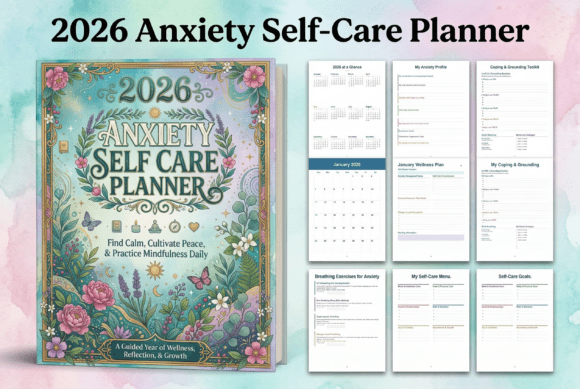
The 🧠 Anxiety Self-Care Planner – Calm Your Mind, Track Your Emotions Build Healthy Habits 🌿✨ begins with what might be its most valuable section: anxiety awareness pages. These pages guide you to identify triggers that might otherwise go unnoticed. For instance, you might discover that your anxiety spikes every Sunday evening—not because of Monday morning, but because of unfinished tasks from the previous week. Without tracking, this pattern remains invisible.
Physical symptoms also get documented here. Some people experience tightness in their chest, others feel a knot in their stomach, and many report tension headaches. By recording these bodily responses alongside emotional states, the planner helps you recognize your unique anxiety fingerprint. Over time, you learn to catch anxiety earlier, sometimes before it fully escalates. A user working in customer service might notice that certain types of phone calls trigger sweating and shallow breathing. With this awareness, they can prepare calming techniques in advance.
The Daily Anxiety Journal as a Mirror for Your Mind
Morning and evening check-ins form the backbone of consistent anxiety management. The 🧠2026 Anxiety Self Care Planner🌿✨ includes structured daily pages where you rate your anxiety levels at two critical points in the day. Morning entries might reveal anticipation anxiety—worrying about what the day holds. Evening entries often surface rumination anxiety—replaying conversations or decisions.
The journal prompts go beyond simple mood tracking. They ask you to record specific thoughts that accompanied your anxiety, creating a record you can review later. After a few weeks, patterns emerge clearly. Perhaps you notice that your anxiety is highest on days with unstructured time, or that it spikes after social media use. These insights become actionable data rather than vague impressions.
Coping strategies are also logged here. When you write down what helped on a particular day—whether it was a five-minute breathing exercise or a walk around the block—you build a personalized toolkit. Over months of use, you accumulate evidence of what actually works for you, not what generic advice suggests.
Setting Realistic Self-Care Goals Across Life Domains
Self-care often fails because people set overly ambitious goals or focus only on one area of life. The planning pages in this system address mental, physical, and emotional well-being separately. A realistic mental self-care goal might be "spend 10 minutes reading fiction before bed" rather than "meditate for an hour daily." Physical self-care could be "stretch for three minutes after waking up" instead of "go to the gym every morning."
Emotional self-care goals deserve special attention because they are frequently overlooked. Examples include "call a friend once this week" or "write one sentence about something I enjoyed today." The 🧠 Anxiety Self-Care Planner – Calm Your Mind, Track Your Emotions Build Healthy Habits 🌿✨ encourages you to set goals that feel achievable, then gradually expand them. A parent with young children might start with "take three deep breaths before entering the house after work" before working up to longer practices.
Monthly Wellness Planning for Anticipating Stressors
Each month brings its own challenges. January might carry post-holiday blues and financial stress, while April could bring tax deadlines or seasonal allergies. The monthly planning pages help you look ahead and prepare. You identify potential stressors before they hit, then design coping strategies in advance. This proactive approach is far more effective than reacting after anxiety has already peaked.
Intentions set at the beginning of the month create a gentle compass. Instead of rigid resolutions, the planner invites you to choose a theme—perhaps "patience with myself" or "staying present during meetings." These intentions subtly influence daily decisions. At month's end, a brief reflection helps you evaluate what worked and what needs adjustment. Over time, your monthly planning becomes more accurate and more compassionate.
Thought Reframing as a Practical Skill
Anxious thoughts often follow predictable distortions: catastrophizing, mind-reading, all-or-nothing thinking. The thought reframing exercises in this planner teach you to catch these patterns and challenge them with evidence. For example, if you think "I'll definitely mess up this presentation," the prompt asks you to consider past presentations that went well and to identify specific preparation steps you've already taken.
This is not about forced positivity—it is about accurate thinking. The exercises encourage you to find a middle ground between anxious predictions and unrealistic optimism. A teacher worried about a difficult parent meeting might reframe "they will be furious" to "they might have concerns, and I can listen and respond calmly." Over repeated practice, this cognitive skill becomes more automatic, reducing the intensity and duration of anxiety episodes.
Breathing Exercises That Work Under Pressure
The breathing exercise guides included in the 🧠2026 Anxiety Self Care Planner🌿✨ are not generic instructions—they are positioned as tools you can use in moments of acute stress. Box breathing, which involves inhaling for four counts, holding for four, exhaling for four, and holding again for four, is especially useful before meetings or during commutes. The 4-7-8 method, where you inhale for four counts, hold for seven, and exhale for eight, is better suited for winding down at night.
Grounding techniques complement these breathing exercises. The classic 5-4-3-2-1 method—identifying five things you see, four you can touch, three you hear, two you smell, and one you taste—helps interrupt panic spirals by engaging the senses. The planner presents these techniques in simple, memorable language so you can recall them even when stressed.
The Self-Care Menu for Different Moments
Not all anxiety requires the same response. A quick calm activity might be appropriate during a work break—perhaps drinking tea slowly or stretching your neck. Short resets could work in the middle of a stressful afternoon, like stepping outside for two minutes or listening to a favorite song. Deep relaxation practices, such as a full body scan or a warm bath, are better saved for evenings or weekends.
The self-care menu section of the 🧠 Anxiety Self-Care Planner – Calm Your Mind, Track Your Emotions Build Healthy Habits 🌿✨ categorizes activities by duration and intensity, making it easy to choose something appropriate for your current situation. A software developer facing burnout might select "five-minute desk stretch" during a coding session, while "thirty-minute nature walk" could serve as an after-work reset. Having these options pre-decided removes the decision fatigue that often derails self-care attempts.
Mood and Energy Tracking for Deeper Insights
Mood tracking goes hand in hand with anxiety management. The planner includes space to record not just anxiety levels but also your overall mood and energy throughout the day. You might discover that your anxiety is lower on days when you have moderate energy—neither exhausted nor wired. These observations help you schedule demanding tasks during your optimal windows and protect those times from unnecessary stress triggers.
Energy tracking also reveals connections between lifestyle factors and anxiety. Poor sleep the night before might correlate with higher anxiety the next day. Skipping lunch could lead to afternoon panic. Caffeine intake might amplify physical symptoms. With consistent tracking, you build a personal database that makes these connections obvious.
Who Benefits Most from This Approach
Professionals in high-stress fields—healthcare workers, teachers, first responders, and corporate managers—often find this planner valuable because it provides structure without adding more pressure. The guided format means you do not have to invent your own system from scratch. Students navigating academic anxiety can use the monthly planning pages to align study schedules with their energy patterns. Creatives dealing with performance anxiety might focus on the thought reframing exercises to quiet their inner critic.
Entrepreneurs and business owners, who often face uncertainty and isolation, can use the self-care planning pages to protect their mental health while building their ventures. Researchers and academics, who deal with rejection and imposter syndrome, benefit from the daily journal's reflective prompts. The planner adapts to different lifestyles because its framework is flexible rather than prescriptive.
Building Long-Term Habits Through Gentle Consistency
The true value of the 🧠2026 Anxiety Self Care Planner🌿✨ emerges over months of use. It is not about perfection—missing a few days does not break the system. The repeated practice of checking in with yourself, recording observations, and planning intentionally creates neural pathways that support emotional regulation. Over time, you may find yourself noticing anxiety triggers in real time without needing the journal, having internalized the awareness the planner cultivates.
Habit formation research suggests that consistency matters more than intensity. Using the planner for five minutes daily is more effective than spending an hour once a week. The design respects this principle by making each section brief and focused. A morning check-in takes two minutes. An evening reflection takes three. Monthly planning requires fifteen minutes at the start of each month. These small investments compound into significant self-awareness and emotional resilience.
Considerations for Getting the Most Out of the Planner
Like any tool, this planner works best when used with intention. It helps to keep it in a visible, accessible place—on a nightstand, desk, or kitchen counter. Digital reminders to use it can be helpful, but the physical act of writing remains central to its effectiveness. Some users benefit from pairing it with a consistent routine, such as having tea while completing the morning entry or lighting a candle during evening reflection.
The privacy of the planner matters. Keeping it in a secure place where you feel safe being honest with yourself is crucial for getting accurate data. You might choose to share insights with a therapist or trusted friend, but the primary relationship is between you and the pages. Over time, the journal becomes a record of growth—proof that anxiety, while persistent, can be understood and managed with the right tools and consistent practice.