The 2026 Letting Go Workbook: A Guided Path to Emotional Release and Renewal
If you've ever tried to simply "move on" from a difficult experience only to find the same thoughts circling back, you understand why letting go is rarely a one-time decision. It’s a process—one that often benefits from structure, reflection, and time. The 🍃2026 Letting Go Workbook✨📘 and its companion 🍃 2026 Letting Go Workbook – Release the Past Embrace a Fresh Start ✨📘 offer a guided framework for exactly that process. Designed for adults who want to step into a lighter, more peaceful mindset, this 120-page workbook provides a thoughtful blend of prompts, exercises, and planning tools aimed at releasing past burdens and creating space for growth.
What Makes the 2026 Letting Go Workbook Distinct
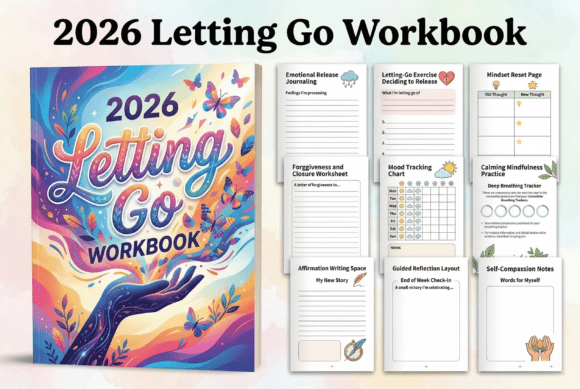
At its core, the workbook is built around the idea that emotional release requires intentional practice—not just willpower. It includes letting go reflection prompts, emotional release exercises, forgiveness and acceptance worksheets, mindset shift activities, self-compassion healing prompts, and a fresh start goal planner. What distinguishes it from a standard journal or a generic self-help book is how these elements are woven together into a sequential, no-bleed format that allows for both free writing and guided exploration.
Unlike a blank notebook, which offers no direction, or a therapy session, which relies on verbal processing, this workbook gives you hands-on exercises you can return to as often as needed. The prompts are designed to help you explore thoughts, emotions, and experiences that may be holding you back, without demanding that you have all the answers upfront. That structure can be especially helpful for people who are new to journaling or who feel overwhelmed by open-ended questions like "What do I need to let go of?"
How It Compares with Other Approaches to Letting Go
When evaluating the 🍃2026 Letting Go Workbook✨📘, it helps to consider the broader landscape of resources available for emotional healing and personal growth. People seeking to release the past often turn to a mix of options: individual therapy, self-help books, digital apps, guided journals, or informal journaling. Each has distinct strengths, and the right choice depends on your situation.
Workbooks vs. Therapy
Therapy provides personalized professional guidance and can address complex trauma in ways a workbook cannot. If you are dealing with deep grief, unresolved trauma, or a mental health condition requiring clinical attention, a therapist is the more appropriate resource. The workbook, however, can serve as a complementary tool—something you work through between sessions to deepen your understanding, or as a first step if therapy feels inaccessible or intimidating. For someone who has already done therapeutic work and wants to maintain progress, the 🍃 2026 Letting Go Workbook – Release the Past Embrace a Fresh Start ✨📘 offers a self-paced way to stay engaged with emotional processing.
Workbooks vs. Self-Help Books
Traditional self-help books often lean heavily on theory, stories, and conceptual frameworks. They can be inspiring, but they rarely ask you to pause, reflect, and write—at least not in a structured way. The workbook format shifts the emphasis from reading to doing. You aren't just learning about forgiveness; you are actively working through forgiveness worksheets. You aren't just told to change your mindset; you are guided through specific mindset shift activities. For many people, this active engagement leads to greater retention and personal insight. On the other hand, someone who prefers reading narratives or gaining knowledge before diving into exercises might start with a book and then use the workbook to apply what they have learned.
Workbooks vs. Digital Apps
Digital journaling and mindfulness apps offer convenience and reminders, but they can also introduce distractions—notifications, scrolling, and the temptation to switch tasks. The physical, no-bleed format of this workbook creates a dedicated space away from screens. Writing by hand also has cognitive benefits: it can slow down your thinking, help you process emotions more fully, and create a tangible record of your journey. That said, apps often provide community features, guided audio, or habit tracking that a workbook cannot replicate. Someone who values digital integration or who relies on app-based accountability might prefer a hybrid approach, using both a digital tool for reminders and the workbook for deeper reflection sessions.
Examining the Workbook's Key Features in Practice
To understand whether this workbook is the right fit, it helps to look at how specific features function in real use.
Letting Go Reflection Prompts
These prompts are not generic questions. They are designed to help you pinpoint what you are holding onto—whether that is a resentment, a fear, a relationship, or an identity you have outgrown. For example, a prompt might ask you to describe a specific memory and then explore what emotion still lingers around it. This focused approach can help you avoid the trap of vague journaling that stays on the surface. However, if you already have a strong journaling practice and don't need prompting, these questions might feel repetitive. In that case, you could adapt them as starting points rather than strict instructions.
Emotional Release Exercises
These exercises offer structured ways to process feelings like anger, sadness, or regret. They might involve writing a letter you never send, listing what you are ready to release, or creating a symbolic ritual on paper. The strength is that they provide a safe container for emotions that might otherwise feel overwhelming. A tradeoff is that emotional release work can sometimes stir up discomfort. If you complete an exercise and feel more unsettled, it may be helpful to have a support system in place—whether that is a friend, a therapist, or simply the self-compassion prompts built into the workbook. The workbook does not replace human support, but it does help you build the skill of sitting with difficult feelings.
Forgiveness and Acceptance Worksheets
Forgiveness is one of the most misunderstood aspects of letting go. Many people assume it means condoning someone's actions or reconciling with them. These worksheets help clarify what forgiveness means to you—and whether acceptance, rather than forgiveness, is the more fitting goal. The workbook guides you through self-reflection rather than prescribing a specific outcome. That makes it useful for a range of situations, from forgiving a loved one to accepting the unpredictability of life. However, forgiveness is deeply personal, and some people may need more nuanced guidance than a worksheet can offer, especially in cases involving serious harm. In those situations, the workbook can still be a starting point, but professional support may be necessary to navigate the complexity.
Mindset Shift Activities
These activities help you identify limiting beliefs—statements you have internalized about yourself, others, or the future. The workbook then guides you to reframe those beliefs in a more empowering direction. For example, you might move from "I always fail when I try something new" to "I have learned from past attempts, and I am capable of growth." This cognitive reframing is a well-established technique in personal development and therapeutic approaches like cognitive behavioral therapy. The workbook makes it accessible and self-directed, which is a clear strength. One limitation is that deep-seated beliefs often require repeated exposure and real-world testing to shift. The workbook can initiate the process, but lasting change usually happens as you apply new perspectives in daily life.
Self-Compassion Healing Prompts
Perhaps the most underrated feature in any letting go process is self-compassion. The workbook dedicates space to prompts that encourage you to treat yourself with kindness, especially when you struggle or feel stuck. This is a notable design choice because many letting go resources focus exclusively on the past rather than on how you relate to yourself during the process. If you tend to be self-critical, these prompts can be a gentle counterbalance. If you already practice self-compassion, they can deepen and reinforce that habit.
Fresh Start Goal Planner
The workbook does not leave you in the past. The fresh start goal planner helps you channel the emotional clarity you gain into concrete intentions for 2026. This forward-looking section distinguishes it from workbooks that only focus on release. It acknowledges that letting go is not just about subtraction—it's also about making room for new priorities, relationships, and ways of being. The planner is straightforward, which is helpful for people who feel directionless, but those who already have strong goal-setting systems might find it basic. In that case, you could use it as a supplement to your existing planning process.
Who Benefits Most from This Workbook
The 🍃2026 Letting Go Workbook✨📘 is especially well-suited for people who:
- Feel stuck in patterns of rumination or resentment
- Have experienced a significant transition—a breakup, job loss, relocation, or loss of a loved one
- Want to start the new year with emotional clarity and intentionality
- Are new to journaling and prefer guided prompts over blank pages
- Value a physical, screen-free tool for reflection
- Are looking for a supplement to therapy or coaching
The workbook is less likely to meet the needs of someone who:
- Requires ongoing professional support for complex trauma
- Prefers entirely unstructured creative expression
- Wants a quick, one-session solution (the process is designed to be revisited over time)
- Is searching for a resource that addresses a specific issue like addiction or grief in-depth
Practical Considerations for Your Decision
When choosing between this workbook and other options, consider your learning style and current emotional state. If you process things best by writing and need a roadmap to follow, the structured format of the 🍃 2026 Letting Go Workbook – Release the Past Embrace a Fresh Start ✨📘 offers clear advantages. If you learn through discussion, reading, or audio content, you might combine the workbook with a podcast, a book, or a supportive conversation partner.
Another factor is timing. The 2026 focus means the workbook is positioned as a resource for the upcoming year, which can be motivating if you use seasonal transitions as natural checkpoints. But its content is not year-specific—you could use it any time you are ready to do the work. The date simply provides a framework for goal setting and renewal.
Budget is also worth weighing. A physical workbook is a one-time purchase with no recurring costs, unlike apps that may require subscriptions or therapy sessions that can be expensive. If affordability is a concern, this format offers lasting value. On the other hand, if you prefer free resources, many reflection exercises and journaling prompts are available online. The difference lies in the curation, sequence, and no-bleed design that makes this a cohesive product rather than a collection of scattered ideas.
Making an Informed Choice
No single resource can address every person's journey of letting go, and the best choice is often the one you will actually use. The 🍃2026 Letting Go Workbook✨📘 stands out for its integrated combination of reflection, emotional release, forgiveness work, mindset shifts, self-compassion, and goal planning. It does not promise instant relief, but it provides a systematic way to engage with the process over time.
If you have tried letting go on your own and felt that good intentions were not enough, a guided workbook can bridge the gap. If you are in the middle of a transition and unsure where to start, the prompts can help you find your footing. And if you are simply curious about what emotional freedom might feel like, the workbook offers a low-stakes way to explore that question.
Ultimately, letting go is less about erasing the past than about changing your relationship to it. Whether you use this workbook as your main tool or as part of a broader strategy, the act of showing up and engaging—page by page, reflection by reflection—is itself a step toward a lighter, more intentional life.