The Growing Demand for Reading Log Journal KDP Interior in the Self-Publishing Ecosystem
In recent years, the self-publishing landscape has undergone a dramatic transformation. What was once a niche avenue for authors seeking alternatives to traditional publishing has evolved into a thriving marketplace where creators, entrepreneurs, and designers build sustainable businesses. At the heart of this shift lies a category of products that may seem deceptively simple: journal interiors. Among these, the Reading Log Journal KDP Interior has emerged as a compelling product type that reflects broader changes in how people document their media consumption and how creators serve those needs.
Understanding why this particular product resonates requires looking beyond the file itself. The Reading Log Journal KDP Interior is not merely a set of pages; it represents a convergence of personal productivity trends, print-on-demand technology, and a cultural shift toward intentional reading habits. For professionals, creators, and entrepreneurs exploring the Amazon KDP platform, recognizing the relevance of such products is essential for building a portfolio that meets real-world demand.
What Exactly Is a Reading Log Journal KDP Interior?
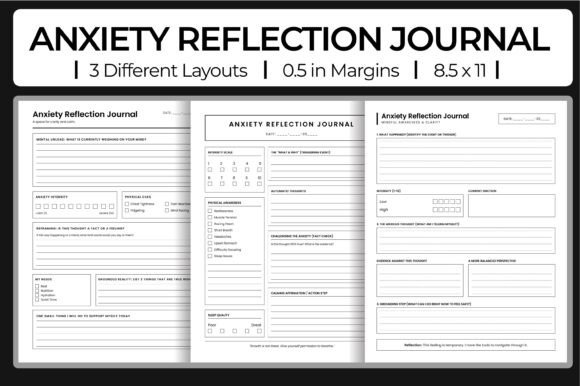
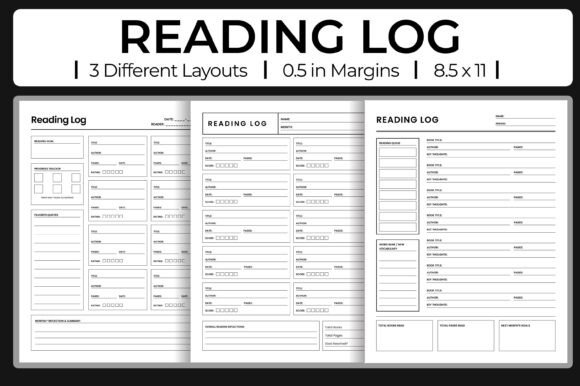
A Reading Log Journal KDP Interior is a pre-designed, print-ready PDF file that contains the internal pages of a reading tracker journal. It is formatted specifically for Amazon's Kindle Direct Publishing platform, with standard dimensions of 8.5″ x 11″, no bleed, and high resolution at 300 dpi. Typically, it includes multiple layout variations—often three distinct designs—so that end users can choose the format that best suits their tracking preferences.
These interiors commonly feature spaces for recording book titles, authors, dates started and finished, ratings, notes, and reflections. They may also include prompts for genre classification, memorable quotes, or reading goals. The product is designed to be uploaded directly to KDP, making it accessible for self-publishers who may not have extensive design experience but want to offer polished, professional journals to their audience.
The typical offering includes three PDF files, each with 120 pages, plus corresponding JPG preview files. This gives publishers flexibility—they can use one layout per book or combine variations. The high-resolution format ensures crisp printing, while the no-bleed specification simplifies production. For the creator, the Reading Log Journal KDP Interior serves as a plug-and-play asset that eliminates the need to build layouts from scratch.
Why the Market Is Paying Attention
Several converging trends explain why the Reading Log Journal KDP Interior has gained traction among self-publishers and their customers. First, there is a documented resurgence in print-based tracking. In an era dominated by digital apps and screens, many readers are returning to analog methods for focus, reflection, and mindfulness. Writing down what they read helps them retain information, set meaningful goals, and create a physical archive of their literary journey.
Second, the Reading Log Journal KDP Interior aligns with the growing popularity of intentional living and productivity systems. People are not just reading more; they are reading with purpose. Whether they are professionals conducting research, book club participants tracking discussions, or lifelong learners building a personal curriculum, they need tools that support structured documentation. A well-designed reading log meets that need without requiring them to design it themselves.
Third, the rise of print-on-demand has lowered the barrier for niche publishing. Anyone with a KDP account can publish a reading log journal in days, not months. The Reading Log Journal KDP Interior is particularly attractive because it taps into an evergreen demand. People have always tracked what they read, and the physical book format remains a preferred medium for many who want to disconnect from screens while engaging with their reading habits.
Shifting Consumer Expectations
The expectations of today's journal buyers have evolved. A generic notebook with blank pages no longer satisfies. Consumers want structure, variety, and aesthetic appeal. They want layouts that accommodate different reading styles—some prefer minimalistic designs with ample writing space, while others enjoy guided prompts and categories. A high-quality Reading Log Journal KDP Interior addresses this by offering multiple layouts within a single purchase, allowing users to select the format that resonates with them.
For the self-publisher, this means that investing in a well-crafted interior is not optional; it is a competitive necessity. The days of publishing a basic table and expecting strong sales are behind us. Today's buyers compare products carefully, reading previews and examining sample pages before making a purchase. A professional interior with diverse layouts signals value and care, which directly influences conversion rates.
How the Product Fits Broader Market Trends
The Reading Log Journal KDP Interior is part of a larger ecosystem of tracker journals that includes habit trackers, meal planners, budget logs, and wellness diaries. This category has exploded in recent years, driven by a cultural appetite for self-optimization and personal data. People want to measure their progress, whether in fitness, finance, or literature. The reading log is a natural extension of this trend.
From a business perspective, the product sits at the intersection of several profitable niches: bullet journaling, low-content publishing, and the broader self-help and personal development market. By offering a Reading Log Journal KDP Interior, a creator can serve multiple audiences simultaneously—avid readers, students, teachers, book club members, and even professionals tracking industry literature. This versatility is a key reason why such interiors perform well on KDP.
Moreover, the product supports the growing interest in print-on-demand as a scalable business model. Unlike traditional inventory-based publishing, KDP allows creators to list products without holding stock. The Reading Log Journal KDP Interior is perfectly suited for this model because it is a low-risk, high-margin product. Once the interior file is created and uploaded, it can generate passive income over time with minimal ongoing effort.
Practical Applications for Different Audiences
Entrepreneurs and marketers can use a Reading Log Journal KDP Interior to build a brand around reading and learning. For example, a creator who runs a book review blog or a literary podcast can sell a companion journal that aligns with their content. This creates a cohesive customer experience, where readers can engage with the brand beyond the digital platform. The interior becomes a physical extension of the creator's authority and expertise.
Freelancers, particularly those in design or publishing, can purchase a Reading Log Journal KDP Interior as a base template and customize it for clients. Because the files are fully editable, they can modify fonts, colors, and layouts to match a client's brand. This offers a fast turnaround for custom journal projects without starting from zero. For designers, this efficiency is a significant advantage.
Professionals in education and coaching can also leverage such interiors. A teacher might use a reading log journal for classroom assignments, while a reading coach could provide it to clients as part of a structured program. The printable nature of the PDF means it can be used digitally or printed at home, adding flexibility for different use cases.
Changing Workflows and Expectations
The self-publishing workflow has matured considerably. What used to require specialized software and technical know-how is now accessible to anyone willing to learn. A Reading Log Journal KDP Interior simplifies this process by providing ready-to-upload files that meet Amazon's exact specifications. This reduces friction for publishers who want to focus on marketing and customer engagement rather than formatting details.
Yet, the expectations for quality have risen in parallel. A Reading Log Journal KDP Interior must be more than functional; it must be visually appealing and thoughtfully structured. Users who purchase a printed journal expect a tactile experience that feels intentional. The 300 dpi resolution, the precise no-bleed layout, and the availability of multiple design options all contribute to this perception. Publishers who invest in premium interiors differentiate themselves in a crowded marketplace.
Customer feedback on KDP frequently highlights layout preferences. Some readers prefer a simple two-page spread with minimal decoration, while others enjoy decorative headers, icons, or inspirational quotes. Offering three distinct layouts within a single Reading Log Journal KDP Interior addresses this diversity, allowing the end user to choose what works best for their personal style. This flexibility reduces the likelihood of negative reviews and increases overall satisfaction.
Observations on Customizability and Scalability
One of the notable features of a high-quality Reading Log Journal KDP Interior is its customizability. While the product is sold as a ready-to-upload PDF, the underlying design often allows for adjustments. Publishers can add or remove pages, combine layouts, or incorporate their own branding elements. The 120-page structure provides a substantial journal, but it can be scaled up or down depending on the target audience. A 60-page version might appeal to casual readers, while a 200-page version could attract serious bibliophiles.
This flexibility is particularly valuable for entrepreneurs who want to test different price points or niche segments. By starting with a base interior that includes three layouts, a publisher can create multiple product variations—one focused on minimalism, another on guided reflection, and a third on goal tracking. Each variation can be published separately, effectively multiplying the product line without starting from scratch each time.
Connecting to Larger Developments in Remote Work and Lifelong Learning
The relevance of the Reading Log Journal KDP Interior extends beyond individual productivity. In a world where remote work and continuous learning have become the norm, professionals are increasingly responsible for their own development. Reading logs help them track industry publications, certifications, and personal enrichment. The journal becomes a tool for career management, not just leisure.
Furthermore, the rise of digital minimalism has prompted many to seek analog solutions for tasks that feel overwhelming on screens. A printed reading log offers a break from notifications and multitasking. It encourages focused reflection, which is a rare commodity in today's attention economy. The Reading Log Journal KDP Interior is not just a product; it is a response to a cultural need for slower, more deliberate engagement with information.
Final Reflections on the Opportunity
For creators and entrepreneurs evaluating the KDP marketplace, the Reading Log Journal KDP Interior represents a category worth serious consideration. Its strengths lie in its alignment with enduring consumer behaviors—people like to track, reflect, and own physical artifacts of their progress. Its compatibility with print-on-demand platforms makes it scalable, while its multiple layout formats ensure broad appeal.
The product also exemplifies a larger shift in how digital goods are packaged for physical output. A PDF file, when designed with care, becomes a bridge between digital creation and tangible experience. The Reading Log Journal KDP Interior is a prime example of this bridge: it is built digitally, sold globally, and used physically in homes, libraries, and coffee shops around the world.
As the self-publishing industry continues to mature, the demand for specialized, well-designed interiors will only grow. Those who recognize the value of a thoughtfully crafted Reading Log Journal KDP Interior today will be well-positioned to meet that demand tomorrow. The key is to focus on quality, usability, and relevance—precisely the attributes that define the best interiors in this space.