Understanding Dissociation: Your Complete Guide to Healing with a Dissociation Journal
Dissociation is a complex psychological experience that can leave individuals feeling disconnected from themselves, their memories, and the world around them. For many, it serves as a survival mechanism in response to trauma, but when dissociation becomes chronic, it can interfere with daily life, relationships, and personal well-being. A dissociation journal offers a structured, compassionate way to explore these experiences, track symptoms, and build grounding techniques that foster healing. Whether you are new to the concept or seeking deeper understanding, this guide will walk you through everything you need to know about dissociation and how journaling can become a powerful tool on your journey.
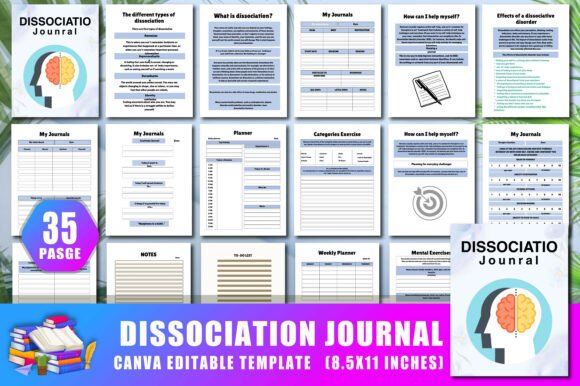
This article also introduces the Dissociation Journal Canva Interior — a ready-to-upload, fully editable resource designed for Amazon KDP and personal use. With 35 pages of thoughtfully crafted content, including psychoeducation, self-help exercises, planners, and creative prompts, this journal empowers users to understand their dissociation and take meaningful steps toward recovery. Let's explore what dissociation really means, how it shows up, and how you can use journaling to reconnect with yourself.
What Is Dissociation?
Dissociation is often described as a feeling of detachment or separation from one's own thoughts, emotions, body, or surroundings. It exists on a spectrum — from mild, everyday experiences like daydreaming or "zoning out" during a long drive, to more severe forms where a person may feel as though they are observing their life from outside their body or cannot recall important personal information. At its core, dissociation is a psychological response to overwhelming stress or trauma. The mind essentially "checks out" to protect itself from pain that feels too big to handle in the moment.
For many people, dissociation is not a choice — it is an automatic reaction. Understanding this is the first step toward self-compassion. A dissociation journal helps you document these experiences without judgment, creating a safe space to explore what triggers them and how they affect your daily life.
Signs and Symptoms of Dissociation
Recognizing dissociation can be challenging because it often feels vague or confusing. Common signs and symptoms include:
- Feeling emotionally or physically numb
- Experiencing gaps in memory — forgetting events or time periods
- Feeling as though you are observing yourself from outside your body (depersonalization)
- Feeling that the world around you is unreal, foggy, or dreamlike (derealization)
- Sudden shifts in identity or feeling like different "parts" of you are present
- Difficulty concentrating or staying present in conversations
- A sense of being disconnected from your own feelings, thoughts, or body
If these experiences sound familiar, you are not alone. A dissociation journal can help you track these symptoms over time, identify patterns, and bring greater awareness to your internal world. The Signs and Symptoms section in the journal offers structured prompts to gently guide your self-reflection.
The Different Types of Dissociation
Dissociation is not a one-size-fits-all experience. Mental health professionals generally recognize several types, each with its own characteristics:
Depersonalization
This involves feeling detached from your own mind or body, as though you are watching yourself from a distance. You might feel like your thoughts, feelings, or actions are not your own.
Derealization
Here, the external world feels unreal. People, objects, and surroundings may seem distorted, flat, or artificial — like a movie set or a dream.
Dissociative Amnesia
This involves memory gaps for important personal information, often related to traumatic experiences. It can range from forgetting small details to losing entire blocks of time.
Identity Disturbance or Dissociative Identity Disorder (DID)
In more severe cases, dissociation can involve distinct shifts in identity or the presence of different "parts" or "alters" that hold different memories, feelings, and behaviors. This is often a result of severe, repeated childhood trauma.
Understanding which type of dissociation you experience can help you tailor your healing practices. Your dissociation journal includes dedicated pages on The Different Types of Dissociation, helping you learn and recognize your own patterns.
Effects of a Dissociative Disorder
Living with a dissociative disorder can be exhausting and isolating. The effects often ripple through every area of life:
- Relationships: Feeling disconnected makes it hard to form close bonds or trust others.
- Work or school: Memory gaps, concentration difficulties, and emotional numbness can impact performance.
- Physical health: Dissociation can lead to neglecting self-care, sleep difficulties, and physical tension.
- Emotional well-being: Many people experience shame, guilt, or confusion about their symptoms, which can worsen anxiety or depression.
- Daily functioning: Simple tasks like showering, eating, or managing finances may feel overwhelming or unreal.
Healing from dissociation is not about forcing yourself to "snap out of it." It is about slowly building safety, awareness, and grounding skills. A dissociation journal provides a gentle structure for this work, with pages dedicated to understanding the Effects of a Dissociative Disorder and tracking your progress.
How Can I Help Myself? Practical Strategies
If you experience dissociation, there are many practical steps you can take to help yourself feel more present and grounded. Journaling is one of the most effective self-help tools because it combines psychoeducation, reflection, and skill-building in one place. Here are some key strategies:
Grounding Techniques
Grounding helps bring you back to the present moment when you feel disconnected. The 5-4-3-2-1 Technique is a classic grounding exercise that uses your five senses: name five things you can see, four you can touch, three you can hear, two you can smell, and one you can taste. Your dissociation journal includes this technique in a dedicated page so you can practice it anytime.
Categories Exercise
Another grounding method is the Categories Exercise, where you pick a simple category — like fruits, animals, or colors — and list as many as you can. This engages your brain in a low-pressure way and helps shift focus away from dissociative fog.
Body Awareness
Dissociation often involves losing connection with your body. Gentle body awareness exercises — like noticing the temperature of your hands, the feeling of your feet on the floor, or the rhythm of your breath — can slowly rebuild that connection. The journal's Body Awareness pages offer guided prompts to support this practice.
Mental Exercises
Your dissociation journal includes several pages of Mental Exercises designed to strengthen focus and presence. These might include simple math puzzles, pattern recognition, or creative visualization. Repeating these exercises regularly can improve your ability to stay grounded.
Using a Dissociation Journal: A Step-by-Step Approach
A dissociation journal is more than just a notebook — it is a companion on your healing journey. The Dissociation Journal Canva Interior is carefully designed to support you every step of the way. Here is what you will find inside:
- Belongs to Page: Personalize your journal and make it your own.
- What Is Dissociation: Clear, compassionate psychoeducation to help you understand your experiences.
- Signs and Symptoms: Guided prompts to track and reflect on your symptoms.
- The Different Types of Dissociation: Learn about depersonalization, derealization, amnesia, and identity disturbance.
- Effects of a Dissociative Disorder: Explore how dissociation impacts your life and relationships.
- How Can I Help Myself: Practical self-help strategies and grounding techniques.
- 4-Page My Journals: Dedicated space for free writing and reflection.
- 5-4-3-2-1 Technique: A full page to practice this powerful grounding exercise.
- Categories Exercise: Engage your mind with simple categorization prompts.
- Body Awareness: Reconnect with your body through guided exercises.
- Mental Exercises: Multiple pages of cognitive grounding activities.
- Planner, Weekly Planner, Monthly Calendar: Stay organized and build structure into your life.
- Bucket List, To-Do List, Vision Board: Set goals and create a positive future focus.
- Dissociation Therapy Journal: Track therapy sessions, insights, and progress.
- Notes, Thank You, Product Information: Complete your journal with gratitude and reflection.
With 35 pages, a no-bleed design, 300 DPI resolution, and a practical 8.5 x 11 inch size, this journal is ready for high-quality print or digital use. Every page is fully editable in Canva, so you can customize colors, shapes, text, and more to suit your personal style or brand.
Why Journaling Works for Dissociation
Journaling creates a bridge between your inner experience and the outer world. When dissociation makes you feel distant from yourself, writing can help you anchor your thoughts and feelings in a tangible way. Research shows that expressive writing reduces stress, improves emotional regulation, and helps integrate fragmented memories. A dissociation journal takes this a step further by combining psychoeducation with practical exercises, so you are not just writing — you are actively building skills for healing.
The structure of the journal also provides consistency. When your life feels chaotic or disconnected, having a familiar routine — like opening your journal at the same time each day — can be deeply stabilizing. Over time, you may notice that you spend less time in dissociative states and more time feeling present, even if just for moments at a time.
Common Misunderstandings About Dissociation
Many people misunderstand dissociation, which can lead to shame or isolation. Let's clear up a few common misconceptions:
- "Dissociation is rare." In reality, dissociation is quite common, especially among people who have experienced trauma. Mild forms happen to almost everyone at some point.
- "People with dissociation are just 'spacey' or 'dramatic.'" Dissociation is a genuine psychological response, not a character flaw. It is the brain's way of coping with overwhelm.
- "You can just snap out of it." Forcing yourself to "snap out" often backfires. Gentle grounding and self-compassion are far more effective.
- "Dissociation means you have multiple personalities." Dissociative identity disorder is one type of dissociation, but most people with dissociation do not experience distinct alters. The spectrum is wide.
Understanding these nuances helps reduce stigma and opens the door to compassionate self-care. Your dissociation journal is a safe space to explore your own experiences without judgment.
How to Get Started with Your Dissociation Journal
Starting a journal can feel intimidating, especially if dissociation makes it hard to focus or trust your own thoughts. Here is a simple way to begin:
- Set a timer for five minutes. You don't need to write for hours. Short, consistent sessions are more sustainable.
- Choose one page. You might start with the What Is Dissociation section or a simple grounding exercise like 5-4-3-2-1.
- Use the editable Canva link. Because this journal is fully customizable, you can adjust the fonts, colors, and layout to feel more inviting. Make it yours.
- Be kind to yourself. There is no "right" way to journal. If you miss a day or write only one word, that is okay.
- Repeat. Consistency matters more than perfection. Over time, you will build a practice that supports your healing.
The Dissociation Journal Canva Interior comes with high-resolution JPG, PNG, and PDF files, so you can print it at home or upload directly to Amazon KDP. The no-bleed design makes printing easy, and the 300 DPI ensures crisp, professional quality.
Final Thoughts: Your Healing Journey Starts Here
Dissociation can feel isolating, but you do not have to navigate it alone. A dissociation journal is a gentle, practical tool that meets you exactly where you are. It offers education, reflection, and actionable exercises — all in a format that you can personalize to fit your unique needs. Whether you are using it for personal growth, therapy support, or as a ready-to-upload product for your KDP business, this journal is designed to make a difference.
Remember, healing is not linear. Some days you will feel present and grounded; other days you may feel far away. Each entry in your dissociation journal is a step toward understanding yourself more deeply and building a life where you feel more connected, more aware, and more at home in your own skin. Start wherever you are, and let the journal guide you forward.
Ready to begin? The Dissociation Journal Canva Interior is available now with full editing capabilities, print-ready files, and 35 pages of thoughtfully designed content. Your healing journey deserves a dedicated space — and this journal is exactly that.