1000 Content Marketing Prompts: Exploring Its Role in Modern Content Strategy
Content marketing relies on consistent, relevant, and engaging material, but generating fresh ideas week after week can be a challenge. Many professionals turn to prompt collections, templates, and systems to streamline their planning. One resource that has gained attention is 1000 Content Marketing Prompts, a comprehensive collection that positions itself as more than a list of ideas—it’s a full content marketing system. This article examines what this resource offers, how it compares with other approaches to content planning, and when it might—or might not—be the right fit for your workflow.
What Makes 1000 Content Marketing Prompts Distinct?
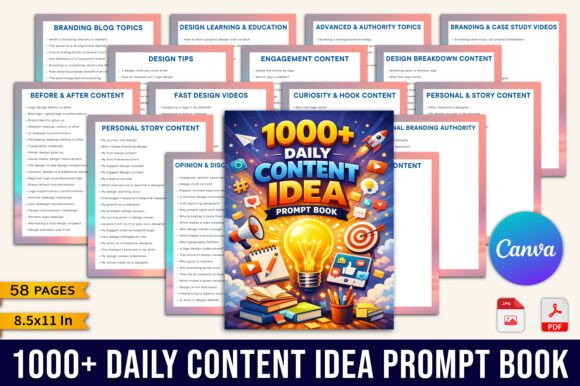
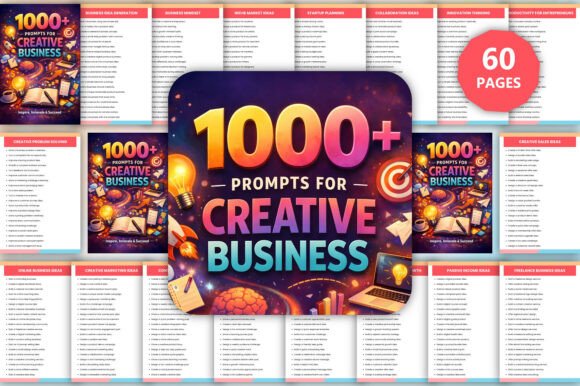
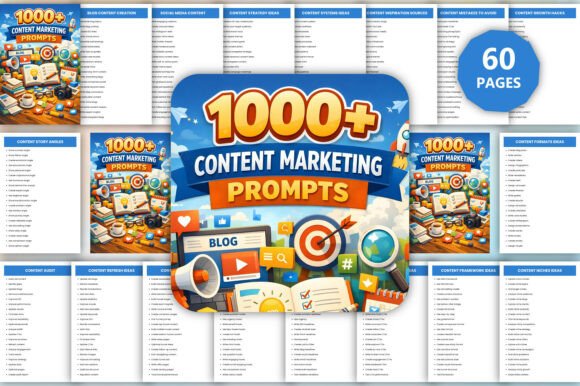
At its core, 1000 Content Marketing Prompts is a library of prompts organized into categories that cover the entire content lifecycle. The collection includes prompts for social media, blogging, SEO copywriting, email marketing, video scripts, analytics, lead generation, and AI-powered content automation. Unlike a simple list of topic ideas, this resource provides prompts that are designed to guide strategy, not just output. For example, instead of a prompt that says “write a post about productivity,” you might find a prompt that says “create an Instagram Reel script that compares two productivity methods and ends with a question to drive comments.”
What sets it apart is the structural organization. The prompts are grouped not only by channel but also by marketing function—awareness, engagement, conversion, retention. This means you can move through the customer journey systematically. Additionally, the resource includes AI automation prompts, which are less common in traditional prompt books. These help you set up workflows using tools like ChatGPT or Jasper, making it relevant for marketers who want to blend human creativity with machine efficiency.
Comparing Approaches: Prompt Collections vs. Other Content Planning Resources
When evaluating 1000 Content Marketing Prompts, it helps to consider the broader landscape of content planning tools. Many marketers rely on editorial calendars, content strategy frameworks (like the pillar-cluster model), or subscription-based idea banks. Each has its strengths.
Prompt Collections vs. Editorial Calendars
An editorial calendar shows you when to publish, but it doesn’t always tell you what to say. A prompt collection fills that gap. If you have a calendar but struggle to fill it with varied posts, a resource like the 1000-prompt system can generate ideas on demand. However, an editorial calendar gives you a bird’s-eye view of content themes and dates, which a prompt book alone cannot replicate. For best results, many marketers combine both: they use the calendar for scheduling and the prompts for content substance.
Prompt Collections vs. Strategy Frameworks
Frameworks like the “Content Marketing Matrix” or “Topic Clusters” provide a methodology for organizing content by purpose and topic. They are more abstract and require you to develop your own ideas. A prompt collection is more tactical—it gives you ready-to-use instructions. The tradeoff is that a framework teaches you a repeatable process, while a prompt collection can feel like a crutch if you never internalize the strategy behind it. 1000 Content Marketing Prompts attempts to bridge this by including prompts for analytics and optimization, nudging users to think about performance, but it remains primarily a tactical tool.
Prompt Collections vs. Paid Content Libraries
Some marketers subscribe to databases of pre-written content, templates, and swipe files. These tend to be more specific (e.g., email subject lines, Instagram caption templates). A prompt collection like this one is more generative—it gives you a starting point that you must adapt. This requires more work but also more originality. For teams that need speed and are comfortable with templates, a swipe file library might be more efficient. For those who want to maintain a distinct voice while still having guidance, the prompt approach is often preferable.
Key Strengths and Practical Applications
One of the biggest strengths of this resource is its breadth. With prompts spanning 10 or more categories, you can use it for nearly every channel a typical content marketer touches. Here are a few realistic examples of how the prompts might be applied:
- Social media: A prompt asking you to create a “3-minute video breaking down a common misconception in your industry, with a hook that starts with ‘Most people think…’.” This can be adapted for TikTok, Reels, or YouTube Shorts.
- Email marketing: A prompt like “Write a 5-email nurture sequence for new subscribers based on the objection that your product is too expensive.” This moves beyond generic email templates into strategic positioning.
- SEO content: A prompt that says “Identify 5 long-tail keywords from a seed keyword and outline a blog post for each targeting search intent.” This directly supports keyword research and content creation.
- Lead generation: Prompts focused on creating lead magnets, such as “Design a comparison checklist that helps your audience choose between two solutions, and gate it behind an email opt-in.”
These examples show that the prompts are not just ideas—they are mini-briefs. For a solo content creator or a small team, this can save hours of brainstorming and briefing time. The AI automation prompts are another practical advantage: they help you structure prompts for chatbots or content generators, making it easier to scale output without losing consistency.
Tradeoffs and Limitations to Consider
No single resource is perfect for every marketer, and 1000 Content Marketing Prompts has several tradeoffs worth examining.
Volume can be overwhelming. 1,000 prompts is a lot. While the organization helps, some users may feel paralyzed by choice. If you are looking for a lean, curated set of high-impact ideas, such a large collection might require extra filtering. This is a common tradeoff with abundance-based resources: more options can mean more time spent deciding.
Prompts are not a substitute for deep strategy. A prompt can tell you to “create a video comparing two approaches,” but it won’t tell you which approaches to compare based on your unique audience research or competitive landscape. Marketers who rely solely on prompts may produce content that feels generic if they skip the strategic thinking that should come first. The resource includes analytics prompts, but the onus is on the user to connect the prompts to their data and goals.
Format and usability. The files are PDF and JPG. While these are upload-ready and suitable for printing, they are not editable in the same way as a spreadsheet or a text document. If you prefer to work in Notion, Google Docs, or a project management tool, you will need to manually transfer prompts or adapt them. Some competitors offer interactive dashboards or editable templates, which can be more convenient for collaborative teams.
AI prompt emphasis may not suit everyone. Some marketers are skeptical of AI-generated content or work in regulated industries where automated content is risky. The AI automation prompts assume you are comfortable with tools like ChatGPT. If you avoid AI-assisted writing, those sections will be less useful.
When 1000 Content Marketing Prompts Fits Best
Based on its structure and features, this resource tends to work well for:
- Solo marketers and freelancers who need to cover multiple channels without a dedicated strategy team. The prompts serve as a quick idea engine when you’re stuck.
- Small agencies that want to standardize content briefs across clients. You can pull prompts from relevant categories and adapt them per client.
- Content teams experimenting with AI who want to create repeatable workflows. The AI automation prompts provide a framework for using language models efficiently.
- Course creators or coaches who need a variety of content formats (blog, video, email, social) to build an audience. The breadth of categories supports multi-channel launches.
- Marketers with a clear strategy but insufficient execution ideas. If you already have your buyer personas and messaging pillars defined, the prompts can feed the execution phase without steering you off course.
When You Might Need a Different Resource
There are also situations where another approach or tool may serve you better:
- If you need in-depth training or methodology. This is a prompt collection, not a course. If you want to learn why certain content types work or how to design a full content strategy from scratch, a structured online course or a book like “Everybody Writes” or “Content Inc.” would fill that gap better.
- If you work in a highly niche industry. The prompts are designed to be broadly applicable. If your audience requires extremely specific technical language or compliance constraints (medical, legal, finance), you may find that fewer prompts directly apply. You would need to adapt heavily, which reduces the convenience factor.
- If you prefer systems over prompts. Some marketers thrive on repeatable processes (e.g., a weekly content sprint, a monthly pillar page update). A prompts collection provides sporadic inspiration, not a system of workflow. For systematic production, you might combine this with a project management system or a content ops platform.
- If you need collaboration features. The PDF/JPG format means you cannot easily comment, assign, or track progress within the document itself. Teams using Asana, Trello, or Slack would need to reinterpret the prompts into tasks. A shared Google Sheet or a dedicated prompt software might integrate more smoothly.
Making an Informed Decision
Choosing a content marketing resource ultimately depends on your current workflow, team size, and tolerance for adaptation. 1000 Content Marketing Prompts offers a wide variety of structured ideas that can accelerate content creation and reduce brainstorming time. Its inclusion of AI prompts and lead generation categories makes it more comprehensive than many traditional idea books. However, it is best used as a complement to—not a replacement for—your strategic foundation. If you already have your audience insights and goals defined, this resource can fuel the tactical execution. If you are still figuring out who you serve or what your key message is, you might find the prompts distracting rather than helpful.
Before purchasing or committing to any resource, consider listing your biggest content bottlenecks. Is it coming up with ideas? Writing headlines? Structuring emails? Understanding analytics? Then evaluate how well the resource addresses those specific pain points. For many professionals, the combination of breadth and structure in this collection makes it a practical addition to their toolkit, especially when used alongside a content calendar and a solid understanding of their audience’s needs.
Ultimately, no single prompt book can replace experience or audience insight, but 1000 Content Marketing Prompts can serve as a reliable springboard—one that might just help you turn a blank page into a complete campaign with less friction and more variety.