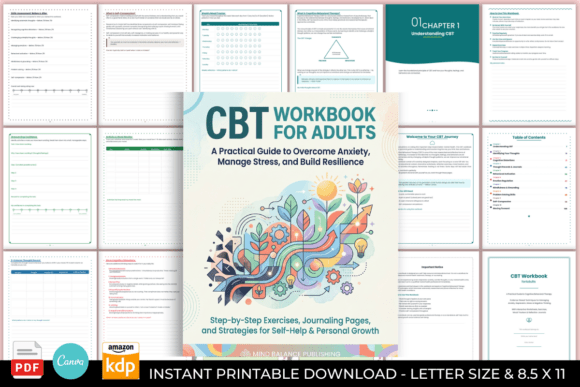
Understanding the Modern CBT Workbook for Adults and Its Role in Mental Wellness
If you have been searching for practical ways to manage anxiety or break free from repetitive negative thinking, you have likely come across the concept of cognitive behavioral therapy. It is one of the most researched and effective approaches for improving mental health, yet many people struggle to access regular therapy sessions due to cost, time, or availability. This is where a well-designed CBT Workbook for Adults becomes a genuinely useful tool. Rather than simply reading about cognitive restructuring or mindfulness, you get structured exercises that guide you step by step, turning abstract concepts into actionable habits. The value lies not just in understanding the theory but in applying it to your own life, at your own pace, in your own space.
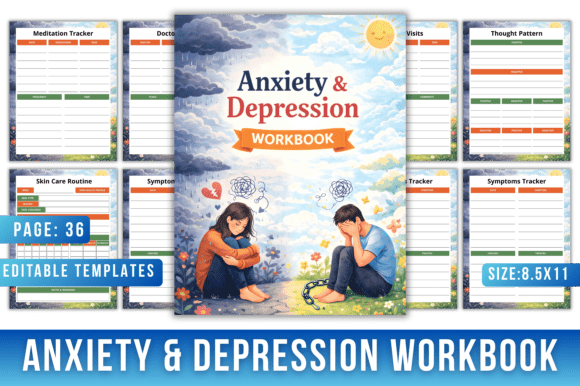
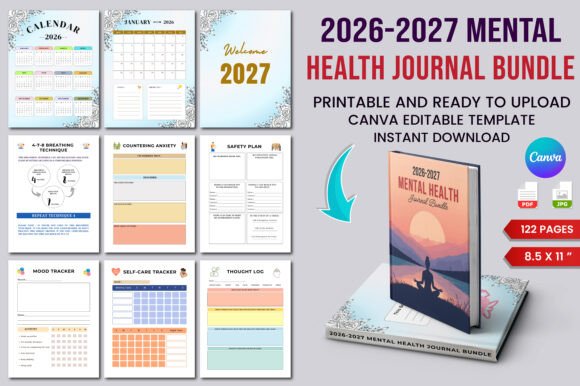
A quality workbook does more than present information. It creates a container for self-reflection, helping you map out your emotional patterns, identify thinking traps, and gradually replace unhelpful responses with healthier alternatives. The CBT Workbook for Adults that focuses on overcoming anxiety, managing stress, and building resilience offers a complete framework for this kind of inner work. It is designed to be practical rather than academic, which matters because mental health improvement happens through consistent practice, not passive reading. When you engage with thought records, evidence-checking tools, and goal-setting exercises, you are essentially training your brain to think differently, and that process requires repetition and structure.
Why a Structured CBT Workbook Matters for Self-Directed Growth
Many people begin their mental health journey by reading articles or watching videos about cognitive behavioral therapy. While those resources provide valuable knowledge, they often lack the scaffolding needed to translate insight into long-term change. A comprehensive CBT Workbook for Adults fills this gap by offering a sequential path from awareness to action. You start with foundational concepts, such as the connection between thoughts, feelings, and behaviors, and then move into self-assessment tools that help you identify your specific triggers and coping styles. This structured progression matters because it prevents overwhelm. Instead of trying to change everything at once, you focus on one layer at a time.
Another important aspect is accountability. When you have dedicated pages for tracking your thoughts, recording your progress, and setting measurable goals, you are more likely to follow through. The physical act of writing engages your brain differently than typing or simply thinking. It reinforces the neural pathways you are trying to build. For adults juggling work, relationships, and daily responsibilities, having a clear, organized workbook means you can return to it whenever you need a reset. You do not have to remember where you left off or what exercise to do next. The workbook holds that structure for you, which reduces friction and increases consistency.
Recognizing Cognitive Distortions Before They Take Over
One of the most powerful features of any effective CBT Workbook for Adults is the section dedicated to cognitive distortions. These are the thinking traps that keep you stuck in cycles of anxiety, self-doubt, or frustration. Common examples include catastrophizing, where you assume the worst possible outcome will happen, or all-or-nothing thinking, where you see situations in black-and-white terms with no middle ground. Without awareness, these patterns operate automatically, coloring your perception of everyday events and fueling emotional distress.
A good workbook helps you name these distortions and provides worksheets to catch them in real time. For instance, you might fill out a thought record after a stressful meeting at work. You write down the automatic thought, identify the distortion type, and then use an evidence-checking tool to test its validity. This process might seem simple, but it is profoundly effective because it shifts you from being at the mercy of your thoughts to becoming an observer of them. Over time, this creates mental distance, allowing you to respond rather than react. The CBT Workbook for Adults that includes guided exercises for this specific skill is particularly valuable because it teaches you a method you can use independently for the rest of your life.
Building Emotional Resilience Through Consistent Practice
Resilience is not something you either have or do not have. It is a skill that develops through repeated exposure to manageable challenges and the deliberate practice of healthy coping mechanisms. A structured CBT Workbook for Adults supports this development by offering exercises that gradually increase in complexity. You might start with simple breathing techniques or thought reframing, then progress to behavioral experiments that test your assumptions in real-world situations. This incremental approach builds confidence because you see evidence of your own growth over time.
Another key element is the emphasis on goal setting. Many workbooks include dedicated space for defining what emotional balance and resilience look like for you personally. This is important because generic advice rarely sticks. When you articulate your own goals, whether that means feeling less anxious in social situations or handling criticism without spiraling, you create a personal roadmap. The exercises then become steps toward that specific vision. For adults who are used to taking charge in other areas of life, this self-directed approach feels empowering. You are not waiting for someone else to fix you. You are actively building your own mental strength.
Stress Management as a Daily Practice, Not an Emergency Response
Stress often accumulates gradually, and by the time you notice it, your nervous system is already in high alert mode. A proactive approach involves regular check-ins with yourself, and a CBT Workbook for Adults can serve as that check-in tool. Instead of waiting until you feel overwhelmed, you use the workbook to monitor your stress levels, identify early warning signs, and apply coping strategies before things escalate. This preventive angle is one of the most practical benefits of having a structured resource at hand.
Some workbooks include sections on behavioral activation, which is a core CBT technique for combating low mood and stress. The idea is to schedule activities that give you a sense of accomplishment or pleasure, even when you do not feel like doing them. By tracking these activities and noting how they affect your mood, you gather data that challenges the belief that nothing will help. Over weeks and months, this data becomes powerful evidence that small actions lead to real shifts in how you feel. The CBT Workbook for Adults that combines thought-based work with behavioral experiments offers a more complete approach to stress management than either method alone.
How a Workbook Fits Into a Modern, Busy Lifestyle
One of the most common barriers to mental health work is time. Between work, family, and other obligations, setting aside an hour for therapy or self-reflection can feel impossible. A workbook solves this problem by being flexible. You can spend five minutes completing a single thought record or thirty minutes working through a longer exercise. There is no pressure to finish a session or adhere to a schedule. You pick it up when you need it and put it down when you do not. This low-barrier access is especially helpful for adults who are new to CBT and want to explore it without a major commitment.
Additionally, a physical workbook offers a break from screen time. Many of us spend hours each day staring at screens for work and leisure, and adding another digital tool for mental health can feel draining. Having a tangible book that you can write in, flip through, and keep on your nightstand creates a different kind of engagement. It signals to your brain that this is a dedicated space for reflection, separate from the constant notifications and information overload of the digital world. For adults who value simplicity and intentionality, this analog approach can be more effective than an app or online course.
Choosing a Workbook That Matches Your Needs
Not all CBT workbooks are created equal. Some are heavily theoretical, while others are purely exercise-based. When selecting a CBT Workbook for Adults, consider your current familiarity with the therapy. If you are new to CBT, look for one that includes an introduction to core concepts and clear instructions for each exercise. If you already have some background, you might prefer a workbook that dives straight into advanced techniques like schema work or behavioral experiments.
Another factor is the tone and design of the workbook. A well-designed workbook with ample writing space, logical section breaks, and visually clear layouts makes the process easier to stick with. If the pages feel cluttered or the instructions are ambiguous, you are less likely to use it consistently. Look for a workbook that feels inviting rather than overwhelming. The best ones balance depth with accessibility, offering enough substance to create real change without making you feel like you need a degree in psychology to understand them.
Finally, consider the specific areas you want to address. Some workbooks focus broadly on anxiety and stress, while others target depression, anger, or self-esteem. A comprehensive CBT Workbook for Adults that covers multiple areas while allowing you to customize your focus offers the most flexibility. You can work through the sections that are most relevant to your current situation and return to others later as new challenges arise. This long-term usability makes it a worthwhile investment in your mental health toolkit.
Practical Recommendations for Getting the Most Out of Your Workbook
To maximize the benefits, treat the workbook as an ongoing practice rather than a one-time project. Set aside a few minutes each day or several times per week to engage with an exercise. Consistency matters more than duration. Even small, regular efforts compound over time. Keep the workbook somewhere visible, like on your desk or beside your bed, as a visual reminder of your commitment to mental balance.
It can also be helpful to pair workbook exercises with other supportive practices. For example, after completing a thought record, you might take a short walk or practice a breathing exercise to reinforce the cognitive shift. Integrating the workbook into a broader self-care routine increases its impact and helps you build sustainable habits. Over time, the skills you practice in the workbook become automatic, and you will find yourself challenging distorted thoughts and managing stress without needing to refer back to the pages as often.
For adults who are used to seeing tangible results from their efforts, tracking progress is especially motivating. Many workbooks include reflection pages at the end of each section where you can summarize what you learned, note any shifts in your thinking, and set intentions for the next phase. Reviewing these reflections after a few weeks or months gives you concrete evidence of how far you have come, which reinforces your motivation to continue. The CBT Workbook for Adults that integrates this tracking element helps you stay connected to your progress and reminds you that change, though gradual, is real.
Mental health is not a destination but an ongoing process. A well-designed workbook supports that process by giving you structure without rigidity, guidance without prescription, and a safe space to explore your inner world. Whether you are working through anxiety, managing daily stress, or simply wanting to understand yourself better, the right resource can make a meaningful difference in how you navigate life. By choosing a comprehensive, evidence-based CBT Workbook for Adults and committing to regular practice, you are taking a proactive step toward greater emotional resilience, mental balance, and personal growth.