Mastering the Art of Prompt Writing: A Practical Guide to the 1000 the Art of Prompt Writing Planner
Prompt writing has become an essential skill for anyone who works with AI tools. Whether you generate marketing copy, brainstorm business ideas, or automate daily tasks, the quality of your output depends heavily on how you phrase your input. The 1000 the Art of Prompt Writing planner positions itself as a structured guide that takes users from absolute beginner to advanced practitioner. But how does it stack up against other learning resources, and is it the right fit for your needs?
This article explores what makes this planner distinct, where it excels, where it may fall short, and how it compares with other approaches to learning prompt engineering. The goal is to help you decide whether this resource aligns with your learning style, experience level, and practical goals.
What Is the 1000 the Art of Prompt Writing Planner?
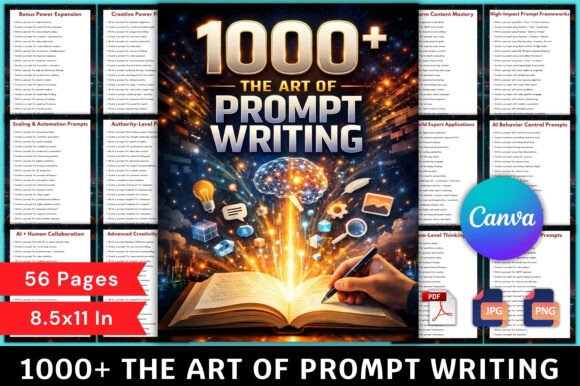
At its core, the 1000 the Art of Prompt Writing planner is a 56-page PDF workbook designed to guide users through a step-by-step progression of prompt creation. It covers everything from basic one-line prompts to complex, multi-layered instructions for business, creativity, and productivity. The planner includes ready-to-use templates, categorized prompts, and refinement techniques aimed at improving clarity and output quality.
What sets it apart from a typical online course or blog post is its structured, hands-on format. Instead of passively reading about prompt theory, you work through exercises, fill in templates, and build your own prompt library. This makes it more of a practice tool than a reference book.
The planner covers categories such as storytelling, marketing, branding, innovation, finance, productivity, content creation, decision-making, and automation. It also includes optimization tools to help you refine your prompts for better results.
How Does It Compare with Other Learning Resources?
To understand where the 1000 the Art of Prompt Writing planner fits, it helps to consider the broader landscape of prompt engineering education. Options range from free blog posts and YouTube tutorials to full online courses, community forums, and AI prompt marketplaces.
Structured Planners vs. Open-Ended Learning
A common way to learn prompt writing is through trial and error. You open a chat interface, type something, see what happens, and adjust. This approach is flexible but can be inefficient. Without a framework, you may repeat the same mistakes or miss techniques that could save time.
The 1000 the Art of Prompt Writing planner offers a structured alternative. Each section builds on the previous one, so you develop skills progressively. This is especially useful if you prefer guided learning over exploration. However, if you already have a strong grasp of basic prompts, the beginner sections may feel slow.
Templates vs. Conceptual Understanding
Some resources teach prompt engineering through principles and theory. They explain why certain phrasing works, how AI models interpret context, and how to design prompts from scratch. Others, like this planner, emphasize templates and ready-to-use frameworks.
The advantage of templates is speed. You can grab a proven structure, insert your details, and get decent results quickly. The tradeoff is that templates may not teach you to adapt when a situation falls outside the provided framework. The 1000 the Art of Prompt Writing planner strikes a balance by including both templates and refinement tools. The optimization sections help you adjust prompts for different contexts, which adds flexibility.
Breadth vs. Depth
With 56 pages and multiple categories, this planner covers a wide range of applications. You get prompts for daily planning, learning, problem-solving, automation, and creative work. This breadth is valuable if you use AI for various tasks and want a single resource to reference.
However, depth in any single area is limited. For example, if you need advanced prompts for a specific industry like legal analysis or medical research, a specialized guide may serve you better. The planner is designed for general use, which makes it accessible but not exhaustive.
Strengths of the 1000 the Art of Prompt Writing Planner
Several features make this planner stand out for its target audience of creators, marketers, students, and professionals.
Clear Progression from Beginner to Advanced
The step-by-step structure is one of its strongest assets. You start with basic prompts that define a goal and a format. As you move forward, you learn to add context, constraints, and examples. Later sections introduce multi-step prompts that chain instructions for complex outputs. This progression mirrors how people naturally improve at prompt writing, making it intuitive to follow.
Printable and Portable Format
The PDF format at 8.5 x 11 inches means you can print it and work offline. For some learners, writing by hand helps retention. Others prefer digital note-taking. The planner accommodates both, which is a practical advantage over online-only courses.
Real-World Application Categories
The inclusion of finance, productivity, and decision-making prompts adds relevance for professionals. Many prompt guides focus heavily on creative writing or coding. This planner broadens the scope to include business thinking, which is useful for marketers, entrepreneurs, and managers.
Optimization and Refinement Tools
A dedicated section on improving clarity, accuracy, and output quality is valuable. Many users struggle with vague or inconsistent AI responses. The refinement techniques in this planner teach you to diagnose issues and adjust your prompts accordingly. This moves beyond simple templates into skill-building.
Limitations and Tradeoffs
No resource is perfect for every user. Understanding the limitations of the 1000 the Art of Prompt Writing planner helps you decide if it fits your needs.
Requires Self-Discipline
Because it is a workbook, you must commit to working through the exercises. There is no instructor, no community, and no feedback loop. If you prefer interactive learning or need accountability, a guided course or workshop may be more effective.
Not a Quick Reference for Experts
If you already write effective prompts daily, the beginner sections will not teach you much new. You might still find value in the templates and optimization tools, but the overall pace may feel slow. In that case, a concise cheat sheet or advanced guide could be a better use of your time.
Generalist Approach
The planner covers many categories, but none in extreme depth. If your work requires highly specialized prompts, you will likely need to supplement this resource with domain-specific knowledge. For example, a marketer might need prompts tailored to a specific platform or audience, which the planner touches on but does not fully explore.
When This Planner Is the Right Choice
The 1000 the Art of Prompt Writing planner works best in certain situations.
- You are new to prompt writing. If you have used AI for basic tasks but want to improve your results systematically, the structured progression will save you time.
- You prefer hands-on learning. Reading about prompts is different from writing them. This planner forces you to practice, which builds skill faster.
- You need a versatile resource. If you work across multiple domains—writing, business, planning, creativity—having one workbook that covers all these areas is convenient.
- You want to integrate prompt writing into your workflow. The daily planning and automation prompts are designed for regular use, not just one-time learning.
When You May Need Another Option
Consider alternatives if any of the following apply.
- You are an advanced user. If you already craft complex prompts daily, you may outgrow this planner quickly. Look for advanced strategy guides or specialized prompt libraries instead.
- You need interactive feedback. A course with peer review or instructor evaluation will help you improve faster if you learn better with external input.
- You focus on a single niche. If your work is limited to a specific industry or tool, a targeted resource will offer more relevant examples and techniques.
- You prefer video or audio learning. The planner is text-based with exercises. If you learn best through lectures or demonstrations, a video course may suit you better.
Real-World Example: How the Planner Works in Practice
Imagine you want to create a series of social media posts for a new product. Without a framework, you might type: Write three Instagram captions about our new coffee blend. The results could be generic or miss key details.
Using the 1000 the Art of Prompt Writing planner, you would first define your goal, audience, and tone. You would specify the product benefits, call to action, and format. The planner provides templates that prompt you to include these elements. After writing an initial prompt, you use the refinement tools to test variations, adjust wording, and compare outputs. The result is a more targeted and effective set of captions.
Over time, you internalize these steps and begin writing better prompts without the templates. That is the ultimate goal of the planner: to build a skill that becomes second nature.
Decision Factors to Consider
When evaluating whether the 1000 the Art of Prompt Writing planner is right for you, think about these factors.
Your current skill level. Beginners will gain the most. Intermediate users may benefit from the optimization tools and new categories. Advanced users may find limited value.
Your preferred learning style. This is a workbook, not a lecture. If you like to learn by doing, it is a strong fit. If you prefer to watch and listen, look elsewhere.
Your time commitment. Working through 56 pages of exercises takes time. If you need quick tips, a shorter resource may be better. If you want to build lasting skills, the investment is worthwhile.
Your budget. Compared to a full online course, a printable workbook is often more affordable. But free resources exist. Weigh the cost against the structure and convenience the planner offers.
Final Thoughts
The 1000 the Art of Prompt Writing planner fills a specific niche: it is a structured, hands-on workbook for people who want to systematically improve their prompt writing skills. It balances breadth across multiple categories with practical templates and refinement techniques. It is not the only path to becoming a skilled prompt writer, but for many learners, it offers a clear and efficient route.
As with any resource, the key is to match it to your goals. If you are new to prompt writing, want a portable practice tool, and appreciate a step-by-step approach, this planner is worth considering. If you are already proficient or need specialized depth, you may want to complement it with other resources. Either way, understanding what it offers—and what it does not—helps you make a more informed decision.