My First Alphabet Tracing Workbook: A Strategic Tool for Building Early Writing Confidence
When you are selecting resources for a young learner, it is easy to get lost in a sea of bright covers and bold claims. Many alphabet books prioritize visual noise over actual utility. My First Alphabet Tracing Workbook takes a different path. It is built around a simple, focused premise: give a child one letter, enough space to practice, and a familiar object to connect with, and let the learning happen naturally.
This article is written for educators, parents, and decision-makers who want to understand not just what this workbook contains, but why its design choices matter for long-term skill development, and how to use it with intention rather than as a passive activity.
What This Workbook Is and Why It Matters for Early Learning Goals
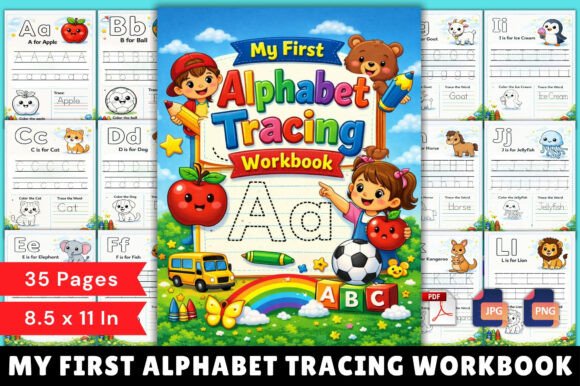
At its core, My First Alphabet Tracing Workbook is a practice tool for children who are beginning to recognize and write letters. But to treat it as merely a collection of tracing pages would be to miss the strategic value it offers. The workbook is structured around a deliberate reduction of distractions. Each page presents one letter, one corresponding object (Apple, Ball, Cat, Dog), and a generous blank space for free writing.
This design is not accidental. Cognitive load is a real consideration for young children. When a page is cluttered with too many images, instructions, or competing elements, a child’s attention fragments. The workbook’s clean layout supports sustained focus, which is a foundational skill for later academic success. For the adult choosing the resource, this means you are not just buying a tracing book—you are investing in a tool that respects how early learners actually process information.
From a practical standpoint, this workbook supports several specific goals:
- Letter recognition: Seeing the same letter repeatedly in a consistent layout builds familiarity.
- Handwriting mechanics: The large writing area allows children to develop motor control without the frustration of cramped lines.
- Confidence building: Each completed page provides a tangible sense of accomplishment, which encourages continued practice.
- Engagement through creativity: The coloring component turns a rote task into an interactive experience, increasing the likelihood that a child will return to the book voluntarily.
How Thoughtful Design Supports Productivity in Early Learning
Productivity in early childhood education looks different than it does in a corporate setting, but the underlying principles are similar. You want the highest quality output (in this case, skill acquisition) with the least amount of friction. My First Alphabet Tracing Workbook reduces friction in several observable ways.
First, the single-letter-per-page format eliminates decision fatigue. A child does not have to choose where to start or which letter to attempt. The structure is clear before the pencil touches the page. Second, the large blank area is a deliberate invitation to practice without fear of making mistakes. Children who worry about staying within narrow lines often develop hesitation or grip tension. The open space encourages free movement, which is essential for developing fluid handwriting.
Third, the familiar objects serve as memory anchors. When a child traces the letter D and colors a dog, they are building a mental association that strengthens recall. This is not entertainment—it is efficient encoding. For the adult overseeing this process, the workbook becomes a reliable tool that requires minimal explanation. You can hand it to a child and say, “Today we are working on the letter B. Here is a ball. You can color it when you finish tracing.” The instruction is implicit in the design.
When to Use This Workbook Strategically
Timing and context matter. My First Alphabet Tracing Workbook is most effective when used as part of a broader routine rather than as a standalone solution. Consider integrating it during specific windows of the day when a child is alert but not overstimulated—perhaps after a nap, before a meal, or during a quiet afternoon period.
It is also useful as a diagnostic tool. By observing how a child approaches each page, you can gather information about their fine motor development, attention span, and letter familiarity. If a child consistently struggles with certain letters, you can revisit those pages without pressure. The workbook’s repetitive structure actually supports this kind of targeted practice because it does not introduce new variables each time.
For educators managing a classroom, this workbook works well as a station activity. You can set out several copies and let children work through the letters at their own pace. Because the instructions are minimal, even children who are not yet reading independently can understand what to do based on the visual layout. This reduces the need for constant adult intervention and allows the teacher to focus on individual support where it is needed most.
For parents homeschooling or supplementing schoolwork, the workbook can serve as a consistent anchor in a weekly schedule. You might assign two to three letters per week, paired with related activities such as reading a picture book about apples when working on the letter A, or going outside to look for cats when practicing C. The workbook becomes one part of a larger, connected learning experience.
Strategic Observations on Long-Term Value
One of the common mistakes adults make when selecting early learning resources is focusing on short-term engagement rather than long-term skill transfer. A workbook that a child finds exciting for ten minutes but that teaches nothing sustainable is not a good investment. My First Alphabet Tracing Workbook offers long-term value because it builds habits that extend beyond the alphabet.
The practice of focusing on one task until completion, the experience of holding a pencil correctly and applying consistent pressure, and the habit of associating symbols with sounds and objects—these are transferable skills. A child who completes this workbook will be better prepared for handwriting in kindergarten and first grade, not because they have memorized the alphabet, but because they have developed the underlying motor and cognitive processes needed to write.
From a planning perspective, this workbook also offers predictability. You know exactly what you are getting: twenty-six pages of focused letter practice, each with a consistent format. This makes it easy to plan ahead, track progress, and measure completion. For decision-makers who need to justify resource purchases—whether for a classroom, a daycare center, or a home learning environment—this predictability is valuable. You are not buying an unpredictable experience. You are buying a repeatable, testable process.
What to Consider Before Using This Workbook
No resource is universally perfect, and My First Alphabet Tracing Workbook is no exception. Understanding its limitations will help you use it more effectively.
First, this workbook is designed for children who are ready for structured tracing. If a child is still primarily interested in scribbling or has not yet developed the hand strength to hold a pencil, you may need to start with pre-writing activities before introducing this book. Expecting a child to trace letters before they are developmentally ready can create frustration and resistance. The workbook should be a tool for building confidence, not a test of compliance.
Second, because the workbook focuses on one letter at a time, it does not provide built-in review of previously learned letters. You may need to supplement with additional practice or create your own review schedule. For example, after completing letters A through E, you could spend a session revisiting those pages and asking the child to trace them again or name the object associated with each letter.
Third, the workbook’s strength—its simplicity—can also be perceived as a weakness by those who prefer more elaborate, gamified learning experiences. If a child is accustomed to digital apps with rewards and animations, a physical tracing book may initially feel less stimulating. In such cases, you might need to introduce the workbook gradually and frame it as a special, quiet-time activity rather than a direct replacement for screen-based learning.
Possible Risks of Using the Workbook Without Clear Goals
Using any educational resource without intentionality carries risks. If you hand My First Alphabet Tracing Workbook to a child and expect them to work through it independently without guidance or context, you may see limited results. The workbook is a tool, not a teacher. It does not explain why letters are important, nor does it correct grip or posture. These responsibilities fall on the adult.
Another risk is rushing. If you are focused on finishing the entire book quickly—perhaps because you want to show progress on a checklist—you may inadvertently pressure the child. Learning to write is a gradual process that involves physical development as much as cognitive understanding. Pushing a child through pages without allowing them to practice at their own pace can lead to frustration, sloppy handwriting habits, or a negative association with writing altogether.
There is also the risk of using the workbook in isolation. A child who only traces letters in a book but never sees them in context—on signs, in stories, or in their own name—may struggle to transfer the skill to real-world writing. The workbook is most effective when it is one component of a rich literacy environment. Pair it with reading aloud, conversation, and opportunities to write for real purposes, such as signing a card or labeling a drawing.
Practical Examples of Intentional Use
To help you apply these ideas, here are three realistic scenarios that show how My First Alphabet Tracing Workbook can be used with clear intention.
Scenario 1: The Parent Who Wants to Build a Morning Routine. A mother of a four-year-old decides to incorporate the workbook into their morning routine, after breakfast and before playtime. She sets a timer for ten minutes and sits with her child, focusing on one letter each day. She talks about the object on the page, asks her child what color they want to use, and praises the effort rather than the perfection. Over time, the child begins to look forward to this quiet time. The workbook becomes a predictable, comforting start to the day, and the child’s handwriting improves steadily because of the consistent practice.
Scenario 2: The Teacher Who Needs a Low-Prep Station. A kindergarten teacher has a class with a wide range of skill levels. She sets up a station with several copies of the workbook, along with pencils and crayons. Children are instructed to complete one page per station rotation. The teacher circulates to offer help with grip or letter formation. Because the workbook is self-explanatory, children who finish early can color the object while waiting. The teacher finds that the workbook works well because it occupies children productively without requiring constant instruction, freeing her to work with students who need more support.
Scenario 3: The Grandparent Who Wants to Connect with a Grandchild. A grandfather wants to help his five-year-old grandson prepare for school, but he is not sure where to start. He buys My First Alphabet Tracing Workbook and uses it during weekly visits. They work on one letter together, and afterward the grandfather tells a short story or shows a picture related to the object on the page. The workbook becomes a shared activity that builds both writing skills and a stronger relationship. The grandfather appreciates that the book is simple enough that he does not need training to use it effectively.
Making the Decision: Is This Workbook Right for Your Situation?
When evaluating whether My First Alphabet Tracing Workbook fits your needs, consider the following questions:
- Is the child developmentally ready for structured tracing, or would they benefit more from pre-writing activities?
- Do you have the time to sit with the child and provide encouragement and guidance, or are you looking for something fully independent?
- Are you willing to supplement the workbook with other literacy activities, such as reading and conversation?
- Does the child respond well to simple, repetitive tasks, or do they need more variety and novelty to stay engaged?
If the answers align with the workbook’s strengths, it can be a highly effective addition to your learning toolkit. If not, you may need to adjust your approach or look for a resource that better matches the child’s current stage and temperament.
Long-Term Positioning: Building a Foundation, Not Just a Skill
The ultimate value of My First Alphabet Tracing Workbook lies not in the letters themselves, but in the habits it cultivates. A child who learns to sit with a task, focus on details, and take pride in completing a page is learning more than handwriting. They are learning how to approach a challenge with patience and persistence. These are qualities that will serve them long after they have outgrown the need for tracing.
For the adult who selects this resource, the workbook represents a thoughtful choice—a recognition that early learning does not need to be complicated to be effective. By choosing a tool that prioritizes clarity, space, and simplicity, you are making a strategic decision to support the child’s developmental journey in a way that respects their natural pace and capacity.
Whether you are a parent, teacher, or caregiver, the goal is not to rush through the alphabet. The goal is to give a child the confidence and skill to write their own name, to express their own ideas, and to approach future learning with a sense of capability. My First Alphabet Tracing Workbook, used with intention, can be a reliable step on that path.