The Time Life Alignment Workbook: A Practical Guide to Reclaiming Your Time and Focus
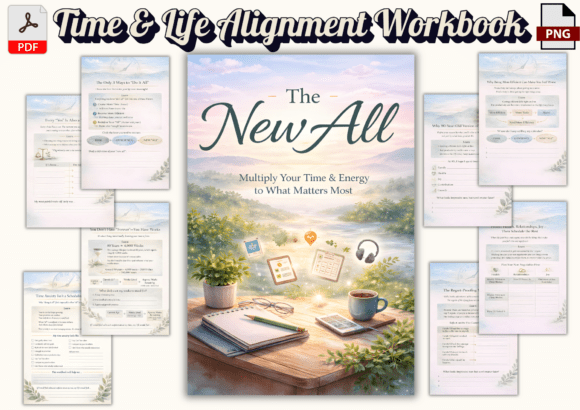
Feeling overwhelmed by endless to-do lists and constantly busy but still feeling behind is a common experience for many professionals, creators, and entrepreneurs. The Time Life Alignment Workbook offers a structured, 21-page guided approach to move from constant busyness to meaningful focus. This resource is designed for anyone tired of the productivity rat race and ready to define their own version of "enough."
Instead of yet another system for cramming more into your day, this workbook helps you rethink productivity from the ground up. It blends time management, intentional living, and reflection prompts to help you identify where your time actually goes, clarify your core priorities, and design a weekly system that works for real life.
What Is the Time Life Alignment Workbook?
The Time Life Alignment Workbook is a guided reflection and planning tool. It moves beyond surface-level time management techniques and addresses the underlying anxiety and overwhelm that often accompany modern busyness. The workbook includes time anxiety reflection exercises, life audits, and simple planning tools that help you escape the efficiency trap and protect time for health, relationships, and joy.
This is not a theoretical book or a productivity system that requires a steep learning curve. It is a practical, printable resource (available in PDF and PNG formats, 6x9 inches) that you can use immediately. The workbook is structured to guide you through three core phases: understanding your current time use, clarifying what matters most, and building a sustainable weekly system.
Where the Workbook Fits in Your Broader Process
The Time Life Alignment Workbook is most effective when used as a periodic alignment tool rather than a daily task manager. It complements your existing tools and routines. Think of it as a compass that helps you set direction, while your calendar, to-do list, and project management tools handle the day-to-day execution.
This workbook fits naturally into several contexts:
- Before starting a new project or role: Use it to clarify priorities and ensure your energy goes toward what matters most from the outset.
- During a period of overwhelm or burnout: The reflection exercises help you identify sources of time anxiety and re-establish boundaries.
- After a major life or work transition: Revisit the workbook to realign your weekly system with your evolved priorities.
- As a quarterly or seasonal review: Schedule a two-hour session every three months to complete the workbook exercises and reset your focus.
How It Interacts with Other Tools and Methods
The workbook is designed to work alongside your existing productivity stack, not replace it. Here are practical ways to integrate it with common tools and methods:
- Calendar systems (Google Calendar, Outlook, Notion Calendar): After completing the workbook, use your calendar to block time for your identified priorities. The workbook helps you decide what deserves a recurring time block, from deep work to relationship time.
- Task managers (Todoist, Asana, Trello): Use the workbook to audit your current task list. Identify tasks that do not align with your core priorities and archive or delegate them. The workbook gives you the clarity to say no without guilt.
- Journaling or reflection practices: The time anxiety reflection exercises in the workbook can become a regular journaling prompt. You can revisit specific prompts weekly or monthly to track progress.
- Goal-setting frameworks (OKRs, SMART goals): Use the workbook to define your "why" before diving into goal-setting. The priorities you clarify here inform the goals you set in other systems.
- Habit tracking apps: After identifying priorities like health or joy, create simple habit trackers to reinforce those areas daily or weekly.
Practical Implementation Tips
To get the most out of the Time Life Alignment Workbook, approach it as a working document. Print it out or use the PNG files on a tablet for digital annotation. Here are workflow examples for different user profiles:
For a busy professional or entrepreneur
Block two uninterrupted hours on a Sunday afternoon. Complete the workbook in one sitting. Focus especially on the life audit and the weekly system design sections. At the end of the session, set up your calendar for the coming week based on your new priorities. Repeat this quarterly to stay aligned.
For a creator or freelancer
Your time is your most valuable asset. Use the workbook to distinguish between client work that aligns with your long-term vision and tasks that drain your energy. The escape-the-productivity-trap exercises are particularly useful here. Apply the workbook before taking on a new client or launching a new project to ensure it fits your definition of "enough."
For a small business owner or publisher
Use the workbook with your team or partner during a planning retreat. The reflection exercises can be done individually, then discussed collectively to align on shared priorities. The weekly system design section can inform team workflows and meeting structures.
Organizational and Efficiency Benefits
One of the workbook's strongest contributions is helping you prepare mentally and strategically before you act. Most productivity struggles stem not from lack of tools but from lack of clarity. The workbook addresses this root cause directly. By completing the exercises, you gain:
- Consistency: A clear set of priorities that you can refer back to when making daily decisions.
- Quality control: You stop saying yes to tasks, projects, and commitments that dilute your focus and energy.
- Usability: The workbook format is simple and accessible. No complex frameworks to learn. You can complete the exercises in one or two sittings.
- Long-term value: The workbook is designed for repeated use. Revisit it every season or after major life changes to realign your system.
Key Workbook Sections and How to Use Them
The 21-page workbook is organized into several distinct sections, each serving a specific purpose in the alignment process.
Time Anxiety Reflection Exercises
These exercises help you name and explore the specific feelings of overwhelm and busyness. Instead of pushing through, you pause and examine what is driving the anxiety. This is the foundation for all subsequent work. Use these prompts when you feel scattered or before making a big decision.
Life Audits
A life audit asks you to look at how you currently spend your time across different domains: work, health, relationships, personal growth, rest, and joy. This is a neutral, non-judgmental inventory. The key is to compare where your time actually goes with where you want it to go. This section pairs well with time tracking data from a tool like Toggl or RescueTime if you have it, but it works fine without.
Core Priorities and Values Clarification
Here, you define what matters most right now. This is not a list of everything you care about, but a focused set of priorities for the current season of life. This section directly feeds into the weekly system design. It helps you say no to opportunities that are good but not aligned.
Escape the Productivity Trap
This is a critical section for anyone who has internalized the idea that being productive means doing more. The exercises here help you redefine productivity as doing what matters, not doing everything. This reframe is essential for long-term sustainability and burnout prevention.
Design a Weekly System for Real Life
The final section translates your reflections into action. You design a weekly rhythm that protects time for your core priorities, health, relationships, and joy. This is not a rigid schedule but a flexible template that accounts for the unpredictability of real life. It might include anchor events (e.g., a morning routine, a weekly date night, a block for deep work) and flexible time for reactive tasks.
Integrating the Workbook into a Long-Term Routine
The Time Life Alignment Workbook is not a one-time fix. Its real power comes from repeated use. Here are practical suggestions for making it a lasting part of your workflow:
- Schedule a quarterly "alignment day": Block half a day every three months. Complete the workbook fresh (you can reuse the digital files or print new copies). Compare your responses from the previous quarter to see what has shifted.
- Use a specific exercise as a weekly check-in: For example, the time anxiety reflection can be adapted into a five-minute weekly journal prompt to track your stress levels and adjust your schedule.
- Combine with a weekly review: Every Sunday evening, spend 15 minutes reviewing your priorities and your coming week. The workbook gives you a clear set of priorities to anchor this review.
- Share with an accountability partner: If you work on the workbook with a colleague or friend, you can hold each other accountable to the weekly system you design.
Useful Observations for First-Time Users
If you are new to the Time Life Alignment Workbook, here are a few observations that will help you get the most out of it:
- Be honest, not aspirational. The workbook works best when you accurately reflect where you are, not where you think you should be. The life audit is a snapshot, not a judgment.
- You do not need to complete it in one sitting. While you can, you can also spread the sections across a week. Let each exercise settle before moving to the next.
- The weekly system you design will evolve. Do not aim for perfection. Aim for a system that is 80% effective and that you will actually follow. Adjust after a week or two.
- Pair it with actual time tracking for deeper insights. If you have never tracked your time, try a week of manual tracking before completing the life audit. The contrast between perceived and actual time use is often surprising.
Who Benefits Most from This Workbook
While the workbook is useful for a broad audience, it is especially valuable for specific groups:
- Professionals and managers who feel stuck in a cycle of meetings, emails, and reactive work.
- Creators and freelancers who struggle with the blur between work and life and need help setting boundaries.
- Entrepreneurs and small business owners who wear many hats and need to prioritize where to focus their limited energy.
- Marketers, educators, and bloggers who juggle multiple projects and content streams and need a system for deciding what to create and what to let go.
- Hobbyists and productivity-minded individuals who want to reclaim time for pursuits that bring them joy, not just more output.
Getting Started with Your Workbook
The Time Life Alignment Workbook is delivered as an instant digital download in PDF and PNG formats. The 6x9 inch printable format is easy to print at home or at a local print shop. You can also use the PNG files with a tablet and note-taking app like GoodNotes, Notability, or OneNote for a paperless experience.
To begin, set aside a quiet block of time. Have a pen (or stylus) and an open mind. Do not rush the reflection exercises. The value of this workbook lies not in completing it quickly, but in the clarity you gain from each section. When you finish, you will have a custom-designed weekly system that reflects your actual priorities, not someone else's expectations.
Ultimately, the Time Life Alignment Workbook is about reclaiming your time and focusing on what matters most. It is a practical, repeatable process for anyone ready to move from overwhelmed and busy to aligned and intentional.