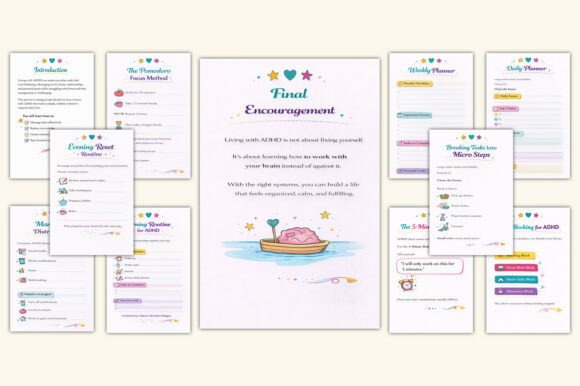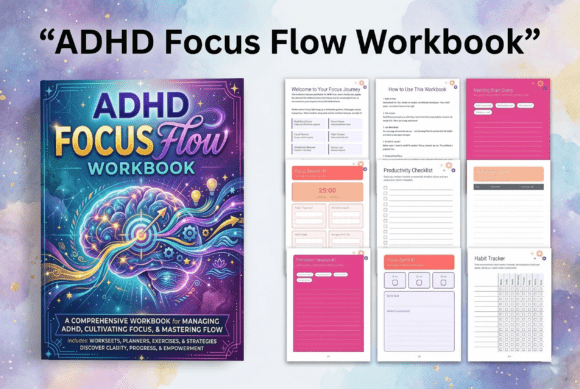
ADHD Focus Flow Workbook
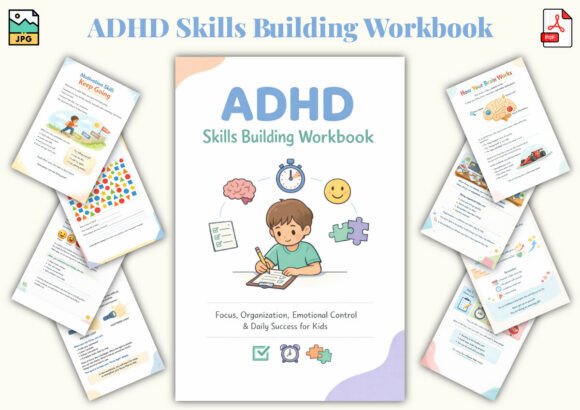
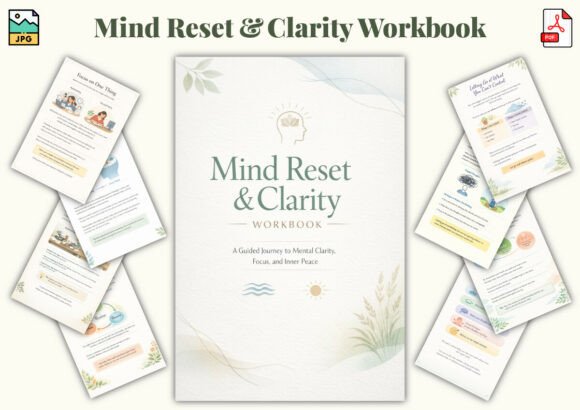
If you have ever sat down to work, only to find your mind racing through unrelated thoughts, forgotten errands, or half-formed ideas, you understand the weight of mental clutter. The 🧠✨ADHD Focus Flow Workbook📘 meets you exactly where you are. Designed for the unique wiring of ADHD brains, this workbook does not demand rigid structure or perfection. Instead, it offers a flexible, brain-friendly system for clearing mental noise, prioritizing what matters, and moving through your day with less resistance. It combines guided prompts, energy-aware planning, and practical breakdowns so you can work with your attention patterns rather than against them.
This approach matters because ADHD is not a lack of focus but a challenge with regulating focus. A traditional planner or to-do list often fails because it assumes a linear, consistent energy flow. The ADHD Focus Flow Workbook acknowledges that your focus ebbs and flows. It gives you permission to dump your thoughts without judgment, plan around your natural energy peaks, and break down overwhelming tasks into steps that feel achievable. Whether you are a professional juggling deadlines, a creator managing multiple projects, or someone simply trying to get through daily life with less overwhelm, this workbook adapts to your rhythm.
What Makes the Workbook Different
Many productivity tools are built for neurotypical brains. They assume you can maintain a single priority list, estimate time accurately, and resist distractions. The ADHD Focus Flow Workbook starts from a different premise: your brain needs space to offload before it can focus. That is why the workbook centers on brain dump pages, morning clarity exercises, and energy-based planning rather than rigid scheduling.
Brain Dump Pages
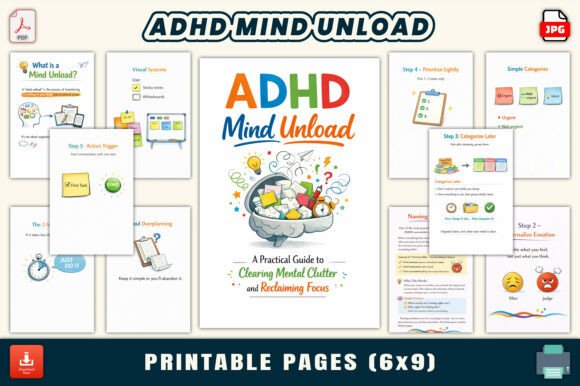
The brain dump is not just a nice feature; it is a foundational tool. When your mind is holding dozens of loose threads—a work deadline, a grocery item, an email you need to send, a worry about tomorrow—it cannot focus on the task in front of you. By writing everything down without judgment or organization, you free up mental bandwidth. The workbook provides dedicated spaces for this, so you do not have to worry about forgetting something important. You simply empty your mind onto the page.
Morning Brain Dump
The morning brain dump exercise helps you start the day clear. Instead of reaching for your phone or jumping straight into tasks, you spend a few minutes writing whatever surfaces. This simple ritual can improve mental clarity and reduce the scattered feeling that often accompanies ADHD mornings. It sets a calmer tone for the day ahead.
Energy-Based Planning
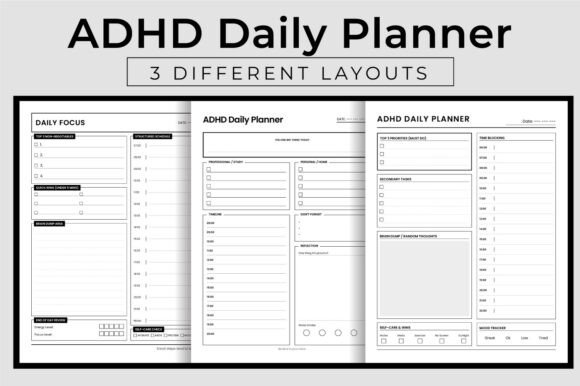
Traditional planning tells you to schedule tasks by time blocks. Energy-based planning asks you to consider when your focus is naturally stronger or weaker. If you know you have a burst of clarity mid-morning, you can place your most demanding work there. If your energy dips after lunch, you can plan low-focus tasks like organizing files or responding to routine messages. The workbook includes prompts and layouts that help you map your energy patterns and plan accordingly.
Different Audiences, Different Benefits
The value of the ADHD Focus Flow Workbook shifts depending on who you are and what you need. Here is how it serves various users without forcing a one-size-fits-all approach.
Beginners and Those New to ADHD Tools
If you are new to structured planning or have tried and abandoned multiple systems, this workbook offers a low-pressure entry point. You do not need to learn a complex methodology. You can start with just the brain dump pages and the daily focus planner. The layouts are simple, uncluttered, and designed to reduce distraction. For a beginner, the priority is ease of use and flexibility. The workbook does not punish you for skipping a day or using it inconsistently. You can pick it up whenever you need it.
Practical example: A freelancer who has never used a planner can open the workbook and immediately write down everything on their mind—client feedback, a bill due tomorrow, an idea for a new project. From there, they can identify the one or two most important tasks for the day and ignore the rest. No pressure to fill every box.
Professionals and Entrepreneurs
For professionals managing multiple responsibilities, the workbook becomes a tool for triage and delegation. The task breakdown sheets help turn a vague project like "launch the website" into specific steps: choose a domain, draft homepage copy, select images, test checkout flow. Energy-based planning helps you schedule high-focus work during your peak times and leave routine tasks for lower-energy periods. Entrepreneurs often wear many hats, and the workbook helps them decide what actually needs their attention versus what can wait or be outsourced.
Practical example: A small business owner can use the daily focus planner to pick three meaningful tasks instead of trying to cram twenty items into one day. The brain dump catches stray ideas for marketing or operations, so nothing gets lost.
Creators, Writers, and Marketers
Creative work requires a different kind of focus—one that can feel especially elusive with ADHD. The workbook supports creative workflows by separating idea generation from execution. You can capture spontaneous ideas in the brain dump without derailing your current task. Later, you can revisit those ideas and decide which ones deserve development. The energy-based planning helps creators schedule their most creative work during their natural flow periods rather than forcing creativity at a set time.
Practical example: A blogger can jot down post topics as they arise, then use the task breakdown sheets to outline research, drafting, editing, and publishing steps. The morning brain dump clears mental space for deeper writing later.
Educators and Hobbyists
Educators face constant interruptions and shifting priorities. The workbook offers a place to offload administrative tasks, lesson ideas, and student concerns so they do not all compete for attention at once. Hobbyists benefit from the flexible structure because their projects often lack external deadlines. The workbook helps them make steady progress without the pressure of a rigid schedule.
Practical example: A teacher can use the workbook during breaks to capture ideas for next week's lesson while clearing their mind of classroom noise. A hobbyist learning guitar can break down practice into small, focused sessions rather than feeling overwhelmed by the goal of "learning to play."
Key Features in Practice
Beyond the brain dump and energy planning, the workbook includes several other tools that support ADHD-friendly productivity.
Daily Focus Planner
This is your anchor. It helps you identify one to three most important tasks for the day—what truly needs to move forward. The layout avoids overwhelming you with endless lines. It asks: What is the one thing that would make today feel productive? You can write it down and let everything else be secondary. This is especially valuable for people with ADHD who tend to either overcommit or avoid starting because the list feels too long.
Task Breakdown Sheets
Big tasks often trigger avoidance because they feel shapeless and heavy. The task breakdown sheets help you pull apart a large project into concrete, manageable steps. Each step feels small enough to start. This reduces the paralysis that comes from facing a monolithic task. You do not need to plan everything at once. You can break down just one task per day if that is what works for you.
ADHD-Friendly Layouts
The design choices matter. The workbook uses simple layouts with enough structure to guide you but not so much that they feel restrictive. White space, clear headings, and minimal visual clutter help reduce distraction. You are not fighting with the layout to figure out where to write. It feels intuitive and forgiving.
Is the Workbook Right for You?
Deciding whether the ADHD Focus Flow Workbook matches your goals depends on your priorities. If you value flexibility over rigid structure, this workbook will likely feel freeing. If you need a system that adapts when your energy shifts, it meets that need. If you have tried traditional planners and found them too demanding or too vague, this offers a middle ground—guided but not controlling.
Consider your skill level and experience with planning tools. Beginners will find the entry point gentle. Experienced users who have already developed some strategies can integrate the workbook as a supplement—perhaps using it primarily for brain dumps or for breaking down complex projects. The cost is reasonable for a physical tool that you can use daily over several months. The long-term usefulness comes from its adaptability: you can reuse it as your needs change.
If you are a professional with tight deadlines, the workbook helps you protect your focus by externalizing distractions. If you are a creator, it helps you capture ideas without losing momentum. If you are simply someone who wants to feel less overwhelmed by everyday life, the brain dump alone can be a game changer. There is no wrong way to use it. You can start anywhere, skip sections, and return to them later.
Ultimately, the ADHD Focus Flow Workbook is not about becoming perfectly organized. It is about creating enough structure to reduce overwhelm while honoring how your brain actually works. It is a tool for clarity, not constraint.