Guided Journal for 2027: How a Gratitude Positivity Journal Becomes Your Year-Round Anchor
Most people treat a new year like a fresh to-do list. They set resolutions, buy a planner, and by February the pages are blank and the resolutions feel like distant memories. A guided journal works differently. It doesn't just ask you to write down tasks. It invites you to pause, reflect, and notice what is already going well. The 2027 Gratitude Positivity Journal A Year of Abundance does exactly that. It is structured, yes, but it is also flexible enough to fit into the real rhythms of your life. Whether you are a freelancer juggling multiple projects, a parent trying to hold it all together, or a small business owner navigating uncertainty, this journal gives you a framework to keep your focus on what actually matters.
What a Guided Journal Actually Does for You
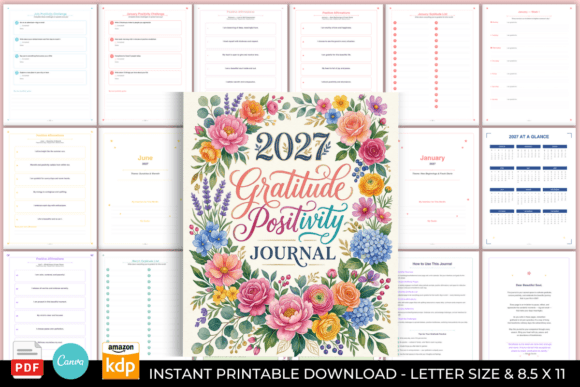
A guided journal is not a diary where you stare at a blank page and hope something comes. It provides prompts, sections, and a structure that leads you through a process. The 2027 Gratitude Positivity Journal is built around monthly themes, weekly check-ins, and space for intentions. You do not need to be a seasoned writer or a mindfulness expert to use it. You just need to show up. The journal handles the direction. Your job is to bring your honest thoughts.
This matters because gratitude is not a passive feeling. It is a practice. Without a structure, it is easy to forget to reflect. Days blur together. Stress takes over. A guided journal becomes the gentle nudge that brings you back to center. It turns gratitude from an abstract idea into a daily habit that actually sticks.
Morning Coffee and Clear Intentions
Imagine this. You pour your coffee, sit down at the kitchen table, and open the journal to the current week. The Setting Your Heart's Intentions section at the start of the year helps you define your Word of the Year and your primary goals for positivity. That is not fluffy. That is practical. When you know your word for the year, every decision you make can be measured against it. If your word is "steady," you can ask yourself whether a new commitment supports steadiness or disrupts it. That kind of clarity changes how you spend your time.
Between Meetings and Deadlines
For entrepreneurs and marketers, the pace is relentless. You move from client call to content deadline to strategy session. It is easy to end the week feeling like you accomplished nothing because you only remember what went wrong. The Weekly... sections in each monthly journey give you a structured place to note what went well, what you learned, and what you are grateful for. This is not about toxic positivity. It is about balancing the narrative. When you write down three good things that happened during a chaotic week, you start to see patterns. You notice what works. You also notice what drains you. That is actionable data for your business and your life.
Evening Reflection Before Sleep
Many users keep this journal on their nightstand. Before sleep, they flip to the current week and write a short reflection. This is especially helpful for educators and bloggers who spend hours giving to others. Your mind races with everything you need to do tomorrow. Writing down a moment of gratitude, even a small one, signals your brain that the day is complete. It lowers the mental noise. It also creates a record. Months later, you can look back and see that even on hard days, there was something worth noting.
Who Benefits Most and Why
- Freelancers and creators often work alone. Without a team or external feedback, it is easy to focus only on what is not working. A gratitude journal becomes a personal feedback loop. It reminds you of progress you would otherwise ignore.
- Small business owners carry the weight of every decision. The journal does not solve business problems, but it changes how you carry them. When you start each month by setting a focus, you approach challenges with more clarity and less reactivity.
- Bloggers and publishers need content that resonates. Using a guided journal yourself gives you firsthand experience with the format. You understand what makes a prompt effective. That insight can shape the products or content you create for your own audience.
- Hobbyists and everyday users may not think they need a structured journal. But that is exactly why they benefit most. Without structure, hobbies and self-care get pushed aside. The journal makes reflection feel like a natural part of the day, not another task.
Real Scenarios Where This Journal Shines
Scenario one: You are a teacher in the middle of the school year. The demands are constant. You grade papers at night and plan lessons on weekends. By February, burnout is real. The Monthly Themed Journeys give you a way to reset. Each month has a mini-calendar and a focus. You do not need to reflect every single day. You check in at the start of the month, set a simple intention, and note one or two gratitudes each week. By June, you have a record of small victories that kept you going. That is not just nice to have. That is survival.
Scenario two: You run an online store. The holiday rush is exhausting. Orders come in at all hours. Customer emails pile up. The 2027 Year at a Glance page helps you mark the stressful periods in advance. You can plan your reflection practice around those high-intensity weeks. When you know December is going to be chaotic, you commit to writing one sentence of gratitude each morning. That sentence becomes an anchor. It takes ten seconds, but it shifts your starting point for the day.
Scenario three: You are between jobs or transitions. Uncertainty makes gratitude feel forced. But the guided journal does not ask you to fake happiness. It asks you to notice. You might write, "I am grateful that I have time to walk in the afternoon right now." That is honest. That is real. Over weeks, the practice rewires your attention. You start to see possibilities instead of problems. That is a practical outcome with tangible effects on your job search or creative projects.
What to Consider Before You Start Using This Journal
A guided journal is a tool, not a magic solution. The 2027 Gratitude Positivity Journal is designed to be used consistently, but consistency does not mean perfection. You will miss days. That is fine. The journal has 115 pages, which is enough space for a full year of weekly and monthly reflections without feeling overwhelming. You do not need to fill every line.
Think about where you will keep it. People who place it somewhere visible, like on a desk or nightstand, use it more often. People who tuck it in a drawer forget about it. Also consider your preferred format. If you love writing by hand, this journal is a natural fit. If you prefer digital, you might adapt the prompts into a notes app. The value is in the structure of the prompts, not the paper itself.
Another consideration is timing. The journal is built around the 2027 calendar year, but you can start any time. If you pick it up in March, just begin with March. Do not feel pressure to backfill. The monthly themes are flexible enough to work as standalone reflections. The point is to start where you are.
Connecting Features to Real Outcomes
The SECTION 1 Intentions Vision Welcome is not just a pretty opening. It is where you claim ownership of your practice. Writing your name and your word for the year creates a psychological commitment. You are more likely to follow through when you have declared your intention.
The Monthly Cover and Mini-Calendar are not decorative. They help you visualize the month ahead. When you see the weeks laid out, you can anticipate busy periods and plan your reflection practice around them. It turns an abstract month into a manageable view.
The weekly prompts are designed to be brief. You do not need to write paragraphs. A few sentences are enough. That is crucial for busy adults who cannot dedicate thirty minutes a day to journaling. Five minutes is realistic. Five minutes consistently yields more results than an hour once a month.
Why This Journal Works for the Whole Year
The 12 monthly journeys cover January through December. Each month has its own theme and focus. That keeps the practice fresh. You do not get bored because the prompts shift with the seasons. January might focus on new beginnings. July might focus on growth and momentum. By December, you have a full picture of your year that goes beyond what you achieved. You also see how you grew, what you appreciated, and where you found joy even in hard moments.
This is especially valuable for content creators and bloggers who want to write with more authenticity. When you have a gratitude practice, your writing naturally becomes more grounded. You stop chasing trends and start speaking from real experience. Your audience notices. That is not marketing hype. That is the outcome of showing up honestly on the page, whether in your journal or in your work.
The 2027 Gratitude Positivity Journal is not about having a perfect year. It is about noticing that even in an imperfect year, there is abundance. Small moments. Quiet wins. Unexpected kindness. The journal trains your attention to see those things. Over time, that changes how you move through your days. It changes how you talk to yourself. And that changes everything else.
If you are someone who wants to end 2027 with a clearer sense of what actually mattered, this guided journal gives you a way to track that. Not in metrics or goals, but in moments. That is the kind of record that stays with you long after the year ends.