How Structured Prompts Transform Caregiving Into a Manageable, Mindful Practice
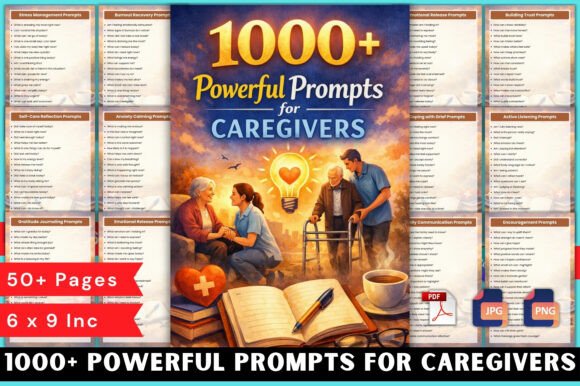
Caregiving, whether performed by a family member or a trained professional, involves far more than completing a checklist of tasks. It demands emotional resilience, clear communication, and the ability to adapt to constantly shifting needs. Many caregivers enter this role with dedication but little preparation for the mental and logistical weight it carries. This is where a thoughtfully organized resource becomes invaluable. 🎨 1000 Powerful Prompts for Caregivers offers a complete support system designed to address both the practical and emotional dimensions of caregiving. Instead of relying on intuition alone, caregivers gain access to a structured library of prompts that guide daily interactions, self-reflection, and decision-making.
The concept of using prompts might seem simple, but its impact is profound. A well-crafted prompt can redirect a caregiver’s focus, reduce decision fatigue, and open pathways for honest conversation. When caregiving routines become overwhelming, having a set of ready-to-use questions and reflections prevents stagnation and promotes proactive care. This resource is not a passive collection of ideas; it is an active tool meant to be used every day, in real situations.
Why Caregivers Need More Than Just Instructions
Standard caregiving guides often focus on medical procedures or daily tasks. While those are necessary, they neglect the human elements that determine the quality of care. A caregiver who feels emotionally depleted cannot provide attentive support. Similarly, a caregiver who struggles with communication may unintentionally create distance with the person they are helping.
🎨 1000 Powerful Prompts for Caregivers bridges this gap by combining task-oriented guidance with emotional and psychological support. The prompts are organized into clear categories, each targeting a specific aspect of the caregiving experience. This structure ensures that no area is overlooked. Whether a caregiver needs to assess their own stress levels, plan a difficult conversation about medication, or simply find a moment of mindfulness, the appropriate prompts are available without searching through unrelated material.
Practical Benefits of a Prompt-Based Approach
One of the greatest challenges in caregiving is knowing what to say or do in a given moment. When a loved one is frustrated, in pain, or confused, a caregiver may freeze, unsure how to respond. Prompts eliminate that hesitation by providing a framework for action. For example, a prompt that asks, “What is one small thing I can do right now to make this person feel more comfortable?” shifts focus from anxiety to practical action.
Similarly, prompts designed for self-care prevent caregiver burnout. Questions like, “What did I do today that helped me feel grounded?” encourage reflection and reinforce healthy habits. These are not abstract suggestions. They are specific, actionable, and repeatable.
The Categories That Make This Resource Comprehensive
The organization of 🎨 1000 Powerful Prompts for Caregivers is one of its strongest features. Rather than forcing a caregiver to sift through unrelated content, the prompts are divided into focused sections. These include emotional support, self-care, patient communication, daily caregiving tasks, stress management, burnout recovery, empathy building, and mindfulness.
Each section serves a distinct purpose. The emotional support prompts help caregivers articulate feelings they might otherwise suppress. The self-care section reminds them that their own well-being is not optional. Patient communication prompts provide scripts and questions that foster trust and clarity. Daily task prompts streamline routines and reduce the mental load of planning.
This categorical structure means that a caregiver can quickly find the exact type of support they need without distraction. If morning routines feel chaotic, there is a category for that. If a difficult family conversation is looming, prompts exist to prepare for it. The resource becomes a go-to reference rather than a book to read once and set aside.
Real-World Scenarios Where Prompts Make a Difference
Consider a professional caregiver working in a memory care facility. Each day brings new challenges in communication and patience. Using prompts from the empathy and communication categories, the caregiver can approach residents with a calm, prepared mindset. A prompt like, “What memory might bring this person comfort today?” turns a routine interaction into a meaningful connection.
For a family member caring for an aging parent at home, the emotional toll can be intense. Prompts focused on stress and anxiety help that caregiver recognize when they need a break. A simple prompt such as, “What is one boundary I need to set today?” empowers them to protect their own mental health while still providing excellent care.
In home healthcare settings, where schedules are tight and responsibilities overlap, prompts for daily tasks ensure consistency. A caregiver can run through a few prompts at the start of a shift to prioritize the most important actions. This reduces errors and ensures that nothing is forgotten during a busy day.
Supporting Emotional Well-Being Without Adding Another Task
One concern caregivers often express is that they already have too much to do. Adding another tool or resource can feel like a burden. However, 🎨 1000 Powerful Prompts for Caregivers is designed to integrate seamlessly into existing routines. The prompts are short, focused, and require minimal time to use. A caregiver can spend three minutes with a prompt during a coffee break or before a shift begins.
The emotional well-being prompts do not demand lengthy journaling unless the caregiver chooses that path. Instead, they invite brief reflection that can shift perspective immediately. For example, a prompt that asks, “What am I grateful for in this moment?” rewires the brain to notice positive elements even in difficult circumstances. Over time, this practice builds emotional resilience without requiring extra effort.
Mindfulness prompts are particularly valuable for caregivers who feel constantly rushed. A prompt like, “Take three slow breaths and notice one sound in the room” can be completed in under a minute. Yet that single minute of presence reduces tension and improves focus for the hours ahead.
Communication Prompts That Build Trust and Reduce Conflict
Miscommunication is a major source of stress in caregiving relationships. The person receiving care may feel misunderstood or infantilized. The caregiver may feel frustrated when their efforts are not appreciated. Communication prompts in this collection address these issues directly.
Some prompts guide the caregiver in how to ask open-ended questions that invite the care recipient to share their feelings. Others help the caregiver frame requests in a way that preserves the recipient’s dignity. For instance, instead of saying, “You need to take your medicine,” a prompt might suggest, “How can we make taking your medicine easier for you today?” This small shift in language reduces resistance and fosters cooperation.
For family caregivers, communication prompts also help navigate conversations with siblings, doctors, and other stakeholders. Questions that encourage clarity and empathy reduce the likelihood of arguments and misunderstandings.
A Resource for Professional Growth and Personal Reflection
Professional caregivers, including home health aides, nurses, and social workers, often face high turnover and burnout. Having a structured prompt library supports their professional development by encouraging consistent self-assessment. Prompts that ask about learning, growth, and challenges help professionals identify areas where they need more training or support.
At the same time, the same prompts serve a personal function. A healthcare worker who uses prompts for empathy and self-care is less likely to experience compassion fatigue. The resource bridges the gap between professional competence and personal sustainability.
For those training new caregivers, this collection serves as an excellent teaching tool. Supervisors can assign prompts as discussion starters during team meetings. New caregivers can use prompts to build confidence before they interact with clients. The versatility of the resource makes it useful across experience levels and settings.
How to Incorporate Prompts Into Daily Caregiving Routines
Adopting a prompt-based practice does not require a complete overhaul of existing systems. The most effective approach is to start small. A caregiver might choose one prompt from the emotional support category each morning. Writing the answer in a notebook takes less than five minutes but sets a reflective tone for the day.
Another practical method is to use prompts during transition times. Between patient visits or after completing a challenging task, a quick prompt helps reset focus. Caregivers who work in teams can share a prompt of the day and discuss it briefly during a shift handoff.
The key is consistency, not volume. Using even a single prompt daily produces cumulative benefits over weeks and months. The resource is designed to support this habit without requiring a major time commitment.
Why This Collection Stands Apart From Generic Resources
Many caregiving resources exist, but few are built with the same level of intentional structure. 🎨 1000 Powerful Prompts for Caregivers was created by professionals who understand the nuances of caregiving work. Every prompt serves a specific purpose, and the categories reflect real-world challenges rather than theoretical ideas.
The collection also acknowledges that caregiving is not a one-size-fits-all experience. A prompt that works for a hospice nurse may differ from one that helps a mother caring for a child with special needs. The breadth of categories ensures that every caregiver finds relevant material regardless of their specific situation.
This resource is not a replacement for professional therapy or medical training. It is a complementary tool that strengthens the caregiver’s ability to provide quality care. By reducing guesswork and providing structure, it frees up mental energy for what matters most: compassionate, attentive presence.
Final Observations on the Role of Prompts in Modern Caregiving
Caregiving is evolving. More people are taking on care roles while juggling careers, families, and personal responsibilities. The margin for error is thin, and the stakes are high. A resource that simplifies decision-making while promoting emotional health is not a luxury; it is a necessity.
🎨 1000 Powerful Prompts for Caregivers meets this need by offering a practical, organized, and deeply human approach to care. It acknowledges that caregivers are not machines. They are people who need guidance, reassurance, and moments of reflection. The prompts in this collection provide exactly that, one question at a time.
For anyone who has ever felt uncertain, overwhelmed, or isolated in their caregiving role, this prompt library offers a reliable companion. It does not claim to solve every problem, but it provides the clarity and confidence to face each day with intention. Caregiving is demanding, but with the right tools, it can also be deeply rewarding.