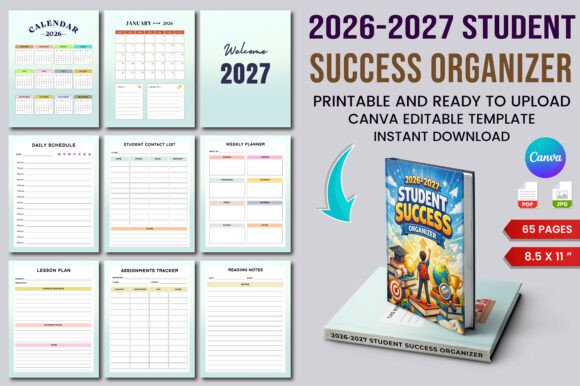
Student Success Organizer 2026–2027
Academic life demands more than just showing up to class. Between managing deadlines, tracking assignments, and balancing extracurriculars, students need a system that works with them, not against them. The Student Success Organizer 2026–2027 offers a complete framework for staying on top of the school year from start to finish. Whether you are a high school student preparing for college applications or a university undergraduate juggling multiple courses, this planner provides the structure to turn chaos into clarity.
What makes this organizer different
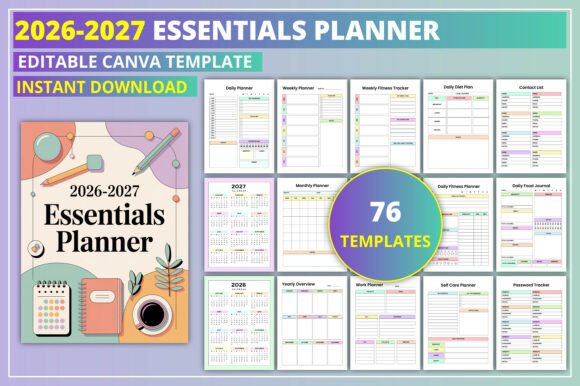
Many planners focus on one aspect of student life, such as daily scheduling or homework tracking. This organizer takes a broader view. It combines full-year calendars for 2026 and 2027 with weekly and daily layouts, study trackers, lesson planners, and grade monitoring tools. The result is a single resource that supports every phase of the academic journey.
The design also includes thoughtful extras like a vision board, bucket list, and goal-setting pages. These elements encourage students to think beyond grades and exams. They invite reflection on personal growth, aspirations, and the bigger picture of what education means.
Who benefits from this planner
- High school students preparing for college can use the grade tracker and semester overview to maintain strong academic records while using the goal pages to clarify their next steps.
- College and university students managing multiple courses, readings, and exam schedules will find the time table, assignment tracker, and study log essential for staying organised across different subjects.
- Homeschooling parents and tutors can adapt the lesson plan templates and reading log to create customised learning paths for their children or students.
- Teachers and educators who want a comprehensive way to track class progress, volunteer schedules, and lesson plans across the academic year.
- Student mentors and academic coaches can use the goal-setting and reflection pages to guide discussions about academic habits and personal development.
Daily, weekly, and yearly planning in one place
The strength of this organizer lies in its layered approach. The yearly calendar gives a bird’s-eye view of the entire academic year. From there, students can zoom into monthly and weekly layouts for detailed planning. The daily schedule pages allow for hour-by-hour time blocking, which is especially useful during exam periods or when balancing school with part-time work.
Practical applications for time management
A student with a packed schedule can use the weekly planner to block out study sessions, extracurricular activities, and downtime. The homework log ensures nothing slips through the cracks, while the assignment tracker provides a clear overview of upcoming deadlines. By cross-referencing the weekly planner with the semester plan, students can avoid the common trap of overcommitting in one period and leaving another week underused.
Lesson planning for educators and tutors
Teachers and tutors can use the daily lesson planner alongside the topic checklist to map out curriculum delivery across the year. The revision checklist is particularly useful for helping students prepare for final exams without last-minute panic. By breaking revision into manageable chunks, the planner encourages consistent study habits rather than cramming.
Tracking progress and staying motivated
One of the most motivating features of the Student Success Organizer 2026–2027 is the student grade tracker. Recording grades across the semester gives students a visual representation of their progress. When grades improve, it builds confidence. When they dip, it provides an early warning sign that prompts action.
The study tracker complements this by allowing students to log hours spent on different subjects. Over time, patterns emerge. A student might notice that they study more effectively in the morning or that they tend to procrastinate on certain subjects. This awareness is the first step toward better habits.
Goal setting beyond academics
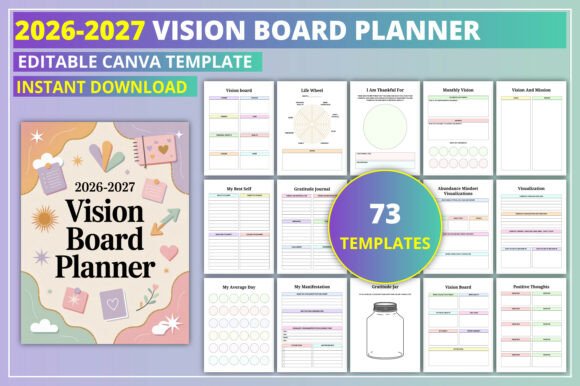
The bucket list and vision board pages shift the focus from short-term tasks to long-term aspirations. A student might include travel goals, personal projects, or skills they want to learn. These pages serve as a reminder that education is part of a larger life journey. They also provide a creative outlet within the planner, giving students permission to dream while staying grounded in their daily responsibilities.
Using the vision board effectively
The vision board can be filled with images, quotes, or sketches that represent the student’s goals. Some students use magazines and collage materials, while others draw or write directly. The key is to revisit the vision board periodically to see which goals have been achieved and which need more attention. This practice keeps long-term aims visible even during busy semesters.
Creative variations for different users
The 65 templates included in the organizer offer flexibility. Not every student will use every page, and that is fine. The planner is designed to be adapted. A creative writing student might prioritise the reading log and book notes, while a science student might focus more on the assignment tracker and semester overview.
- For visual learners, the vision board and bucket list pages can be decorated with colour coding, stickers, or hand-drawn illustrations.
- For data-oriented students, the grade tracker and study log can be used to create charts and analyse study efficiency.
- For students with ADHD or executive function challenges, the time table and homework tracker provide essential structure that reduces mental load.
- For international students adapting to a new education system, the all about me page and contact lists help build a support network while the semester overview clarifies unfamiliar academic timelines.
How to keep results clear and organised
An organizer only works if it is used consistently. Here are practical ways to maintain clarity throughout the year:
- Set a weekly review time. Spend ten minutes every Sunday looking at the coming week. Update the weekly planner, transfer deadlines from the assignment tracker, and check the semester overview for upcoming exams.
- Colour code by subject. Assign a colour to each class and use it consistently across the time table, homework log, and study tracker. This visual system makes scanning for assignments faster and reduces cognitive load.
- Write in pencil for recurring schedules. Classes and activities that change each term can be noted lightly so adjustments are easy to make without crossing out entire sections.
- Use the notes pages for overflow. When a weekly planner block is too small for detailed instructions, jot down a brief note and expand on it in the notes section. Keep the main pages clean and actionable.
- Review the goal pages monthly. At the start of each month, look at the bucket list and vision board. Adjust goals as priorities shift. This keeps the planner alive rather than static.
Adapting the planner for different contexts
The Student Success Organizer 2026–2027 is primarily designed for school use, but its templates can be repurposed for other settings. Entrepreneurs and freelancers might use the time table and weekly planner for client work scheduling. Book lovers can turn the reading log and reading notes into a personal library tracker. Event planners could adapt the assignment tracker and examination schedule for project milestones and deadlines.
The thank you files included in the package add a thoughtful touch. Students can use them to write thank-you notes to teachers, mentors, or classmates at the end of the semester. This small gesture builds relationships and reinforces a positive school culture.
Practical inspiration for getting started
Opening a new planner can feel overwhelming. Here is a simple starting sequence:
- Complete the all about me page. This personalises the planner and makes it feel like your own.
- Fill in the teacher and student contact lists. Having this information accessible saves time later.
- Transfer the school calendar to the yearly planner. Mark holidays, exam dates, and major deadlines first.
- Set up the time table with your current class schedule. Use colour coding from the start.
- Choose one goal from the bucket list. Write it in the goals section and break it down into small steps.
- Start the first weekly planner page. List the tasks for the upcoming week using the homework tracker and assignment log.
This sequence takes about thirty minutes and establishes a foundation that makes the rest of the year easier to navigate.
Why educators and parents appreciate this tool
Teachers who recommend this organizer to students often mention the balance between structure and flexibility. The lesson plan and revision checklist help instructors guide their classes systematically, while the student grade tracker allows parents and guardians to monitor progress without constant check-ins. The class volunteer page is a practical addition for schools that rely on parent participation for events and field trips.
For homeschooling families, the semester overview and book list become central planning tools. Parents can map out the entire academic year in advance, then use the weekly planner and daily lesson planner to execute their plans week by week. The reading log and book to buy list help manage library visits and book orders efficiently.
Final thoughts on staying consistent
The best planner is the one that gets used. The Student Success Organizer 2026–2027 offers enough variety to keep students engaged throughout the year while providing the practical tools needed for academic success. Whether you are a student aiming for straight As, a teacher looking for a reliable planning system, or a parent supporting your child’s education, this organizer provides a flexible framework that adapts to your needs. Start with one page, build the habit, and let the structure do the heavy lifting.