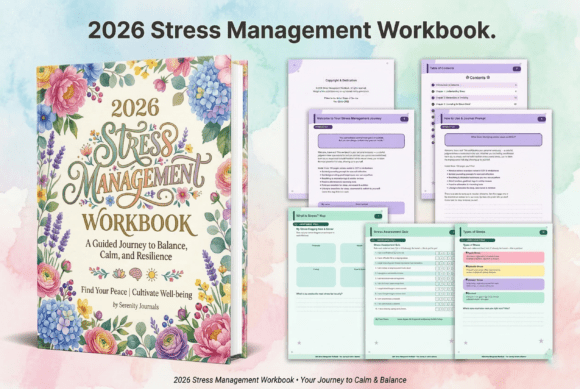
The 2026 Stress Management Workbook: Your Guide to Finding Balance and Building a Calmer Life
In today's fast-paced world, stress has become an almost constant companion for many people. From demanding work schedules and financial pressures to personal responsibilities and the nonstop flow of digital information, the sources of tension are seemingly endless. While a certain amount of stress can motivate and challenge us, chronic stress takes a serious toll on mental, emotional, and physical well-being. That is where a structured approach to stress management becomes invaluable. The 2026 Stress Management Workbook offers a practical, guided path toward understanding your unique stress responses and building lasting habits for a more peaceful life. This article explores the workbook's purpose, key features, and how it can help you regain control, reduce overwhelm, and cultivate resilience throughout the year.
Understanding Stress: More Than Just Feeling Overwhelmed
Before you can effectively manage stress, you need to understand what it is and how it operates in your life. Stress is the body's natural response to perceived threats or demands — a reaction often called the "fight-or-flight" response. In small doses, this response can be helpful, sharpening your focus and energy. However, when stress becomes chronic, it keeps your nervous system in a constant state of alert, leading to burnout, anxiety, and a host of health problems.
One of the most common misunderstandings about stress is that it is purely external — caused by a difficult boss, a busy schedule, or unexpected problems. In reality, stress is profoundly internal. It is shaped by how you interpret events, the stories you tell yourself, and the coping mechanisms you have developed over time. The 2026 Stress Management Workbook begins by addressing this foundational truth: you cannot change every external circumstance, but you can change your relationship with stress. Its Stress Awareness Worksheets help you move from vague feelings of being overwhelmed to a clear, concrete understanding of your personal triggers. By identifying specific situations, thoughts, and patterns that activate your stress response, you take the first critical step toward meaningful change.
Building Self-Awareness Through Daily Tracking
Knowledge is power, especially when it comes to managing your mental health. The workbook's Daily Stress Tracker is a central tool for building self-awareness over time. Instead of relying on memory or general impressions, you record your stress levels, moods, and the situations that influence your well-being each day. This practice reveals patterns you might otherwise miss. Perhaps you notice that your stress spikes on Sunday evenings (anticipatory anxiety about the work week) or that certain interactions consistently leave you feeling drained.
Tracking also helps you identify what reduces your stress. You might discover that a 10-minute walk after lunch, a short mindfulness break, or a conversation with a supportive friend consistently lowers your stress rating. These insights are gold. They transform stress management from a theoretical idea into a personalized, data-informed practice. Over weeks and months, your daily tracker becomes a living document of your journey, showing progress, highlighting setbacks, and reinforcing the habits that truly work for you. This kind of consistent self-monitoring aligns with evidence-based approaches like cognitive behavioral therapy and mindfulness-based stress reduction.
The Powerful Link Between Thoughts, Emotions, and Stress
Stress is not just about what happens to you — it is about how you process what happens. The Thought Emotion Reflection Pages in the workbook guide you through exploring this inner landscape. The core insight here is that your thoughts directly shape your emotional responses and, in turn, your stress levels. For example, if a colleague sends a brief email, you might think, "They are upset with me" or "I did something wrong." That thought triggers feelings of anxiety, worry, or defensiveness — even if the reality is simply that the colleague was busy.
By writing down your thoughts and examining them with curiosity rather than judgment, you create space for a different response. You begin to question automatic assumptions and develop more balanced, realistic perspectives. The workbook provides structured prompts to help you practice this skill, turning reactive patterns into conscious choices. Over time, you learn to respond to challenges with greater emotional flexibility rather than being hijacked by stress. This is a cornerstone of emotional intelligence and psychological resilience.
- Identify automatic thoughts: What went through your mind just before you felt stressed?
- Question the evidence: Is there proof that this thought is completely true? What are alternative explanations?
- Reframe with compassion: What would you say to a good friend in this situation? Can you offer yourself that same understanding?
Creating a Personalized Stress-Reduction Action Plan
A workbook full of insights is only valuable if it leads to action. The Stress-Reduction Action Planner bridges the gap between awareness and real-life change. This section helps you design practical, achievable steps that fit your unique circumstances. Instead of generic advice like "exercise more" or "relax," you create specific, measurable actions aligned with your values and schedule.
For instance, if you have identified that morning rushing sets a stressful tone for your entire day, your action plan might include preparing your work bag and clothes the night before, waking up 15 minutes earlier for a quiet cup of tea, or practicing three minutes of deep breathing before checking your phone. The planner encourages you to start small — even one or two consistent habits can create a ripple effect. It also prompts you to anticipate obstacles and plan for setbacks, which makes your action plan more realistic and sustainable. By treating stress reduction as a skill to be practiced rather than a problem to be fixed, you build long-term resilience.
Mindfulness and Relaxation: Practical Techniques for Daily Calm
Mindfulness is one of the most well-researched and effective tools for stress management, yet many people find it intimidating or vague. The Mindfulness Relaxation Exercises section of the workbook demystifies these practices by offering simple, guided activities you can do in just a few minutes. These exercises include deep breathing techniques, grounding practices (like the 5-4-3-2-1 sensory exercise), and mindful reflection prompts.
The beauty of these exercises is their accessibility. You do not need a meditation cushion, a special app, or an hour of silence. You can practice mindful breathing while waiting in line, sitting at your desk, or winding down before bed. The workbook emphasizes that mindfulness is not about emptying your mind — it is about being fully present with whatever is happening, without judgment. This shift in approach reduces the secondary stress of "trying to relax" and instead cultivates a gentle, accepting awareness. Over time, regular practice rewires your brain for greater calm and focus, making you less reactive to stress triggers throughout the day.
Simple Mindfulness Exercise You Can Try Now
- Find a comfortable seated position and close your eyes or soften your gaze.
- Take three slow, deep breaths, exhaling fully each time.
- Bring your attention to the physical sensations of breathing — the rise and fall of your chest, the air moving through your nostrils.
- When your mind wanders (and it will), gently guide it back to your breath without criticism.
- Continue for two to three minutes, then slowly open your eyes.
This simple practice, done regularly, can significantly lower baseline stress levels and improve your ability to stay centered during challenging moments.
Designing a Self-Care Routine That Actually Works
Self-care is often misunderstood as indulgence or luxury — bubble baths and scented candles. While those can be nice, true self-care is about intentional practices that sustain your well-being across all dimensions: physical, emotional, social, and spiritual. The Self-Care Planning Pages in the workbook help you design a holistic self-care routine that addresses your genuine needs rather than following trends or what others say you should do.
For some people, self-care might mean setting firmer boundaries with work email after hours. For others, it could be scheduling regular movement, cooking nourishing meals, or maintaining a gratitude journal. The planning pages guide you through assessing which areas of your life need more attention and then creating a realistic, personalized plan. The key is consistency over intensity — a 10-minute daily practice is far more effective than an ambitious plan you abandon after two weeks. By treating self-care as a non-negotiable part of your routine, you build a foundation of resilience that helps you handle stress more effectively.
How the Workbook Fits Into Modern Life
One of the greatest strengths of the 2026 Stress Management Workbook is its flexibility. It is designed to be used at your own pace, whether you prefer to work through it sequentially or jump to the section most relevant to your current situation. The year-specific title is not just a gimmick — it encourages you to use the workbook as an ongoing companion, revisiting exercises and trackers as the months unfold. This aligns with the reality that stress management is not a one-time fix but a continuous practice of self-awareness and adjustment.
For professionals, the workbook offers tools to manage workplace stress, prevent burnout, and improve focus. For students, it provides strategies to handle academic pressure and maintain mental health. For anyone navigating life transitions, health challenges, or relationship difficulties, the structured exercises offer clarity and direction. The workbook democratizes access to evidence-based stress management techniques that were once only available through therapy or expensive wellness programs.
Final Thoughts: A Year of Growth and Calm
The journey toward managing stress is not about eliminating it entirely — that would be neither possible nor desirable. Instead, it is about developing the skills and awareness to navigate life's challenges with greater ease, clarity, and balance. The 2026 Stress Management Workbook is a thoughtful, comprehensive tool that meets you where you are and guides you step by step toward a calmer, more intentional life. Through stress awareness worksheets, daily tracking, thought reflection, action planning, mindfulness exercises, and self-care design, it equips you with a complete toolkit for building resilience.
As you move through the year, your workbook becomes a personal record of growth — a testament to your commitment to yourself. Whether you are new to stress management or looking to deepen an existing practice, this workbook offers the structure and support you need to make lasting changes. Small, consistent steps lead to profound transformation. Start where you are, use what you have, and watch your capacity for calm expand day by day. Your journey to a more balanced life begins with a single page.