2026 Healing Journey Workbook – Reflect, Release, Rebuild
What Makes This Workbook a Practical Tool for Emotional Renewal
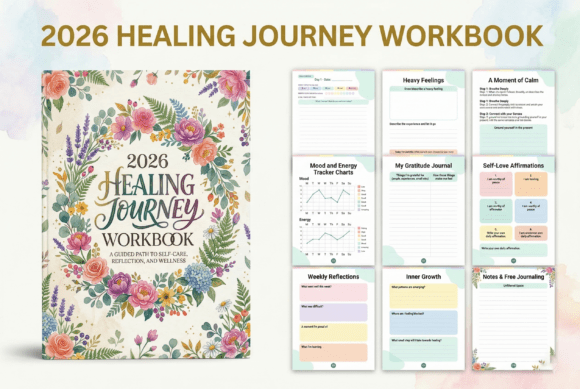
The 2026 Healing Journey Workbook is not another journal that collects dust after a few entries. It is a structured, 120-page no-bleed resource built around guided prompts, emotional awareness exercises, and release worksheets that help you move through difficult feelings rather than around them. Designed for anyone who wants to treat personal growth as a deliberate practice rather than an abstract hope, this workbook turns reflection into a repeatable process.
What sets it apart is its emphasis on actionable healing. Each section — from mindset reframing to weekly check-ins — asks you to write, list, or map out what you discover. The no-bleed format means you can use any pen without worrying about the next page being ruined, which might sound small until you are in the middle of a raw journaling session and don’t want interruptions. It is a tool built for real use, not for display.
Healing Reflection Prompts That Go Beyond Surface-Level Writing
Most guided journals ask generic questions like “What are you grateful for?” The 2026 Healing Journey Workbook goes deeper. Its reflection prompts are designed to help you explore specific emotional patterns, past experiences that still shape your reactions, and the beliefs you carry about yourself. Instead of a single line for an answer, you get space to unpack — often half a page or more — so you can follow a thought until it reaches something honest.
For creative professionals, these prompts can double as material for personal essays, visual journals, or even podcast episodes about emotional growth. A designer might use a prompt about “releasing perfectionism” as a starting point for a new project about imperfection in art. A writer could mine the same prompt for character development or thematic exploration. The workbook gives you raw material; what you do with it afterward is up to you.
Emotional Awareness Exercises for Identifying and Processing Feelings
The emotional awareness exercises in this workbook are built around the idea that you cannot heal what you cannot name. They guide you through identifying specific feelings — not just “sad” or “angry” but the nuances like disappointment, envy, relief, or quiet contentment. Once identified, the exercises walk you through healthy processing strategies that do not rely on suppression or distraction.
If you work in a high-stakes environment — marketing, entrepreneurship, education — you know how easy it is to dismiss emotions as irrelevant to productivity. This workbook treats them as data. When you understand what you feel and why, you make better decisions, communicate more clearly, and avoid burnout. The exercises are short enough to fit into a morning routine but substantial enough to shift your perspective over time.
How Different Users Can Adapt the Workbook for Their Context
- Freelancers and entrepreneurs can use the weekly check-ins to evaluate not just business goals but emotional energy levels, preventing the creeping exhaustion that comes from always being “on.”
- Educators and coaches can adapt the letting-go worksheets as prompts for workshops or one-on-one sessions, helping clients name what holds them back.
- Artists and designers can treat the mindset healing exercises as creative constraints — try illustrating each reframed thought as a visual metaphor.
- Bloggers and content creators can turn completed prompts into authentic posts, stories, or newsletter entries that resonate with audiences looking for real growth, not curated perfection.
The workbook does not prescribe a single way to use it. You can go in order, jump to a section that matches your current emotional state, or repeat a page as many times as you need. That flexibility makes it useful for people who want structure but resist rigidity.
Letting Go Release Worksheets – A System for Moving Forward
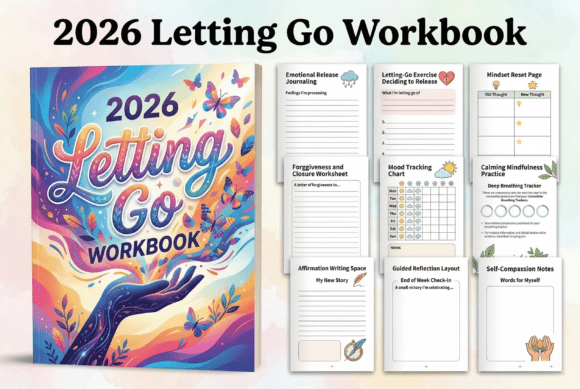
One of the hardest parts of healing is knowing what to release. The letting go release worksheets provide a framework for identifying what no longer serves you — whether that is a relationship pattern, a career expectation, or a story you have told yourself for years. Instead of vague advice like “just let it go,” the workbook asks specific questions: What evidence do you have that holding this belief helps you? What would change if you set it down? What small action can you take today to begin releasing it?
This is where the workbook becomes a practical tool for decision-making. If you are a small business owner deciding whether to pivot, a creative trying to walk away from a stalled project, or someone working through grief, the worksheets give you a repeatable method for evaluating what to keep and what to release. There is no pressure to do it all at once. Each worksheet stands alone, so you can revisit the same release topic over months and watch your perspective shift.
Self-Compassion Activities That Build Real Inner Kindness
Self-compassion is often misunderstood as self-indulgence. The self-compassion activities in this workbook are designed to challenge that idea. They ask you to notice when you are harsh with yourself, examine the language you use, and practice offering the same understanding you would give a close friend. These are not feel-good affirmations; they are cognitive exercises that rewire how you talk to yourself.
For example, one activity asks you to write a self-critical thought, then rewrite it from the perspective of someone who loves you unconditionally. The difference is often stark. Over time, these exercises build a habit of checking your inner dialogue before it spirals. For anyone in a leadership role — educator, manager, team lead — this practice directly improves how you support others because you learn to treat yourself with the patience you want to extend.
Mindset Healing Exercises for Reframing Negative Thought Patterns
The mindset healing exercises focus on the stories you repeat. Most negative thinking is not original; it is a loop you have run so many times it feels true. The workbook helps you identify these loops and offers structured ways to reframe them. You are not asked to replace negative thoughts with positive lies. Instead, you learn to question the thought, find evidence for and against it, and choose a more accurate perspective.
A marketer stuck in imposter syndrome, for instance, might use these exercises to list actual accomplishments and compare them to the belief that they are not qualified. The exercise does not erase the feeling, but it provides counter-evidence that weakens the thought’s grip. Over weeks, the reframing becomes automatic. The workbook’s format makes this process repeatable until it becomes a skill you can apply without the prompts.
Personal Growth Goal Planner – Intentions That Support Healing
Goals set without emotional awareness often collapse under the weight of unresolved feelings. The personal growth goal planner section helps you set intentions that are aligned with your healing journey. Instead of generic goals like “be happier,” you learn to set specific, emotionally grounded objectives: “I will write for 10 minutes each morning to process anxiety before starting work” or “I will say no to one commitment this week to protect my energy.”
For creators and entrepreneurs, this section is especially useful. It connects emotional health to professional output. When you set goals that respect your healing process, you produce work that is more honest, sustainable, and impactful. The planner includes space for monthly and weekly intentions, so you can track progress without obsessing over outcomes.
Weekly Healing Check-Ins – Consistency Without Pressure
The weekly healing check-ins are the backbone of the workbook’s long-term value. Each check-in asks you to reflect on what you felt during the week, what you learned, what challenged you, and what small victory you can acknowledge. They are designed to take 10–15 minutes, making them easy to maintain even during busy seasons.
Consistency matters more than intensity when it comes to healing. A ten-minute check-in every week for a year produces more insight than a single marathon journaling session that leaves you drained. The check-ins also create a record of your growth. After a few months, you can look back and see patterns — what triggered you, what helped, what changed. For anyone who publishes or shares their journey, these notes become authentic content that resonates because it is real, not manufactured.
Practical Tips for Keeping Your Workbook Practice Effective
- Keep it accessible. Leave the workbook somewhere you see daily — on your desk, beside your bed, in your bag. Out of sight often means out of mind.
- Set a low bar. Commit to one page or five minutes. You can always do more, but starting small prevents resistance.
- Use different pens or colors. Visual variety can make the practice more engaging and help you separate different themes at a glance.
- Skip around. You do not need to follow the order. If a release worksheet feels relevant today, do it. The structure is a guide, not a rule.
- Review monthly. Flip back through completed pages to notice patterns. This is where the real insight lives — seeing how your emotional landscape shifts over time.
Adapting the Workbook for Different Platforms and Audiences
If you create content for others, the 2026 Healing Journey Workbook can serve as both a personal tool and a source of material. A blogger could write posts based on each prompt category, sharing personal insights while inviting readers to reflect. A podcaster could use the weekly check-in structure as a format for episodes — each week, discuss one area of healing and what came up. A coach or educator could build a small group around the workbook, using it as a shared resource for discussion and accountability.
The no-bleed format and clean layout also make it suitable for video or photo content. You can film yourself completing a page, share a time-lapse of your reflection process, or post before-and-after insights from different check-ins. Audiences appreciate vulnerability when it is grounded in real practice, not performance. This workbook gives you something genuine to share.
Who Will Benefit Most from This Approach to Healing
- People in transition — career changes, relationship shifts, moves, or losses — who need a structured way to process uncertainty.
- Creatives and freelancers who want to protect their emotional energy so they can produce meaningful work without burning out.
- Anyone who has tried journaling before and found it too vague. The guided nature of this workbook removes the “what do I write about?” barrier.
- Professionals in helping roles — therapists, coaches, teachers, healthcare workers — who need their own space for processing the emotional weight they carry from supporting others.
The workbook does not promise to fix everything. It offers a process. Whether you use it as a private companion, a creative source, or a shared tool for community growth, the value comes from showing up consistently and letting the prompts guide you toward what you already know but have not yet articulated.
Starting Your Journey with the 2026 Healing Workbook
The first page is the hardest. The 2026 Healing Journey Workbook acknowledges that by starting with a simple prompt: “What brings you here today?” There is no pressure to have a profound answer. Write whatever comes. The act of beginning matters more than the content of your first entry.
As you move through the sections — reflection, awareness, release, compassion, mindset, goals, check-ins — you will notice shifts. Some will be obvious, like a change in how you talk to yourself. Others will be subtle, like feeling a little lighter after completing a release worksheet. Over 120 pages, those small shifts accumulate into something real: a rebuilt sense of inner peace that is not dependent on circumstances but on how you relate to them.
For creators, entrepreneurs, educators, and anyone who wants to turn healing into a sustainable practice rather than a one-time event, this workbook offers a clear path. It respects your time, your emotions, and your capacity for growth. The prompts are designed to be revisited, so the workbook can last well beyond 2026. The healing journey does not end when you fill the last page. It continues in how you apply what you learned to the rest of your life.
Open the workbook, pick a prompt, and begin. That is the only step that matters.