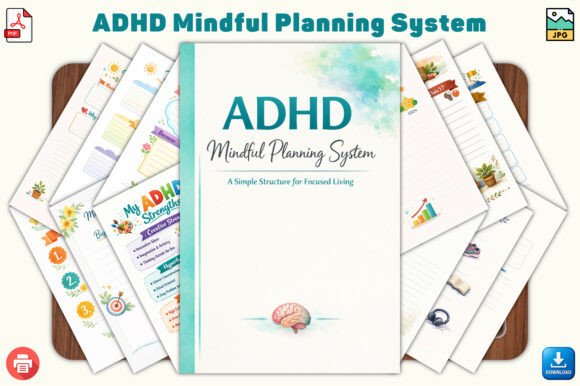
🧠 ADHD Mindful Planning System
For anyone living with an ADHD brain, the gap between intention and action can feel impossibly wide. You wake up with a clear sense of what you want to accomplish, yet by midday your desk is covered with half-finished tasks, scattered notes, and a growing sense of frustration. Traditional planners only compound this problem. Their dense grids, rigid hourly blocks, and endless to-do lists are designed for neurotypical workflows—not for the dynamic, associative, and sometimes chaotic way an ADHD mind naturally operates. The ADHD Mindful Planning System emerged from a simple but powerful insight: planning tools should adapt to the brain, not the other way around.
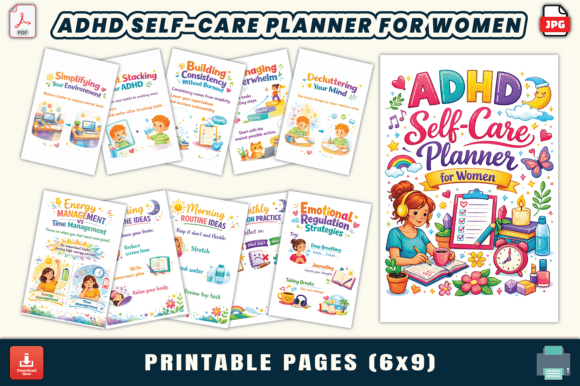
This system strips away every element that creates visual overload or pressure to perform perfectly. Instead, it offers a clean, minimal 6×9 inch layout with 30 thoughtfully structured pages that guide you from mental clutter to clear, focused action. Each page follows a predictable structure: a title, a guided prompt, writing space, subtle icons, and a clean layout. There is no judgment, no rigid schedule to fail at, and no shame spiral waiting for you at the end of the week. Just a gentle, step-by-step process that respects how your brain actually works.
Why the ADHD Mindful Planning System Fits Modern Work and Life
We are living through an era of constant distraction. Notifications, open tabs, Slack messages, and the cultural pressure to be always available have made sustained focus more difficult for everyone. For individuals with ADHD, these challenges are magnified tenfold. The modern knowledge economy demands creative problem-solving, quick context switching, and the ability to manage multiple projects simultaneously—all areas where traditional planning methods tend to fall short.
The ADHD Mindful Planning System speaks directly to this reality. It does not promise to fix your brain or eliminate every distraction. Instead, it provides a calm structure that lets you capture what matters, prioritize without overwhelm, and move forward one small step at a time. The Brain Dump System gives you a dedicated space to offload every thought racing through your mind, while the Rule of 3 Priority Method helps you narrow that chaos down to three achievable focuses for the day. This mirrors what productivity research now tells us: limiting choices reduces cognitive load and increases follow-through.
Current workplace trends also favor this kind of flexible, mindfulness-infused approach. More companies are recognizing that neurodiversity is an asset, not a liability. Remote and hybrid work environments have made self-directed planning more critical than ever. When you no longer have a manager or colleague physically present to help you reset, having an internal system that guides you back to center becomes essential. The planner’s Overwhelm Reset Pages and Mood Emotional Check-ins are not fluffy extras—they are practical tools for navigating the real emotional ups and downs of creative and professional work.
Designed for Distraction-Sensitive Brains
What makes this planner genuinely different is its attentiveness to sensory and cognitive sensitivity. Most planners assault your eyes with bold colors, competing fonts, and boxes that demand to be filled. The ADHD Mindful Planning System uses a soft, calming palette with plenty of white space. Every page has a clear entry point and a natural flow from one section to the next. You are never left wondering where to start or what to write.
The Focus Pattern Awareness pages are a standout feature. Instead of forcing you into a predetermined schedule, they invite you to observe when your energy and attention naturally peak and dip throughout the day. This observational approach is far more effective than trying to conform to a 9-to-5 structure that does not match your biology. Over time, you begin to recognize your own rhythms and can schedule high-focus work during your natural windows of clarity.
For example, a freelance graphic designer using this system might discover that their best creative work happens between 10 PM and midnight, not during the traditional morning hours. Instead of fighting that pattern, they can use the Time Blocking Pages and 25-Minute Focus Sprint Sheets to build a workflow that aligns with their actual energy, not someone else's ideal. This is not about discipline—it is about design.
The Shift from Chaos to Consistent Progress
One of the most demoralizing cycles for adults with ADHD is the pattern of starting strong, losing momentum, and then abandoning the system entirely. The ADHD Mindful Planning System breaks this cycle through its Win Log Reflection Pages and ADHD Strength Mapping. These sections reframe your relationship with progress. Instead of measuring success by how many tasks you completed, you measure it by how many times you showed up for yourself, even when it was hard.
This evolutionary shift in how we think about productivity is gaining traction across professional communities. Marketers, educators, and entrepreneurs are beginning to understand that sustainability matters more than intensity. A planner that helps you move from chaos to clarity to consistent progress is not just a tool—it is a long-term partner in your growth. The Weekly Planning Layout and Habit Tracker are designed to be forgiving. If you miss a day or a week, you simply pick up where you left off. There is no guilt-inducing streak to maintain, no punitive red X's staring back at you.
Consider a small business owner juggling product development, customer service, and marketing. Without a clear structure, each day can feel like a reactive scramble. With the planner's guided prompts, they can spend ten minutes each morning identifying their three most important priorities, blocking time for focused work, and checking in with their emotional state. That small ritual, repeated daily, builds a foundation of calm intentionality that ripples across every area of their business.
Practical Implications for Everyday Users
For professionals and creators, the most immediate benefit of using this system is reduced decision fatigue. Every page eliminates the question of what should I do next? and replaces it with here is one small step you can take right now. The Brain Dump System prevents the mental logjam of holding too many ideas in working memory. Once those thoughts are externalized, your mind is free to engage with the task at hand.
The Rule of 3 Priority Method is particularly useful for anyone who struggles with overscoping their day. Instead of a long list that guarantees feelings of failure, you commit to three meaningful accomplishments. This approach is grounded in the reality that deep, focused work on a few things produces better results than shallow progress on many. A blogger, for instance, might prioritize finalizing one article outline, recording a short video, and engaging with three meaningful comments—rather than trying to do everything at once and ending up doing nothing well.
Another practical implication is the emotional regulation component. Many adults with ADHD experience intense emotional reactions to perceived setbacks. The Mood Emotional Check-ins and Overwhelm Reset Pages provide a structured outlet for processing those feelings without letting them derail the entire day. This is not therapy, but it is a self-awareness tool that helps you catch overwhelm early and apply a reset before it spirals.
How This System Evolves with You
A common criticism of many planning systems is that they work well for a few weeks and then lose their effectiveness. The ADHD Mindful Planning System is built differently because it is designed to evolve with your changing needs. The Focus Pattern Awareness exercises help you track shifts in your productivity rhythms over months, not just days. The ADHD Strength Mapping pages encourage you to reflect on your unique cognitive strengths—creativity, hyperfocus, lateral thinking—and find ways to leverage them in your daily work.
As you move through the 30 pages, you are not just filling out forms. You are building a personal operating manual for your own mind. This kind of self-knowledge is invaluable for long-term professional growth. A marketer who understands that they generate their best campaign ideas during unstructured reflection can intentionally schedule brainstorming sessions rather than forcing creativity during back-to-back meetings. An educator who recognizes that grading drains their focus can batch that work during their low-energy hours, freeing up peak focus for lesson planning.
The trend toward more personalized, neurodiversity-aware productivity tools is not a passing fad. It reflects a deeper cultural shift toward honoring how different brains work. The one-size-fits-all planner is giving way to systems that are modular, flexible, and compassionate. The ADHD Mindful Planning System is part of that movement, offering a structure that is strong enough to hold you steady but gentle enough to let you breathe.
Recommendations for Getting the Most Out of This Planner
Start with the Brain Dump System on your first day. Write down everything that is occupying mental space—tasks, worries, ideas, reminders. Do not edit or prioritize. Just release. Then move to the Rule of 3 Priority Method and choose three items from your brain dump that feel most important for the day ahead. Use the 25-Minute Focus Sprint Sheets to tackle one of those items without pressure. When the sprint ends, step away, stretch, and check in with your energy level.
At the end of the week, spend a few minutes with the Win Log Reflection Pages. Record what went well, even if it was small. This practice rewires your brain to notice progress instead of fixating on gaps. Over time, you will develop a more compassionate and accurate view of your own productivity.
The ADHD Mindful Planning System is not about becoming a perfectly organized person. It is about creating enough structure to reduce daily friction so that your natural creativity, intelligence, and drive can emerge. For anyone tired of fighting their own brain, this planner offers a different path—one built on understanding, not force.