My Backyard Gardening Journal: Track, Learn, and Grow
There is a quiet thrill that comes with watching a seed you planted break through the soil for the first time. It is a small miracle that never gets old. But anyone who has spent time tending a garden knows that these moments of joy are often mixed with questions. Why did the cucumbers struggle this year? Did I water the tomatoes too much? Will the marigolds come back stronger if I move them to a sunnier spot?
These questions are the heart of a growing gardener. And capturing the answers is exactly what My Backyard Gardening Journal was designed to do. It is a simple, thoughtful tool for anyone who wants to move from guessing to knowing, from hoping to planning.
The Real Challenge of Gardening
Gardening is one of the most rewarding activities for the mind and body. It connects you to the seasons, provides healthy food, and creates a sanctuary right outside your door. Yet, it can also be surprisingly complex. Soil quality changes from one bed to the next. Sunlight shifts as trees grow and structures cast new shadows. Pests arrive, sometimes without warning.
Most of us rely on our memory to keep track of all these moving parts. But memory is unreliable. We forget which variety of basil was so productive last summer. We lose track of when we last fertilized the roses. Over time, small gaps in knowledge can lead to frustration or wasted effort. A garden journal fills these gaps. It gives you a reliable record of your decisions and the outcomes that followed. This transforms gardening from a hobby of trial and error into a practice of continuous learning.
More Than Just a Notebook
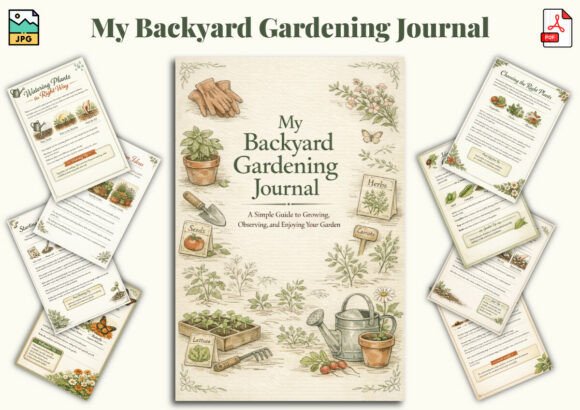
What makes My Backyard Gardening Journal stand out is not just its beautiful vintage botanical design. It is the careful structure that makes consistent journaling feel easy and natural. The journal strikes a balance between guided prompts and open space, which is essential for both beginners and experienced growers.
The pages are not rigid forms that make you feel like you are filling out homework. Instead, they invite you to reflect, sketch, and celebrate small victories. The plant growth tracking sheets allow you to document the subtle changes that happen day by day. The pest and beneficial insect notes shift your perspective from seeing bugs as enemies to understanding their place in your garden’s ecosystem.
Every element, from the weather and watering logs to the garden sketch page, is built with a clear purpose: to make observation a natural part of your gardening routine. The clean and minimal layout ensures that writing down your thoughts takes only a few minutes, so it never feels like a burden.
Tracking the Intangible: Weather and Water
One of the most underrated features of a good garden journal is the weather log. It is easy to forget that a single week of unusual heat can affect your plants for months. By recording basic weather data alongside your garden notes, patterns begin to emerge. You might notice that your lettuce bolts every time temperatures stay above 85°F for two consecutive days. Or that your pepper plants thrive when given deep water only twice a week. These are powerful insights that can only be gained through dedicated observation over time.
From Seed to Harvest: A Practical Walkthrough
Imagine starting a new season with My Backyard Gardening Journal open on your lap. You begin with the garden planning pages. You sketch out your raised beds, decide where the sunflowers will go, and map out the companion planting for your vegetables. This simple act of drawing and planning saves hours of confusion later.
As the weeks go by, you use the weekly garden care checklists to stay on top of watering, weeding, and feeding. These checklists bring a calm rhythm to your week. Instead of wondering what needs to be done, you follow a clear path. When a problem arises, you turn to the pest and beneficial insect notes to document what you saw and how you responded.
At the end of the season, the reflection and garden progress pages help you look back with honest eyes. What worked? What would you do differently next year? The future garden goal planning pages allow you to carry those lessons forward into the next season. This cycle of planning, acting, observing, and reflecting is the foundation of becoming a more skilled and confident gardener.
Who Benefits from a Garden Journal?
My Backyard Gardening Journal is designed for a wide range of people, each with their own relationship to the garden.
- The curious beginner who has just planted their first tomatoes and wants to understand the basics of plant care. The journal provides a gentle framework that guides them without overwhelming them with technical jargon. It gives them a safe place to make mistakes and learn from them.
- The home cook and hobbyist who wants to grow a steady supply of herbs and vegetables. By tracking harvests, they can plan their planting times to ensure a continuous yield. They can also experiment with different varieties and document which ones taste best.
- The creative professional and blogger who uses their garden as a source of content and inspiration. The detailed observation notes and photographs referenced in the journal can be turned into engaging blog posts, social media updates, or even educational materials for their audience.
- The small business owner or market gardener who sells produce or plants. The journal helps them track yield, manage crop rotations, and plan for future seasons with data, not just intuition.
- The educator or parent using the garden as a living classroom. Children can take part in recording growth, drawing flowers, and checking the weather log. This turns the journal into a shared family project that teaches patience, responsibility, and the beauty of nature.
Making the Most of Your Journaling Experience
Like any tool, a garden journal works best when used with intention. One of the most important things to remember is that consistency matters more than perfection. You do not need to write in your journal every single day. Even brief notes taken once or twice a week will build a valuable record over time. The key is to make it a habit, like watering your plants or pulling weeds.
Keep your journal somewhere accessible. If it is stored indoors, bring it outside when you are tending to your garden. Some gardeners prefer to keep a small waterproof clipboard in the garden shed and transfer their notes later. Find what works best for your routine and stick with it.
It is also important to remember that a journal is a mirror of your experience, not a report card. There is no right or wrong way to fill out the pages. Some sections might be more useful to you than others. Feel free to adapt the journal to your style. The goal is to deepen your connection to your garden, not to add stress to your life.
A Record of Growth
One of the greatest gifts of keeping a garden journal is the ability to look back. A full season of notes is a time capsule of your backyard’s life. You can see the weather patterns, the triumphs, and the challenges. You can remember the first ripe strawberry of the summer and the surprise visit from a monarch butterfly.
My Backyard Gardening Journal offers a simple and inspiring way to capture these fleeting moments. It turns the chaos of nature into a personal story of discovery. Whether you are planning your very first garden or looking to bring more organization to an established space, this journal provides the structure and encouragement you need. It is a companion for your journey, helping you grow not only healthier plants but also a deeper understanding of the natural world right outside your door.